One South African insurer has saved millions of rands by fixing 350,000 potholes in Johannesburg


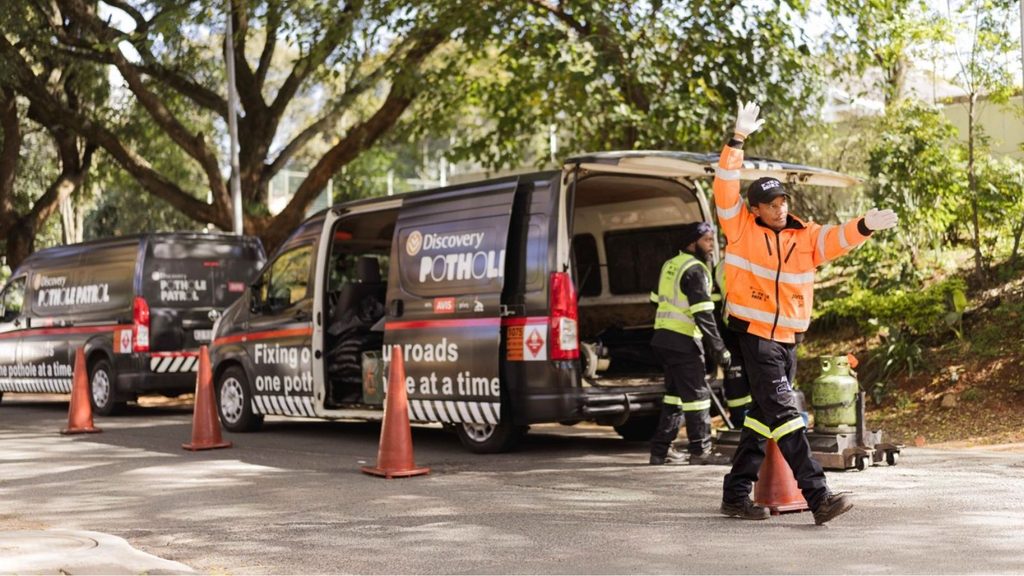
Discovery Insure, in partnership with Johannesburg Roads Agency and Avis, has repaired 350,000 potholes in South Africa’s richest city.
This has obvious benefits for the insurer, which estimated at the launch of the partnership that potholes in Johannesburg cost R650 million a year in damages and lost economic activity.
These damages led to higher claims, affecting the insurer’s profitability and the effectiveness of its shared-value model.
Fixing these potholes reduces the number of claims, enabling Discovery to pass on benefits to customers through rewards and lower premiums.
Discovery Insure CEO Robert Attwell recently revealed that the 350,000 potholes fixed reduced the insurer’s pothole-related claims by 26%.
This is significant and has meaningfully helped Attwell’s business unit reach R1 billion in normalised profit.
However, Discovery Insure is not the only company to benefit from this. The repair of potholes in Johannesburg benefits its competitors, too.
As with Discovery Insure, other vehicle insurance players, such as OUTsurance and Santam, will benefit from fewer claims.
This is strange, as it is not normal for a company to spend millions of its own money on something that may benefit its competitors.
However, as Discovery CEO Adrian Gore describes in his book The Four Principles, that is exactly the point of the initiative.
“When the number of unfilled potholes passes a tipping point, they become a potent symbol of urban decline,” Gore said.
“In Johannesburg, the sheer volume of potholes created a deep sense of malaise about the state of infrastructure that had a significant impact on residents’ morale.”
While this reasoning sounds altruistic, Gore also recalled that he was motivated by the constant complaints from his group of close friends that he meets for coffee every week.
“Every week, someone would have a new and more dramatic pothole story to share about how it had caused them to have a puncture or how they saw cars swerve to avoid them,” Gore said.
“I knew what they were describing was real. Pothole claims were soaring, costing our motor insurance business and the broader industry millions each year.”
“At the same time, their stories irked me. To them, potholes were symbols of a broader, irreversible decay.”
Thus, one Sunday, Gore left his meet-up with friends and asked if Discovery could do anything about the potholes in Johannesburg.
Fixing 350,000 potholes

Gore explained that after his emotional response to his friends’ stories, he took the idea of fixing every pothole in Johannesburg to Discovery’s leadership team.
Immediately, a small team began to study the pothole problem, ranging from how many there were to why fixed potholes quickly deteriorate again.
Following the team’s research, Discovery met with the mayor of Johannesburg in 2021 to discuss how it could help the city address the pothole crisis.
“We knew it was a daunting task and that the expense would be substantial, but our assessment was that we could make inroads into helping him solve the problem for a lot less,” Gore said.
Crucially, Discovery offered to pitch in at their own expense, with the mayor saying the city simply did not have the funds to invest in new pothole-fixing technology.
Gore likened fixing potholes to the broken windows theory of tackling crime, popularised in New York City.
As the small signs of decay, such as potholes, were addressed, morale in the city would improve, and investment would flow into other areas of infrastructure.
“Of course, as motor insurers, we had something to gain too. From our motor insurance business, we knew that pothole-related repair costs were substantial,” Gore said.
“We estimated that costs relating to pothole damage cost South Africa R2 billion a year. The potential upside for the motor insurance industry was significant.”
Discovery partnered with a company that specialised in road repairs to launch Discovery Pothole Patrol in May 2021.
In the first four years, the partnership used 11,800 tonnes of asphalt to fill 300,000 potholes. Discovery Insure’s latest data puts the number of potholes fixed at 350,000.
Thanks to the investment in new technology, Discovery estimates that 0.2% of repaired potholes require further attention or will need to be repaired again.
Gore said the public response was overwhelmingly positive, reflecting the emotional relief of visible progress and that the decline is being reversed.
“We have invested in the project substantially, but the net cost to us is far lower because better roads mean fewer accidents and, thus, fewer insurance claims,” Gore explained.






Comments