Dawie Roodt’s interest rate prediction for South Africa


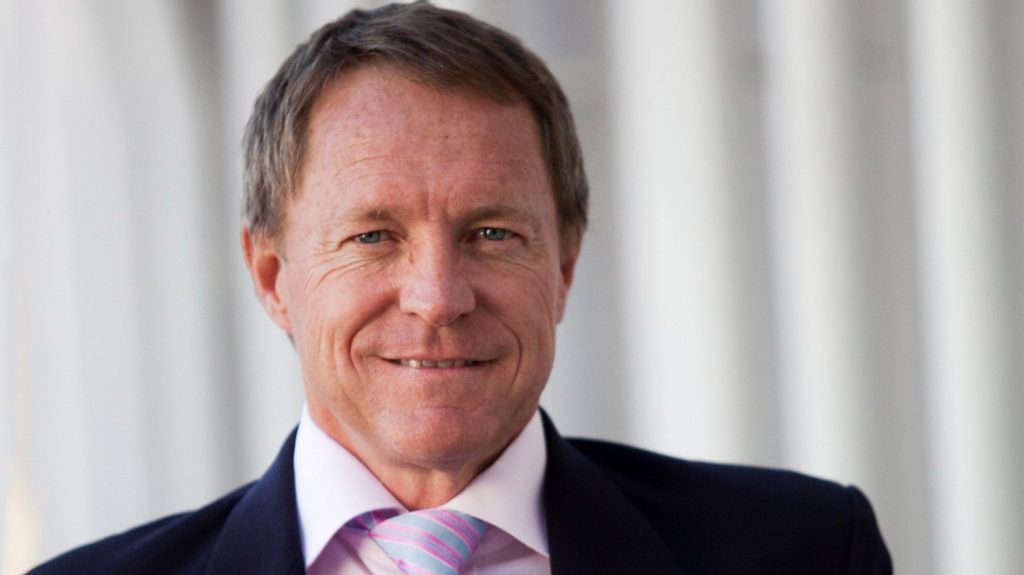
Efficient Group chief economist Dawie Roodt believes the Reserve Bank’s Monetary Policy Committee (MPC) will vote to hike interest rates at its September meeting.
This meeting, scheduled for 23 September, comes at a time of heightened inflationary concerns and weakening economic growth.
While an interest rate hike risks further weakening the economy, Roodt said it may be a necessary trade-off to curb broader inflationary pressures.
Roodt shared his view in a recent interview with Truth Report, wherein he explained that the MPC may have no choice but to raise rates at its next meeting.
This is broadly in line with market and economist predictions, which have priced in another 25-basis-point hike for South Africa in September.
This would bring the Reserve Bank’s policy rate, or the repo rate, to 7.25% and the prime lending rate to 10.75%.
Roodt explained that economists are split on why long-term interest rates appear to be rising.
He said there are two possible causes: inflation will rise, or economic growth will be better than expected.
“My view is that the truth is probably somewhere in between and that the markets are certainly telling us that there is short-term upward pressure on inflation,” he said.
“But I also believe that there’s very strong long-term demand for capital, from the private sector and states, which means more investments and more future economic growth.”
“So, I think the market is telling us there will be a bit more inflationary pressure going forward, but also quite strong economic growth.”
Aside from these factors, Roodt said the Reserve Bank must also contend with the United States Federal Reserve’s recent decision to hike interest rates.
This, he said, leaves the MPC with little choice but to raise South Africa’s borrowing rates as well, as the committee cannot risk narrowing the interest rate differential between the two countries.
Doing so would risk significantly weakening the rand by making South African debt less attractive to investors.
The MPC’s delicate balance
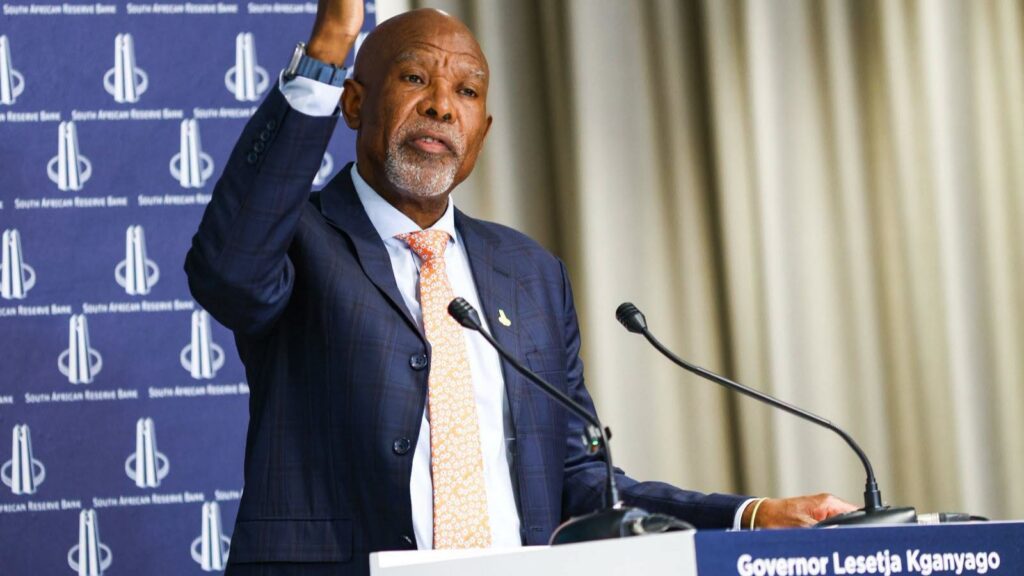
Roodt said he expects the Reserve Bank to hike interest rates by 25 basis points at its September meeting.
“That will be bad for economic growth, but it’s certainly better than more inflationary pressures in the South African economy, so expect the Reserve Bank to tighten monetary policy,” he said.
“It’s not going to be nice for the economy, but it’s much better to have higher or relatively high short-term interest rates than to have much higher inflation.”
While South Africa’s CPI inflation rate slowed to 4.3% in July, down from 5% in June, it is broadly expected to rise to 5% again in August.
This is because the fuel price cuts seen in July have largely been reversed, with global oil prices rising over the past month amid escalating tensions in the Middle East.
At the same time, Statistics South Africa recently revealed that the country’s gross domestic product (GDP) decreased by 0.2% in the second quarter of 2026.
CAM Asset Management portfolio manager Mike van der Westhuizen said this has left the Reserve Bank facing a delicate balance.
While Van der Westhuizen also expects the MPC to raise interest rates in September, he said an argument could be made for keeping rates unchanged.
“In another very tight decision, our base case is that the SARB holds rates steady, but it is effectively a coin toss and will depend on whether the MPC is willing to look through some of the shorter-term inflation dynamics,” he said.
“Based on short-term dynamics alone and where the Consumer Price Index (CPI) currently sits relative to the 3% target, one could easily argue for a 25-basis-point rate hike.”
“The Federal Reserve, now embarking on a hiking cycle, undoubtedly changes the dynamic. Regardless of whether the SARB holds or hikes, we expect the tone from SARB Governor Lesetja Kganyago to remain hawkish.”
Van der Westhuizen expects the Reserve Bank’s inflation projections to be revised higher, moving further away from the 3% target.
This could be a concern for the Reserve Bank, as it points to possible second-round effects stemming from the global oil crisis.
“The key issue is whether higher fuel costs broaden into transport costs, food inflation and wage demands. Those second-round effects are far more important than the initial fuel shock itself,” he said.
“The MPC will undoubtedly acknowledge weak growth, but growth remains a secondary consideration when inflation risks are elevated.”





Comments