R4,400 social grant for 8.2 million people in South Africa


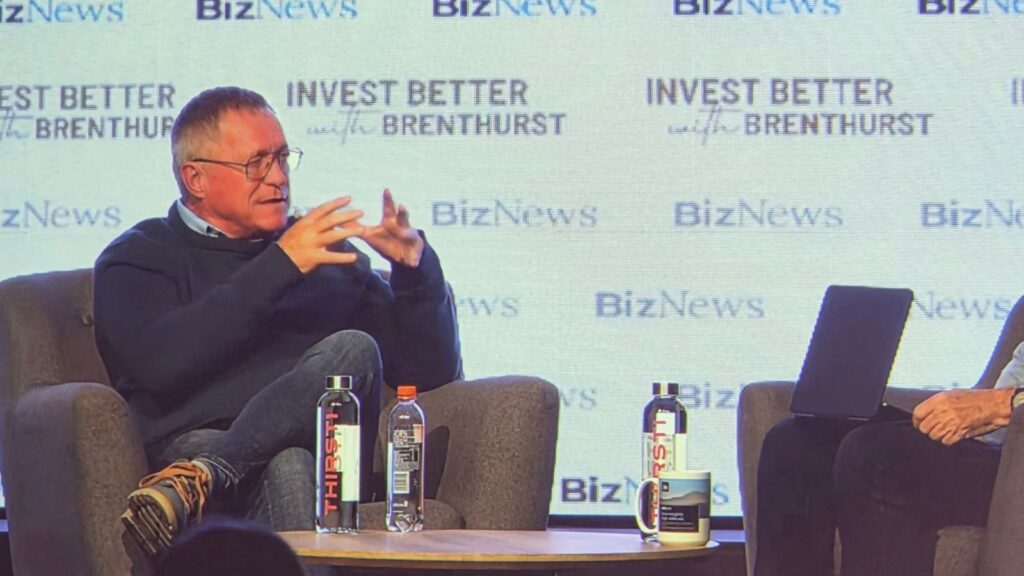
Efficient Group chief economist Dawie Roodt said the proposal to increase monthly social grants to R4,400 would “break the bank” because South Africa’s tax base is too small.
Instead, Roodt proposed eliminating all individual specialised welfare grants in South Africa and consolidating them into a single, unified Basic Income Grant (BIG).
Roodt shared these views in a recent interview with Truth Report, in which he discussed a proposal put forth by EFF leader Julius Malema.
During an address at the EFF’s Mpumalanga Provincial Manifesto Rally, Malema said that they want to increase social grants to a minimum of R4,400 per month, funded by taxpayers.
This forms part of a broader conversation South Africa has been having about introducing a BIG.
Government plans to implement a universal income grant have been underway for years, though few details have been shared about what this grant would look like.
Roodt described Malema’s suggestion that this grant should be R4,400 as “cheap politics”, saying it was not economically viable.
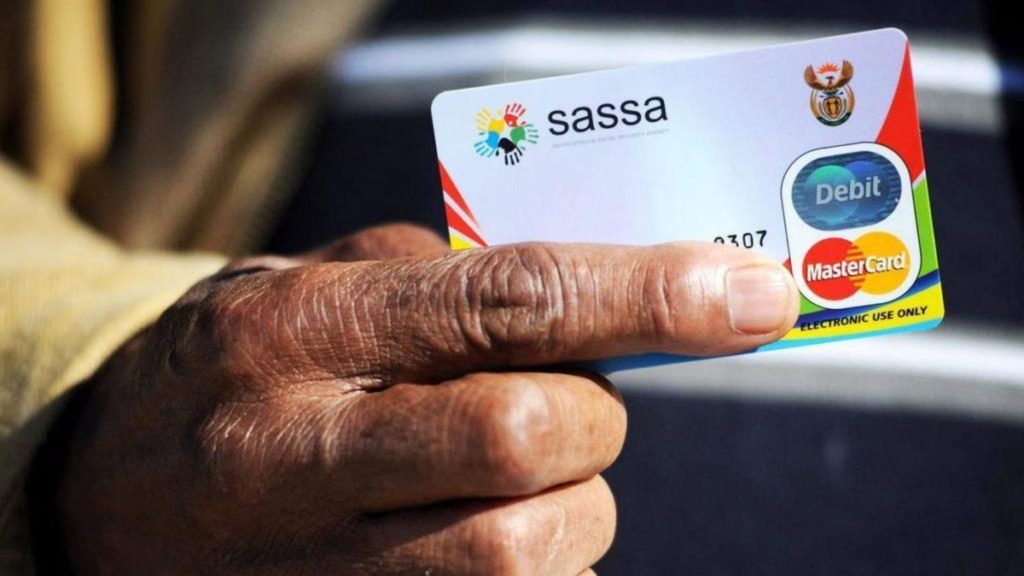
He cited economic figures to support this, saying there are 28 million grant recipients in South Africa, 8.2 million of whom receive the Social Relief of Distress (SRD) grant that a BIG will be modelled after.
“If we increase the grants to R4,400, then that’s going to break the bank without any doubt,” he said.
“It’s going to break the bank because the fiscal account simply will not be able to support this, and the tax base in South Africa is just too small to support this.”
“It is impossible for the tax base to carry that kind of support, especially given the weak state of the South African economy.”
Roodt has previously pointed to South Africa’s narrow tax base as a growing concern, saying it is unsustainable for 7.7 million taxpayers to support 28 million grant recipients.
South Africa’s narrow tax base is skewed heavily towards middle- and higher-income individuals, with 2.4% of South Africans paying 77% of all personal income tax.
This data becomes more disproportionate for high-income individuals. Roodt estimates that a single high-net-worth individual effectively supports 20 low-income earners.
He explained that South Africa has already reached the peak of the Laffer Curve for personal income tax, and any further tax increases would lead to lower compliance and, therefore, lower state revenue.
A Basic Income Grant for South Africa
Roodt explained that while a R4,400 grant is unsustainable, he is not opposed to introducing a BIG in South Africa.
“Here’s what I think that we can consider: let us introduce a basic income grant. You have to have below a certain income to qualify for this basic income grant,” he said.
“Included in this basic income grant will be an amount of money that you can spend on whatever you want to, as well as money that you’re supposed to spend on things like education or health services.”
This part of the grant, Roodt said, could take the form of “a voucher system” for education, health, and other state-provided services.
“Give the poor the choice to choose what they want to spend their money on. Allow poor people to use this money to pick whatever school they want to send their kids to.”
“If you approach it like that, we can get rid of all these other grants and combine them all into one single basic income grant.”
“But then whoever receives the grant must understand that, from now on, it is your responsibility to pay for whatever you want to spend this money on.”
While it is still unclear what the state envisions for a BIG in South Africa, plans to introduce a universal income grant are in advanced stages.
In June 2026, the Department of Social Development (DSD) said it had made significant progress towards developing a BIG Grant for South Africa.
It said this BIG will be modelled on the SRD grant, which was introduced as a temporary measure during the Covid-19 pandemic but has been extended every year since.
The DSD explained that because the SRD grant was successful in addressing poverty, it was directed to “repurpose” it to create a more permanent form of income support.
The department has drafted a policy in this regard and said that, if all goes according to plan, the legislative process for the BIG grant will commence next year, in the 2027/28 fiscal year.




Comments