South Africa’s government has one option left


South Africa’s government does not have the money to invest in infrastructure at the rate the country needs to boost economic growth and avoid further decay.
This is due to the historic mismanagement of state finances over the past 15 years, with the country last posting a full-budget surplus in 2008/09.
The mismanagement has left the South African state with a weak balance sheet that can no longer be leveraged to grow the economy.
Stanlib chief economist Kevin Lings explained that the only option left is to make it comfortable for private businesses to invest in South Africa.
Lings has previously said that the country can turn to international institutions, such as the World Bank, for funding, but that comes with strict conditions.
Funding from these institutions is also unlikely to be sufficient in scale to provide the required capital.
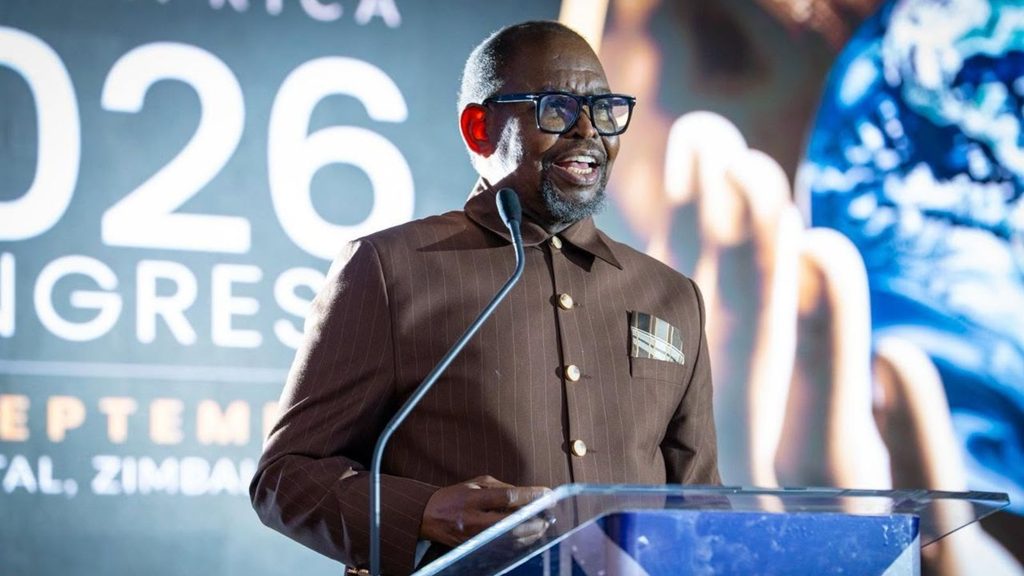
Speaking at the INN8 Investment Summit 2026, Lings explained that South Africa needs to boost its fixed investment rate.
Fixed investment refers to capital spent on infrastructure, machinery, and equipment that increases workforce productivity.
South Africa’s fixed investment rate sits at 13.2% of GDP. In contrast, the average for its emerging market peers is 30% of GDP.
Lings said South Africa has to get its fixed investment rate above 20% to at least maintain its current infrastructure, which is decaying.
Ideally, the country should spend more on fixed investment to ensure that its infrastructure can accommodate a growing population.
“If fixed investment stays at 13.2%, South Africa risks becoming a failed state because infrastructure decays while the population grows at 1.3% annually,” Lings said.
“To fix South Africa, fixed investment must be raised from 13.2% to above 20% of GDP. Between 2004 and 2007, when we did that, South Africa average 5% GDP growth for four consecutive years.”
Lings believes this can be done again, particularly as the country comes off a low base with economic growth averaging 1% for the past decade.
Make business happy

Lings said there is one major challenge with this: the government is heavily indebted, meaning it cannot leverage its balance sheet to the required level.
South Africa’s government debt burden is above 76% of GDP, and 22% of all tax revenue goes toward interest payments.
The government simply cannot afford to make the multi-trillion-rand investment required to maintain and upgrade South Africa’s infrastructure.
“Because the South African government is heavily indebted, it cannot fund this infrastructure push alone. The capital must come from the corporate sector where its debt is low,” Lings said.
South African corporates are sitting on over R1.5 trillion in cash on the sidelines in bank accounts and money market funds.
These companies are hesitant to invest in the local economy due to policy uncertainty, sluggish growth, and the lack of government support.
“Corporates are not investing because business confidence is deeply depressed. To unlock corporate balance sheets, policy implementation must become predictable,” Lings said.
“Rebuilding confidence will also halt the decade-long withdrawal of foreign capital from South African equities, where foreign investors have pulled money out for 10 consecutive years.”
Lings estimated that if South Africa shifts its focus from consumer spending and banking to infrastructure development, fixed investment can return to 20% of GDP.
This would lift sustainable growth from 1.5% to 2% – 4% annually. This will create a flywheel, where faster growth results in more investment, which, in turn, drives growth.
Lings has previously said that deregulation is the government’s only option, as that would greatly increase private participation in the economy.
“I would say that deregulation is your only option now. It is your only choice, and while you may not like it ideologically, it is your only option,” Lings said.
“You are out of options, and those options have been taken away because you took government debt from 26% to 76% of GDP. That increase meant you have taken away your option to use your own balance sheet.”
“How are you going to fix the infrastructure? It is not like you can go borrow money and say, ‘Oh no, it is fine because I am building something with this money. I am not having a party.’ No, you are still borrowing the money.”


Comments