Top economist warns about higher inflation and interest rates for South Africa


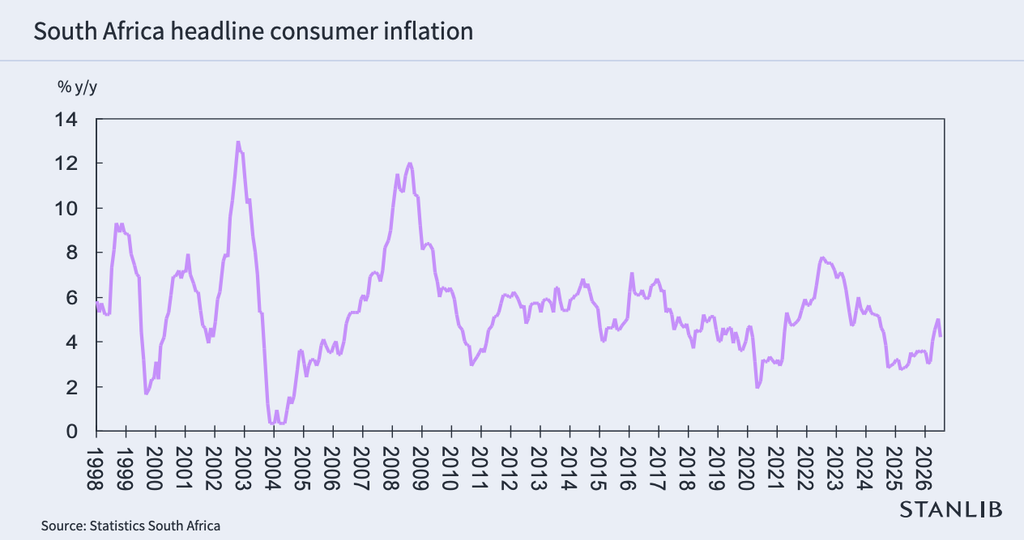
South Africa’s surprisingly low July inflation reading will be temporary, with CPI inflation expected to accelerate again in the coming months.
This is projected to translate into one more interest rate hike from the Reserve Bank in September or November before holding rates at an elevated level.
Relief from elevated rates will only be felt in the second half of 2027 as the impact of the war in Iran rolls off and inflation returns towards 3%.
This is feedback from Stanlib chief economist Kevin Lings, who explained that the surprise July reading does not entail immediate relief for consumers.
Lings said July’s inflation reading was 4.3% annual inflation, and 0.2% monthly inflation was well below market expectations.
“Yes, the 4.3% inflation rate is well above the 3% inflation target, but it is much better than being at 5%. I thought that was especially encouraging,” Lings said.
However, core inflation, which strips out the impact of fuel prices, which are highly volatile, rose to 4.2% in July.
This is concerning news, Lings said, as the Reserve Bank would closely watch this number for any indication that fuel prices are pushing costs higher throughout the economy.
Elevated core inflation indicates that price increases are becoming entrenched and will be harder for the Reserve Bank to tackle.
The bank refers to this as second-round effects, where companies pass on the rising cost of fuel to consumers. In other words, everything else gets expensive, including fuel.
While fuel prices are highly volatile, with prices falling as quickly as they rise, other parts of the economy do not react as quickly. Hence, inflation becomes entrenched.
“What drove core inflation higher was obviously water and electricity prices. Those are the annual adjustments at a municipal level,” Lings explained.
This will be compounded by a looming petrol and diesel price hike in September. Diesel is forecast to rise by up to R3 per litre, and petrol by R1 per litre.
“That is going to add inflationary pressure in the short term. That definitely creates upside risk. So, in the short term, we think that inflation will head closer to 5%,” Lings said.
“I’m not thinking of more successive interest rate hikes. I’m thinking possibly one more interest rate hike during the rest of this year, and then hopefully keeping interest rates on hold.”
Long-term relief
Lings expects inflation to only moderate in the second half of 2027, when the impact of the war in Iran rolls off the annual calculation.
“We are fairly encouraged that inflation will moderate in the second half of next year down to about 3%,” Lings said.
“This would then please the Reserve Bank and allow for it to cut interest rates. I would think of inflation in two separate segments: short-term elevation and long-term decline.”
Interest rate cuts would bring significant relief to South African consumers and the government through reduced short-term borrowing costs.
Lings said this would translate into faster economic growth and less financial strain on the government, enabling greater investment.
However, this outlook is relatively precarious, as it forecasts no further disruptions to global oil supply and does not account for the potential impact of El Niño.
The weather event is expected to be particularly severe in the coming months, resulting in droughts in parts of South Africa. This will push food prices higher.
The impact is difficult to predict, as South Africa currently has relatively high dam levels and moist soil, which may mitigate the effect somewhat.
But Lings’ forecast points to an age-old economic fundamental: the ultimate cure for high inflation is high inflation.
As inflation is calculated on an annual basis, if prices are rising now, it is highly unlikely that they will rise at the same rate in 12 months’ time.
For inflation to be 5% in a year’s time, it would require a similar rise in oil and other prices that occurred earlier this year.
“So, we see inflation rolling over and moving down closer to 3% in the second half of next year and into 2028,” Lings said.
“That will give the Reserve Bank space to cut interest rates on a successive basis. I would say that they can cut interest rates by 200 basis points from current levels.”
 Loading ...



Comments