South Africa’s missing R5 billion in social grants


The Department of Social Development (DSD) has admitted to spending almost R5 billion less than it budgeted on social grants during the 2025/26 financial year.
This was revealed in Parliament before the Portfolio Committee on Social Development, during a briefing on the DSD’s financial performance over the last two quarters.
The DSD reportedly spent just R281.1 billion of its R285.9 billion social grant budget during the previous year, a shortfall of R4.8 billion.
The majority of this underspend was attributable to the department’s agency, the South African Social Security Agency (SASSA), and its Social Relief of Distress (SRD) grant.
Sometimes known as the ‘Covid grant’, this provision was introduced in 2020 to assist working-age adults who had been negatively impacted by the Covid-19 pandemic.
Initially intended to be a temporary six-month relief measure, the grant has remained in place to this day and was even increased from R350 per month up to R370 in 2024.
Around R3.1 billion of the DSD’s spending shortfall was marked as “payable” for 2026/27 in relation to the SRD, meaning it had been approved but had not yet been paid out due to failed bank verification.
Other notable contributors to the underspending were the old age grant at R793 million, the child support grant at R533 million, and the disability grant at R318 million.
The DSD attributed this mainly to improved administration through stricter biometric security measures implemented for new grant applications, which led to a drop in grant uptake.
DA MP Nazley Sharif called this contradictory, saying the Portfolio Committee frequently received complaints from beneficiaries who had struggled with the verification process.
“Government frequently argues that poverty is increasing, vulnerability is increasing, and more people need assistance,” Sharif said. “Yet almost R5 billion was not spent.”
“You need biometrics to make sure that the right people are getting the grants, but what about the right people not getting the grants, being limited, and having barriers to access grants?”
A history of underspending
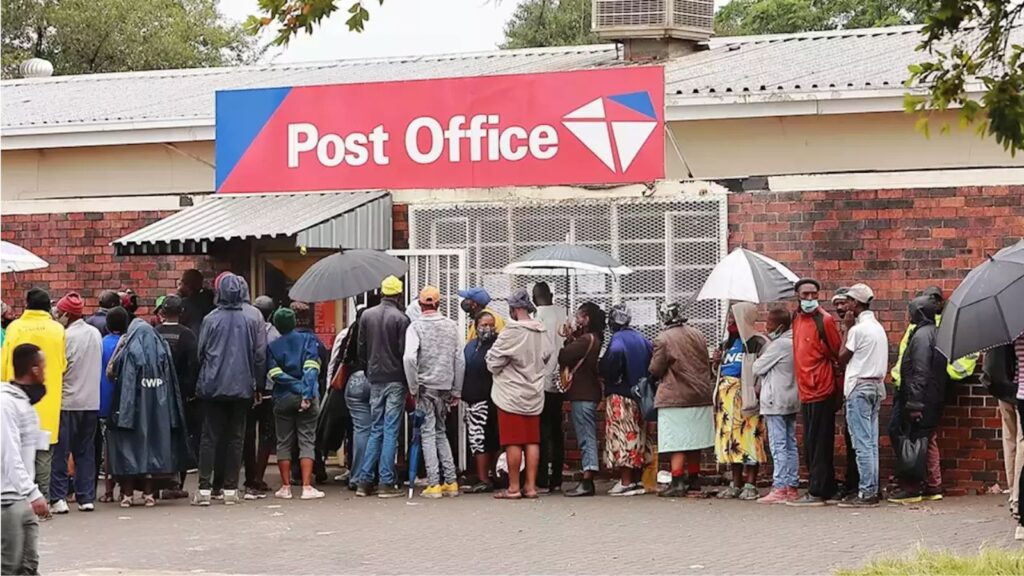
The DSD has consistently underspent its allocated budgets in previous financial years, with the shortfall increasing each year.
The department reported grant underspending of around R2.6 billion during its 2024/25 financial year, which followed another shortfall of R1.6 billion during 2023/24.
In previous years, the DSD attributed this to much of the same reasoning it used in its most recent portfolio committee meeting, such as stricter verification and payment delays.
DSD CFO Thandeka Ngcobo previously explained that the department often received a buffer from National Treasury to account for potential overspending, with unspent funds being returned to the fiscus.
The department’s financial management has also been frequently called into question, with the Auditor-General of South Africa (AGSA) giving the DSD a qualified audit opinion for 2024/25.
The AGSA’s findings centred around a gradual breakdown of internal controls and payment monitoring systems at SASSA occurring over a number of years, which the DSD failed to properly address.
This led to R15 million being paid to deceased beneficiaries during that year, as well as R30.2 million being lost due to 1,680 instances of grants being paid more than once.
Additionally, the AGSA reported that R1.7 billion in beneficiary payments could not be adequately audited because 73,464 beneficiaries did not have files attached to their records in the system.
This pattern of annual budget shortfalls and financial mismanagement at the DSD has exposed a systemic weakness in the allocation of grants.
Siyanda Baduza, a Junior Basic Income Researcher at the Institute of Economic Justice (IEJ), argued that the system has been designed to fail South Africans.
“9 million people are approved every month, but only around 7 million are being paid,” Baduza said. “2 million people are not receiving the grants they should be receiving.”
“The reason they aren’t able to update their bank accounts or verify them is because they struggle with the online-only system.”
For example, Baduza explained that the SRD grant, which accounted for the bulk of the DSD’s underspending, does not allow in-person applications and must be applied for online.
This creates significant challenges for many South Africans who may not have consistent access to cellphones, computers, or the Internet.
The IEJ previously challenged the regulations around the SRD, with the Pretoria High Court ruling in their favour that the online-only system was ultimately unconstitutional. Despite this, the system remains in place.


Comments