The government wanted to reduce unemployment from 24% to 6%. Instead, it rose to 33%.


South Africa’s National Development Plan 2030 promised to increase economic growth and significantly reduce unemployment. The inverse happened.
The South African government published its National Development Plan (NDP) 2030, which provided a roadmap for the country over the next 18 years.
Former Finance Minister and Chairperson of the National Planning Commission, Trevor Manuel, was the main person behind the plan.
He said that South Africa belongs to all its people, and that the future of the country was everyone’s collective future. “Making it work is our collective responsibility,” he said.
“The National Development Plan is a plan for the country to eliminate poverty and reduce inequality by 2030,” he said.
This, Manuel argued, would be achieved through uniting South Africans and unleashing the energies of its citizens.
He added that it would also include building an inclusive economy, strengthening state and leader capabilities, and enhancing the government’s capacity.
What followed over the next fourteen years showed the futility of a plan in the absence of competent and honest political leaders.
Instead of strengthening the state and improving the economy, the government, under his party’s leadership, went in the opposite direction.
It appointed a slew of incompetent and corrupt cadres to ministerial positions and to leadership roles in state-owned enterprises (SOEs).
These cadres greased the wheels of corruption, which ushered in the era of state capture, where the country and SOEs were stripped dry.
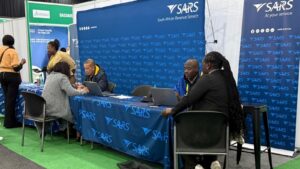
Important institutions, including the criminal justice system and the South African Revenue Service (SARS), were nearly destroyed.
These problems persist to this day, preventing the country from growing and driving many top companies and skilled professionals out of South Africa.
South Africa’s National Development Plan 2030: Promise versus Reality

The National Development Plan 2030 focused heavily on economic growth, as it forms the foundation of improving people’s lives.
The plan set a target of an average annual Gross Domestic Product (GDP) growth for South Africa of 5.4%.
It further wanted to reduce the strict unemployment rate from 24.9% in 2012 to 14% by 2020 and 6% by 2030.
The plan set targets to increase the number of people in work from 13 million in 2010 to 24 million and to raise per capita income from R50,000 to R120,000.
It also wanted to raise the level of gross fixed capital formation from 17% to 30% of GDP, with public sector investment specifically reaching 10% of GDP.
Instead of approaching these targets, South Africa has moved away from them. In all cases, the country is now much worse off than before.
Economic growth slowed from 2.4% in 2012 to approximately 1%, well below the 5.4% target set in the National Development Plan 2030.
South Africa’s latest data showed that the unemployment rate rose to 32.7%, a far cry from the 6% target and well above the 24% fourteen years ago.
The other measures, like gross fixed capital formation and GDP per capita, were equally dismal. Simply put, people’s lives in South Africa got worse.
The table below provides an overview of the targets set in the National Development Plan 2030 and the current performance.
| Metric | NDP 2030 Target | Current Performance | Target |
| GDP growth | 5.40% | 1.10% | 80% below target |
| Unemployment | 6% | 32.70% | 445% below target |
| People in work | 24 million | 16.8 million | 30% below target |
| Gross fixed capital formation | 30% | 14% | 53% below target |
No political will to change the situation
Despite the dismal performance over the last fourteen years, the government is doubling down on policies which caused the economic destruction.
Many economists said South Africa’s prolonged period of stagnant economic growth and low investment is primarily a self-inflicted crisis.
Rather than blaming external factors or unfixable structural traits, they point directly to political ideology, policy failures, and institutional collapse.
One of the biggest problems is the weakening of property rights through policies like Expropriation Without Compensation (EWC).
These policies damage investor confidence and prevent gross fixed capital formation by discouraging local and foreign investment.
Another problem is rigid Broad-Based Black Economic Empowerment (B-BBEE) mandates, which tax capital on arrival.
International companies, like Starlink, avoid the country due to BEE policies, which cost the local economy billions.
Intense labour laws further create administrative burdens and make it incredibly difficult for entrepreneurs to start businesses or hire employees.
The collapse of crucial state-owned enterprises, like Eskom and Transnet, acts as a hard ceiling on economic growth.
Structural bottlenecks, such as a failing national electricity grid and chaotic ports, raise the cost of doing business to prohibitive levels.
The government also continues to spend too much on non-productive, short-term consumption rather than long-term, growth-producing assets.
These problems are well known. However, instead of removing these barriers to growth, the government is doubling down on them.
This is why, instead of moving towards the targets laid out in the National Development Plan 2030, South Africa is moving further away from them.
South Africa’s real GDP growth

Unemployment in South Africa

South Africa’s gross fixed capital formation



Comments