A stroke of luck for South Africa’s rand


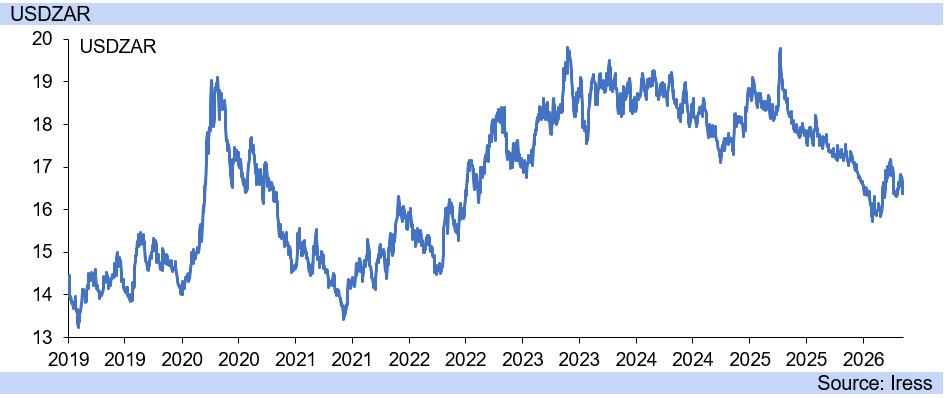
Investec chief economist Annabel Bishop said the rand has become the most volatile emerging-market currency, as the Middle East war continues to keep risk-off sentiment alive in global financial markets.
However, investors are not factoring in interest rate hikes for the United States, but expect 75 basis points worth of increases for South Africa, which has benefited the local currency.
Bishop pointed out that the rand is also at the lower end of the credit default swap (CDS) rankings, meaning it is perceived as more risky than other emerging market currencies.
However, she noted that the rand’s CDS ranking is up from late March, since financial markets have become less risk-off.
This comes amid heightened uncertainty driven by the Middle East war, with peace talks and negotiations ongoing but highly volatile and unpredictable.
“The first half of April saw an easing in tensions and in the oil price, but these flared up towards the end of April,” Bishop explained.
This is largely because the United States has not been able to reach a deal with Iran to end the war, with concerns now rising about oil and petroleum product supply.
Despite this, she said the rand has benefited from the lack of US interest rate hikes fully factored in by financial markets for this year.
In contrast, South Africa is seen to have a higher rate trajectory, which tends to support the rand. Bishop said this should allow for less depreciation for the rand as the Middle East war continues.
She previously explained that the rand has remained remarkably resilient in the face of this global shock, with the local currency having seen only a modest depreciation since the war started.
This is a sentiment also shared by Reserve Bank Governor Lesetja Kganyago, who recently heralded the fortitude of the rand and other emerging-market currencies amid the Iran war.
“The rand exchange rate has been surprisingly resilient so far,” Kganyago said. “It depreciated in March but then recovered to roughly pre-crisis levels. Many of our peers have had similar experiences,” Kganyago said.
Interest rate hikes on the horizon
While expectations of interest rate hikes in South Africa are benefiting the rand, local consumers could feel the pain should they materialise.
Bishop’s base-case scenario currently sees the repo rate cut down to 6.25% by the end of the year.
However, financial markets have priced in a 75 basis point hike for South African interest rates, which would bring the repo rate up to 7%.
BNP Paribas recently told Bloomberg that the Reserve Bank will likely raise interest rates at its next two meetings to rein in inflation.
Amid soaring fuel prices and the potential for these to filter through to food and other prices, many experts are concerned about South Africa’s inflation trajectory.
Kganyago has said the Reserve Bank’s Monetary Policy Committee will look through the first-round effects of the Middle East war and consider incoming data at its next meeting.
However, he has also warned that the committee remains steadfast in its goal to bring and keep South Africa’s inflation rate at the new 3% target, which was introduced late last year.
“That is really our most important message: although we cannot do much about higher inflation right now, we are very committed to getting inflation back to 3%, just where we had it before the shock hit,” Kganyago said.
He said the process of steering inflation to the new target will now likely take longer than the bank once thought.
This could mean higher-for-longer interest rates in South Africa, with the effect of the Middle East war on inflation still uncertain and the Reserve Bank having adopted a highly cautious stance.
Kganyago has also implied that monitoring other central banks will be crucial, noting “it is hard to sit out a global tightening cycle”.





Comments