Eskom’s preferential electricity pricing deals under the spotlight


A fierce debate has erupted over the preferential electricity pricing deals, known as Negotiated Pricing Agreements (NPAs), that Eskom has struck with major industrial users like South32’s Hillside aluminium smelter and ferrochrome producers.
The government insists that these deals are vital to protect jobs and exports, but critics argue that they lack transparency.
These deals also impose costs on other customers and ordinary consumers, contradicting the principles of a fair and competitive electricity market.
South32’s Hillside Aluminium smelter in Richards Bay is one of the largest of its kind globally, and a cornerstone of South Africa’s aluminium industry.
With no local bauxite reserves, Hillside relies on imported feedstock and vast amounts of electricity – 10.3 TWh per year, around 5.6% of Eskom’s total sales.
Under the 10-year NPA approved by NERSA in 2021, Hillside pays a discounted rate for electricity that currently amounts to around R10 billion per year.
This is less than it would pay on Eskom’s standard Megaflex tariff for mines and large industry. The effective discount over the life of the agreement is about 50%.
Eskom justifies this discount by pointing to Hillside’s role in stabilising the grid. The smelter’s operations can be interrupted briefly during supply shortfalls, providing a form of demand-side flexibility that Eskom can use instead of reserve generation.
But according to a recent and critical analysis by Meridian Economics, this function could be replicated more cheaply using 1.2 GW of two-hour battery energy storage.
Using current battery procurement prices from the IPP Office, such a solution would cost less than R3 billion per year, suggesting a net discount of R7 billion annually to Hillside.
Supporters of the NPA argue it helps preserve jobs and downstream aluminium beneficiation. Hillside employs about 1,800 workers directly and supplies 27% of its output domestically.
However, critics argue that this argument is based on false binaries that, without the NPA, the smelter would likely close, resulting in job losses.
Instead, the electricity used at Hillside could be reallocated to smaller businesses, potentially yielding broader and more resilient economic benefits.
The real question, then, is not whether Hillside provides value, but whether that value exceeds what other sectors could generate with the same power.
NERSA and the fog of regulation

The National Energy Regulator of South Africa (NERSA) approved the Hillside NPA in 2021, but the process was opaque.
The decision lacked detailed economic modelling and failed to evaluate alternatives such as battery storage.
It also did not attempt to compare Hillside’s benefits to those of alternative electricity uses.
It would further appear that no other party in South Africa has done a proper economic analysis and calculation of the real socio-economic benefits of the Hillside NPA.
Worse still, key economic inputs, such as the pricing escalation clause and aluminium price “upside” mechanisms, were based on unclear rationales.
Although the NPA was touted as free of embedded derivatives, Meridian Economics argues that a call-option structure remains embedded in the deal.
In a related development, the Cabinet has just approved a framework to extend NPAs to South Africa’s ferrochrome and alloys smelters.
These are long-time industrial electricity users struggling with soaring electricity tariffs in South Africa.
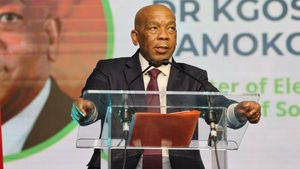
According to Energy & Electricity Minister Kgosientsho Ramokgopa, the aim is to protect energy-intensive exporters and maintain South Africa’s industrial base.
However, this raises more questions than answers: Are these deals driven by sound economic analysis and proper power planning, or by ad hoc industrial policy masquerading as regulation?
Eskom in financial distress

Eskom is in financial distress. Other customers, particularly households and SMEs, are paying ever-higher prices for less reliable power.
Load shedding, grid instability and rising tariffs have become hallmarks of the crisis and make life tough for South Africans.
Despite these issues, one of Eskom’s biggest customers pays half the price for electricity. It was kept under wraps until civil society group Open Secrets forced publication of the full Hillside NPA.
The fact that it took four years for civil society to scrutinise the deal signals how deeply broken the oversight processes are.
The principle of cross-subsidisation can be legitimate, but only when justified.
Preferential electricity pricing must be scrutinised like any public subsidy: through open modelling, public hearings, and clear metrics of cost-benefit analysis. Right now, that is not happening.
Eskom, NERSA and the Ministry of Energy & Electricity must explain why energy-intensive smelters deserve these deals.
They should also explain why other commercial, industrial, manufacturing, and mining customers, as well as ordinary consumers, should foot the bill.
Without that, NPAs risk entrenching elite privilege at the expense of national equity, economic dynamism, and the future of South Africa’s energy system.
 Loading ...



Comments