Private education giant set to thrive as government schools crumble



South Africa’s struggling public education system is creating a major opportunity for private education giant Advtech, which experts say is now well-positioned for further growth.
Advtech has become one of South Africa’s biggest private education success stories, with its share price more than tripling over the past decade as demand for quality private schooling continues to grow.
According to Coronation investment analyst Zukisa Luswazi, the company’s long-term success has been driven by years of investment in private schools and tertiary institutions.
Strong academic results and high graduate employability have further boosted the company’s appeal among investors, parents and students.
Advtech’s growth – as well as that of other JSE-listed private education providers such as STADIO – comes against a backdrop of mounting pressure on South Africa’s public education system.
Poor learning outcomes and capacity constraints are pushing more parents away from public universities and towards private education.
Luswazi said South Africa’s private education sector has remained attractive for years because the state has struggled to provide enough quality education.
“The state has been unable to invest sufficiently to meet the demand for quality education, and its execution has been inconsistent,” he said.
He added that the country’s public education challenges are well known. However, even as real government funding per student declines, universities are seeing a growing demand.
As a result, private education companies such as Advtech have been able to expand rapidly by increasing capacity and investing heavily in the quality of their offerings.
This trend has become increasingly apparent across the sector. Earlier in 2026, Statistics SA reported that private school fees increased by 7.5%, the fastest increase among all education categories.
Tuition fees for primary and secondary education rose by 6.2%, while overall education inflation reached 5.4%. Despite these rising costs, demand continues to grow.
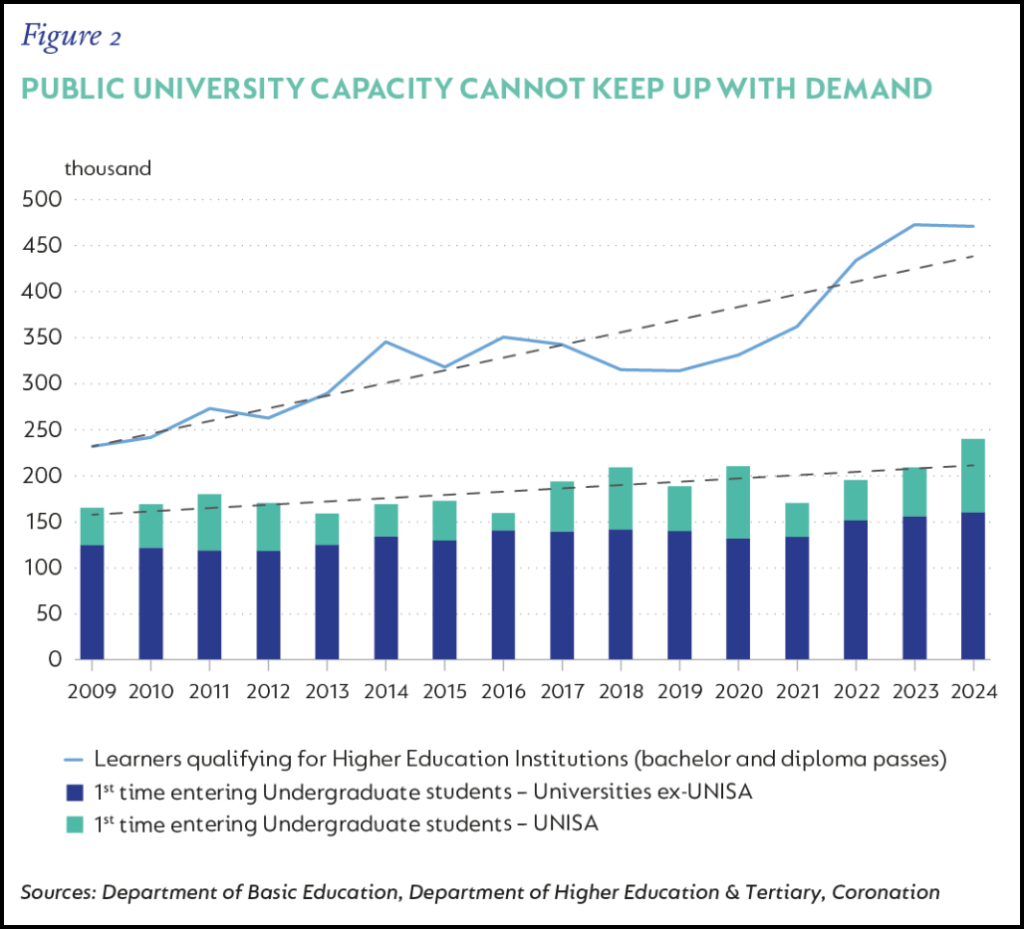
Private education giants step up as government institutions fall short
The growing demand for private education reflects the wider problems in South Africa’s public education system. Recent research has shown that more than 80% of South Africa’s Grade 4 learners cannot read for meaning.
On top of this, nearly half of the country’s secondary schools fail to produce a single learner who reaches the intermediate mathematics benchmark.
Despite government spending on basic education reaching R358.6 billion in the 2026/27 financial year, education outcomes remain among the weakest for upper-middle-income countries.
The National Treasury has also warned that improving education outcomes is essential if South Africa wants to create more jobs and reduce unemployment.
Coronation previously noted that South Africa’s failure to develop human capital has steadily reduced workforce productivity.
It also contributed to rising graduate unemployment, as many students leave university without the skills employers need.
As public institutions continue to decline in quality while becoming more expensive, major education companies have stepped up to fill the gap by expanding their campuses across the country.
Advtech recently completed two new mega campuses in Sandton and Nelson Mandela Bay and plans another in Durban, while STADIO is building its new Durbanville campus.
Other organisations, including Akademia and Curro’s new owners, are also investing billions into expanding private education.
Years of investment are finally paying off
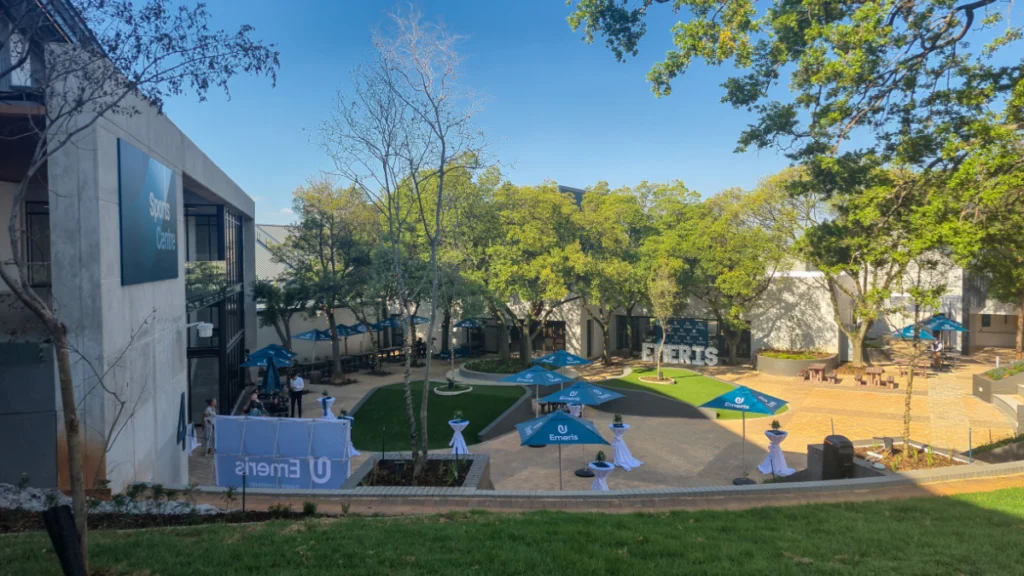
Luswazi said Advtech has spent more than a decade investing in both its schools and tertiary institutions rather than focusing on short-term profits.
The company has expanded its campuses while continuing to improve its facilities, technology, teaching capabilities, research, systems, and academic quality.
One of its biggest investments has been its Academic Centre of Excellence, which develops teaching material, research and best practices that are shared across the group’s schools and tertiary brands.
Luswazi said this creates a competitive advantage because smaller education providers cannot easily replicate such a large central academic capability.
He explained that Advtech has also deliberately kept fee increases competitive while improving the quality of its institutions.
The combination of quality education and affordability has helped the group increase student numbers and market share over the past decade.
Its private tertiary division has become one of its strongest businesses, with Advtech’s institutions now educating more than 70,000 students each year.
Luswazi noted that the company is still investing heavily enough that its current earnings understate its long-term potential.
Years of investment have also begun to yield stronger financial returns. Free cash flow has improved, while returns on equity have climbed above 20%.
These improvements come even as the company continues to expand its campuses and invest in new technology and artificial intelligence.
Although Advtech faces risks, including expansion into the rest of Africa, a weak South African economy and rising labour costs, Luswazi said these are outweighed by long-term opportunities.
He added that the market still underestimates the strength of Advtech’s competitive advantages and future growth prospects, despite the company’s performance over the past decade.
 Loading ...




Comments