Eskom risks a crisis worse than load-shedding


Eskom has entered the most treacherous phase of the transition from a monopoly to one of many players in an open, competitive electricity market.
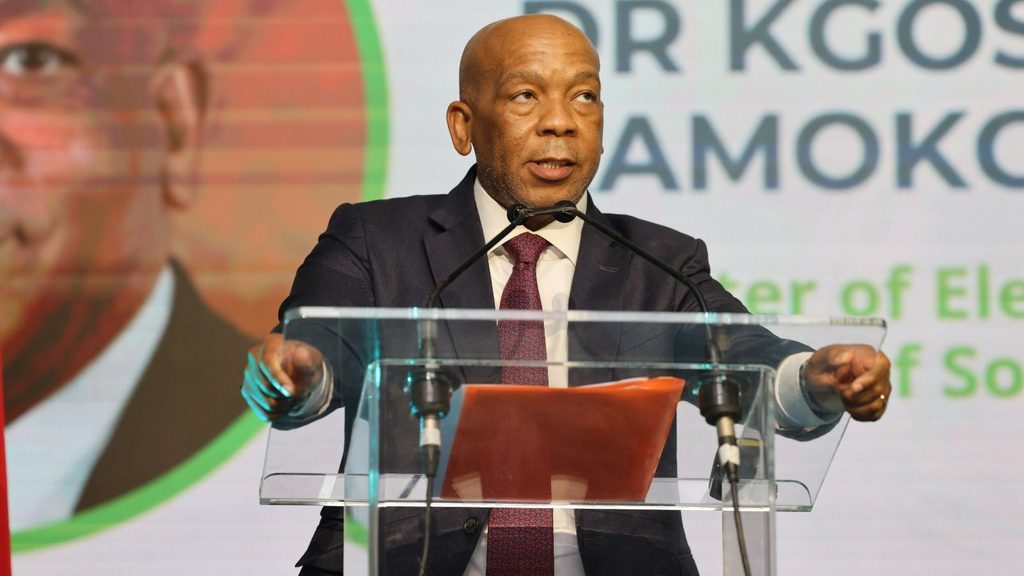
Electricity Minister Kgosientsho Ramokgopa said this phase is the most difficult challenge the utility has faced in its history.
Ramokgopa told the media that this is because the transition is not an engineering challenge where there are clear solutions.
This phase presents structural, financial, and policy risks that are far more difficult for Eskom to manage as they are not all in its control.
The load-shedding crisis, in comparison, was a highly concentrated engineering problem, which perfectly suited the engineers leading Eskom.
Load-shedding was primarily a performance issue at Eskom’s 14 power stations, with the entity able to direct resources to specific problems, people, and equipment.
“We have always known that we are dealing with rotating machines and, as engineers, never doubted our capability to resolve that,” Ramokgopa said.
“We have fought load-shedding. We have always been confident in our ability to resolve load-shedding. Now, we are dealing with something else.”
The challenges Eskom faces now are vastly different from the load-shedding issue that its management team was confident it could tackle.
Challenges ranging from finances to policy are far more difficult to solve as they are not concentrated and are not all in Eskom’s control.
The policy is set by the government, and Eskom must implement it without jeopardising its sustainability.
Financial issues include rising municipal debt, which Eskom has very little control over, as it cannot exercise credit control as a normal company does.
Eskom cannot cut off hundreds of municipalities, including major metros, to enforce payment, as this would crush South Africa’s economy.
It also cannot ‘engineer’ customers, with no control over businesses and households that invest in alternative energy sources, thereby reducing their reliance on Eskom.
“We are now entering the most treacherous phase of this transition. This is going to be the most complex and most difficult phase,” Ramokgopa said.
“If it is not managed correctly, it can undermine energy security and sovereignty. Its impact could be far more devastating than what load-shedding was.”
Managing the transition
The major threat to Eskom during this transition is one entirely of its own making: rising electricity prices that make its product unaffordable.
This is the main reason why households and businesses are investing in rooftop solar and other technologies, cutting their use of Eskom’s electricity.
As a result, a vicious cycle has been created where Eskom loses paying customers and needs to recover more revenue from a smaller base.
The only solution so far has been to raise electricity prices, making the remaining customers pay more to cover Eskom’s production costs.
This makes alternatives more economically attractive and pushes poorer South Africans to illegally connect to the grid, creating more problems for Eskom.
“We can undermine the economy. We can only re-industrialise the economy if we have sustainable, reliable, and affordable electricity,” Ramokgopa said.
The creation of a competitive electricity market will exacerbate this threat to Eskom by introducing competitors for the first time in its history.
More customers are likely to switch to alternatives, further eroding the utility’s customer base and creating a financial challenge.
“Sustaining energy security now requires structural changes in how Eskom plans generation, expands the grid, serves customers, and participates in a changing electricity market,” the minister said.
“The shareholder expects a financially sustainable Eskom that can fulfil its obligations without treating repeated fiscal support or sustained double-digit tariff increases as its business model.”
This is only made worse by rising debt owed by municipalities to Eskom, which Ramokgopa estimates will hit R450 billion by the end of the decade.
“Now that’s unsustainable. It means that Eskom will not continue to be a going concern, and it’s got implications on the cost of electricity,” Ramokgopa explained.
“That which they can’t recover on the debt side, they generally factor it into the tariff regime.”
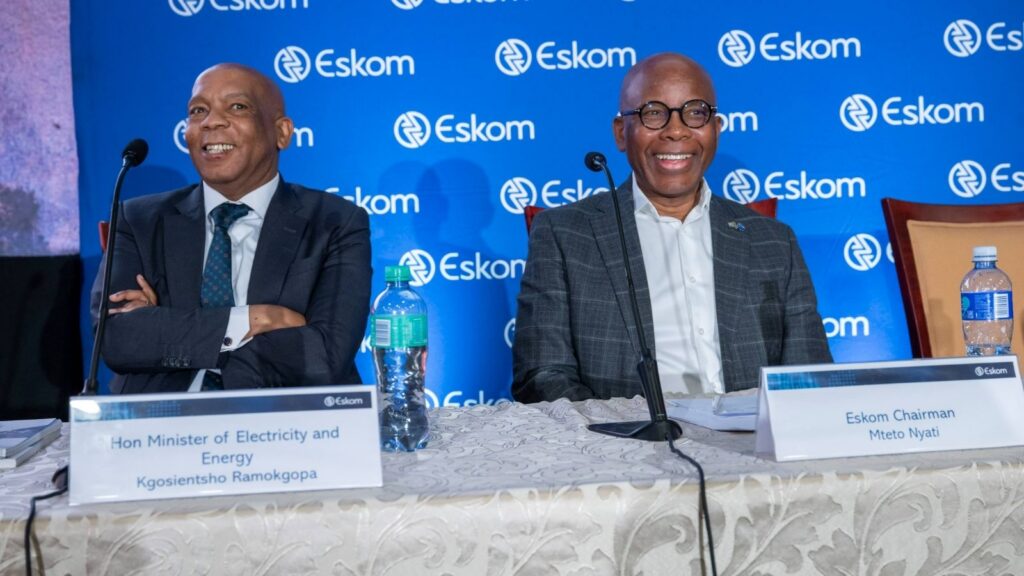
Eskom chairman Mteto Nyati said the window to address these issues is closing, with the utility working hard to bring down its cost of production.
It is also investing in a new initiative called Eskom Green to develop renewable energy plants that produce electricity at a much lower cost than coal-fired power stations.




Comments