Petrol price problem: Fuel and RAF levy increased by 99% from R3.29 per litre to R6.54 per litre


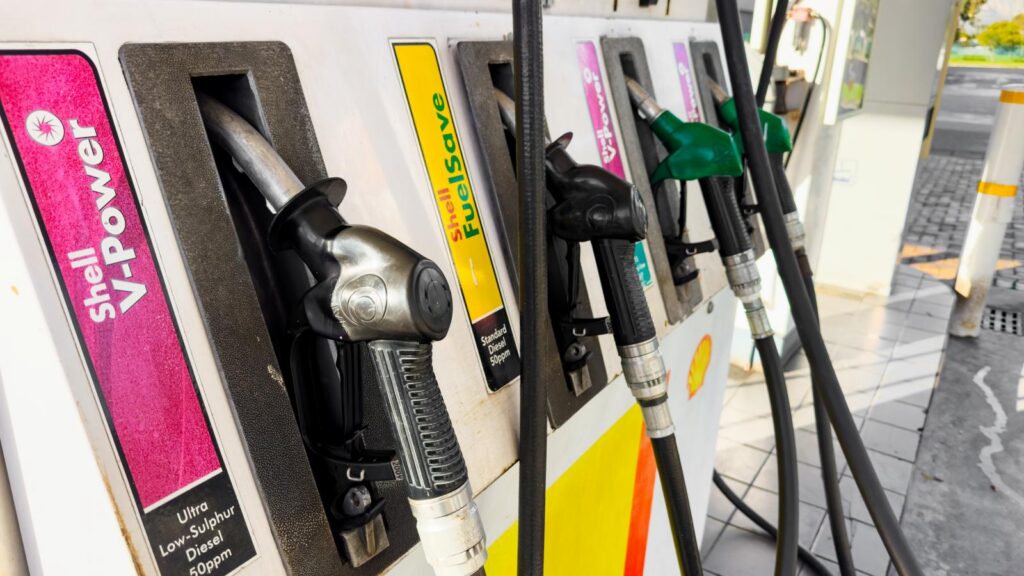
The Road Accident Fund levy and the General Fuel Levy have increased collectively from 329 cents per litre in 2015 to 654 cents per litre today.
These two fuel taxes have played a significant role in the higher petrol and diesel prices South Africans pay at the pump.
The Organisation Undoing Tax Abuse (OUTA) CEO, Wayne Duvenage, explained the impact of the higher fuel taxes.
He said that South Africans have seen sharp increases in petrol prices, which have prompted emotional reactions and renewed scrutiny of fuel levies and taxes.
He said that the combined Road Accident Fund levy and the General Fuel Levy increased by 99% since 2015.
He explained that these taxes, alongside distribution and supply chain costs, have contributed to petrol and diesel price increases.
- In 2015, the non-fuel costs amounted to just under R6 per litre before accounting for the cost of a drop of petrol.
- Today, those costs stand at R12.81 before paying for a drop of petrol.
He added that the final petrol and diesel price, after these taxes, is determined by the basic fuel price, which fluctuates with global market activity.
“Eleven years ago, that was R4.40 per litre, and it has recently shot up to R17.44 per litre,” he said.
Some consolation for South African motorists is that Finance Minister Enoch Godongwana temporarily lowered levies on petrol and diesel.
“Petrol levies were reduced by R1.50 per litre and diesel by R3 per litre from 4 November 2026, with relief continuing until 5 January 2027,” Duvenage said.
“The relief will reduce the tax component of fuel prices, although other factors will determine the final pump price.”
The organisation added that lower diesel costs could also ease pressure on transport, agriculture and food prices.
“Treasury should review the fuel levy structure to identify opportunities for sustainable relief,” Duvenage said.
The government must stop wasting taxpayer money
Duvenage said that beyond lower fuel taxes, the government should address infrastructure failures, municipal overspending, and government waste.
“While government debt has stabilised at 78.4% of GDP, Treasury has revised its economic growth forecast for 2026 downwards from 1.6% to 1.2%,” he said.
“Improved fiscal figures mean little if South Africans continue experiencing unreliable services and deteriorating infrastructure.”
He cited the National Treasury’s review of R887 billion transferred to provinces and municipalities through infrastructure conditional grants between 2018 and 2024.
This review found that projects were often delayed, incomplete, or failed to deliver their intended benefits.
“This does not mean the entire R887 billion was wasted. However, the findings raise questions about value for money and the lack of visible consequences,” he said.
“Spending the money is not the same as doing the job. Treasury must say which projects failed, how much was spent, who was responsible, and what action has been taken.”
“We cannot keep identifying these failures across South Africa without holding anyone accountable.”
OUTA called for the full review to be published, including details of underperforming projects, expenditure, reasons for failure and corrective action taken.
They will also examine the proposed amendments to the Public Finance Management Act and Municipal Finance Management Act.
“South Africa does not suffer from a shortage of laws. We suffer from a shortage of consequences when those laws are broken,” he said.
“Stronger legislation means little if officials continue wasting public money without being held accountable.”
Login or register for unlimited free access.


Conversation
8 commentsThe levies have nearly doubled, so what do we have to show for it?
R4.10 of every litre is called a fuel levy, and we’re told it’s for roads. It has never been ring-fenced. It vanishes into the National Revenue Fund, where it’s treated like the state’s petty cash box, and the roads tell the rest of the story.
Another R2.25 a litre goes to the RAF, roughly R48bn a year. Yet the fund sits on about R439bn in net liabilities and more than 422,000 open claims, most of them older than five years. It has been insolvent since 1981. That isn’t a funding problem. It’s a bucket with no bottom.
Every time the pump price climbs, we aren’t paying for better roads or for the victims still waiting. We’re paying for a system that nobody has been held accountable for. Fix the leak before asking us to pour in more.