Iconic 134-year-old company made more money selling cement in Zimbabwe than in South Africa


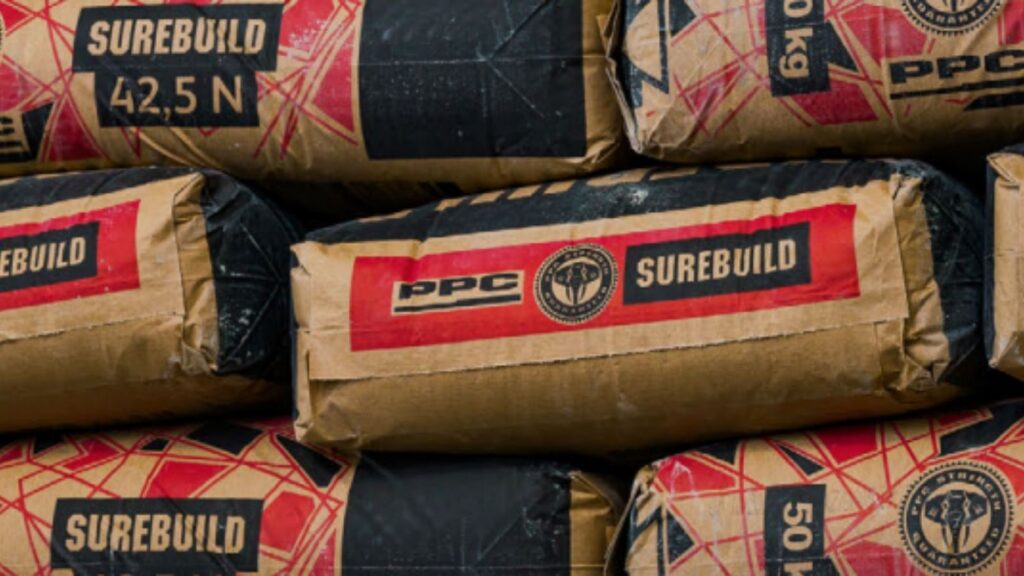
PPC reported that it generated more EBITDA in its Zimbabwean cement division than in Botswana and in its home market, South Africa, in the first half of its 2027 financial year.
In the midst of its Awaken the Giant turnaround strategy, PPC faced several headwinds in its home market, including maintenance and cost pressures.
This was revealed in PPC’s results for the six months through September 2026, released on Monday, 16 November.
The cement giant reported solid results, with revenue up 1.7% to R5.47 billion and EBITDA up 23.7% to R1.22 billion.
As a result, PPC’s EBITDA margin increased by 3.9 percentage points to 22.2%. The firm’s trading profit also grew by 31.7% to R906 million.
PPC’s earnings and headline earnings per share rose 28% to 32 cents, with pro forma HEPS up 27% to 38 cents.
The company also updated shareholders on its RK3 project in these results, saying it remains on time and on budget.
R2.21 billion has been spent on constructing this mega-plant to date, with R435 million of this total spent in the first half of the 2027 financial year.
These results also revealed an interesting facet of PPC’s earnings: it generated more EBITDA in Zimbabwe than in South Africa and Botswana combined.
PPC reports its South African and Botswana cement divisions as a combined unit, with Zimbabwe reported separately.
In the six-month period, Zimbabwe Cement generated EBITDA of R644 million for PPC, up 44.4% year-on-year, with a strong 31.5% margin.
The South African and Botswana Cement division made EBITDA of R577 million, up 1.4%, with a margin of 18.1%.
Notably, this was despite the South Africa-Botswana cement division generating 56% of the group’s revenue, at R3.19 billion.
Zimbabwe Cement generated R2.04 billion in revenue for the group, yet its sales volumes grew by 5.4% while South Africa-Botswana Cement saw its sales volumes decline by 7.9%.
PPC in South Africa versus Zimbabwe

PPC explained that it faced a depressed, weak demand environment in South Africa and Botswana.
High transport costs led to a 5.8% fall in South African volumes, while Botswana plummeted by 37.7%.
PPC also said that its competitors in South Africa engaged in aggressive price discounting to protect volumes.
PPC said it resisted chasing volumes at lower prices, preferring to keep its revenue decline of 2% shallower than its volume loss of 7.9% for the South Africa-Botswana Cement segment.
To achieve this, PPC held its cost of sales flat in South Africa at R2.63 billion, while absorbing the annual maintenance shutdown.
In contrast, the group reported that its Colleen Bawn Kiln in Zimbabwe performed well, with previous turnaround efforts yielding results.
It said higher own-clinker production enhanced this segment’s profitability, even after absorbing a planned maintenance shutdown in September and October.
The Zimbabwe segment also benefited from its debt-free position, holding R178 million in unrestricted cash by the end of September.
Looking forward, PPC said that while South African cement trading conditions are expected to remain challenging in the near term, it is confident in its ability to deliver through the cycle.
“The pressure on margins will remain as competitors continue to discount cement prices and elevated diesel prices place pressure on both distribution and production costs,” it said.
“We remain confident that the cycle will improve and that, over time, competitive dynamics will become more rational as the market prioritises sustainable returns.”
Login or register for unlimited free access.




Conversation
2 commentsPPC has a monopoly in Zimbabwe, a 50kg bag in Zimbabwe costs between US$12 to US$20 yet in South Africa, mainly because of competition, a 50kg bag is priced between US$5 to US$7