South Africa’s oldest food producer clears the air over factory closure in small Western Cape town


Premier has addressed the Competition Commission’s concerns over its decision to close a canning factory in Tulbagh, Western Cape, earlier in 2026.
This facility was previously owned by Rhodes Food Group (RFG), which Premier took full control of in March 2026 in a R5.7 billion deal.
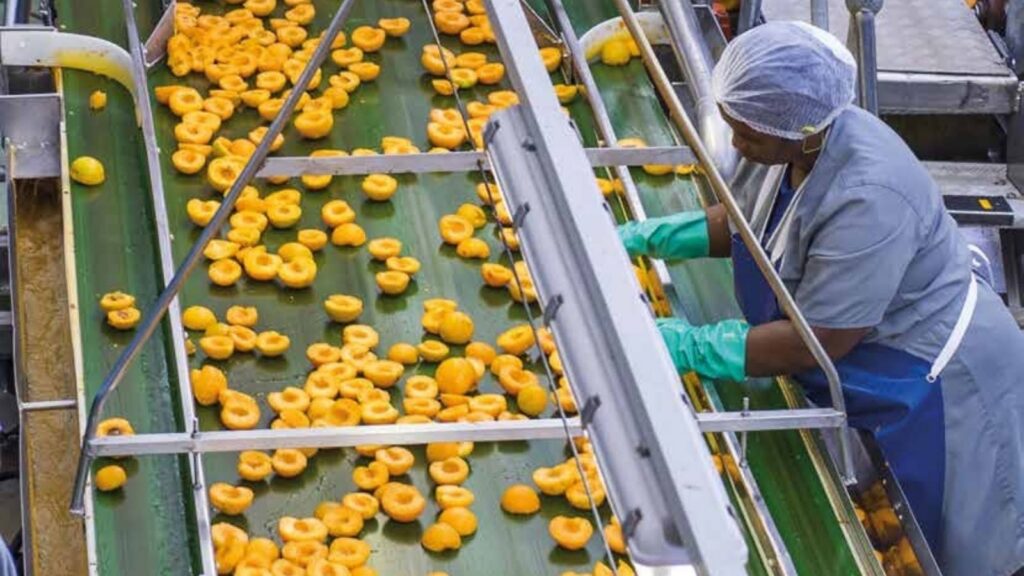
Following the merger of the two companies, Premier decided not to reopen the Fruit Processing Western Cape canning facility in Tulbagh, putting thousands of jobs at risk.
This raised concerns with the Competition Commission, as its approval of the merger was conditional on Premier not implementing any merger-related retrenchments.
However, Premier said in its results for the six months through September 2026 that its decision to close the factory was not related to the merger.
Rather, the food producer attributed its decision to an “implosion” of the global canned fruit market.
Premier explained that several factors in this market have created an unviable export environment, necessitating the factory’s closure.
Some factors include a stronger rand, a bumper Greek fruit crop, Del Monte’s bankruptcy, and aggressive market entry by Chinese producers.
Del Monte was an American food-processing and distribution company known for canned fruits, vegetables, and tomato products. It filed for bankruptcy in July 2025.
All of these factors drove Premier’s decision not to reopen the Tulbagh factory, which will impact employees at the facility, as well as the thousands of farm workers who rely on the plant.
Due to its concerns about this impact and its relation to Premier’s acquisition conditions, the Competition Commission investigated the factory closure.
It also filed an application to revoke the Competition Tribunal’s decision to approve the merger of Premier and RFG. Alternatively, the Commission is seeking to impose additional merger conditions.
“It is our view that for the Tribunal Appeal to undo the merger is not realistic,” Premier said in its results.
“Merger conditions cannot be changed post-approval, and a strong causal link needs to exist between the merger and subsequent decisions to be merger-related.”
“There was no contemplation of closure prior to the merger approval. As such, there have been no merger-related retrenchments, only voluntary separation agreements which were specifically allowed.”
To ease the impact of the factory closure on Tulbagh locals, Premier said it agreed to settlement terms to pay farmers to uproot peach orchards in the region.
It has also committed to purchasing the upcoming season’s harvest and has paid employees double the mandatory separation amounts.
Premier’s results
Premier’s results for the six months through September 2026 also showed that the food producer had a strong start to its 2027 financial year.
The group’s revenue grew by 38.8% to R14.3 billion, largely due to the inclusion of RFG for the first time post-merger.
Premier’s largest division, Millbake, saw more modest 1.3% revenue growth, due to 20% and 5% deflation in maize and wheat, respectively.
Despite this weaker growth, Premier’s operating profit increased by 52.5% to R1.7 billion, while its net profit grew 62.1% to R1.2 billion.
The group’s earnings per share grew 27.5% to 711 cents, and headline earnings rose 27.1% to 711 cents.
Premier’s cash generated from operations improved by 43.0% to R1.8 billion, enabled by growth in EBITDA and supplemented by additional earnings in its Culinary business.
RFG now operates within Premier as its Culinary business within the Grocery division.
Premier said the merger has been progressing well, with its teams working hard to integrate the two businesses.
For the six months through September 2026, Premier did not declare an interim dividend.
Login or register for unlimited free access.


Conversation
1 commentsThe job of the “Competition Commission” is not to make businesses less profitable by preventing them from making economically justifiable decisions.
Neither is it to support Unions and workers in line with the ideologies of their “masters” who make “promises for votes” while destroying the economy with their policies.
We have just seen the outcome for the ANC