The Oppenheimers got lucky


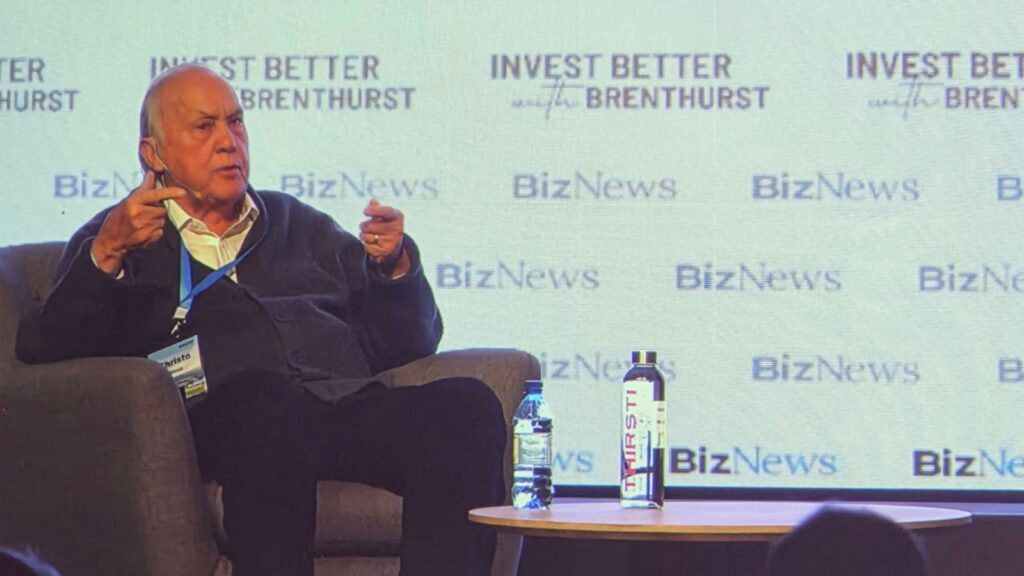
Billionaire Christo Wiese believes that luck plays an integral role in the financial success of many businesses, including his own and that of the Oppenheimer family.
Wiese explained his belief in luck while arguing that South Africa needs significantly more entrepreneurs to create the jobs the country desperately needs.
Speaking at the 9th BizNews Conference, Wiese said that a substantial part of a business’s success often comes down to luck.
Much of luck’s role centres on timing, with fortune providing the opportunity to buy or sell a business at the right time.
To illustrate this point, Wiese used the example of the Oppenheimers, who had the good fortune to effectively absorb Cecil John Rhodes’ business interests and then sell De Beers at the right time.
This does not mean that the entire success of the Oppenheimers is down to fortune, as the family is still blessed with phenomenal businessmen in Ernest and Harry.
They had the foresight and ability to absorb Rhodes’ interests and turn them into a mining behemoth that dominated the South African economy.
In this sense, fortune may provide the opportunity, but whether that opportunity is taken depends on individual skill, preparation and work.
Wiese said that many other people would have wasted the opportunities the Oppenheimers were given and would not have built the businesses they did.
“I read an article the other day that twenty years ago, De Beers was valued at $12 billion. When the Oppenheimers sold their stake in 2011, it was valued at $8 billion,” Wiese said.
“Today, they are struggling to find a buyer at less than a billion dollars. So look at the luck there. The Oppenheimers got a $5 billion cheque for their stake in De Beers just in time. That is luck.”
The Oppenheimer family, under the guidance of Nicky Oppenheimer, sold their 40% stake in De Beers to Anglo American for $5.1 billion in 2011. Today, Anglo cannot sell it for $1 billion.
In 2026 money, the Oppenheimer sale would be worth $7.73 billion (R127.98 billion). This means the family avoided a potential R111.48 billion decline in the value of their De Beers stake.
Wiese’s luck with Pep

Wiese does not discount the role of luck in his own business career, whether through his family connections to Pep or the chance to buy Shoprite when it had only eight stores.
However, Wiese said these two parts of his career, from a young lawyer to a multi-billionaire, were not when he felt the luckiest.
Instead, the retail giant pointed to Pepkor’s listing on the JSE in 1972 as the time when luck played the greatest role in his career.
“When we wanted to list Pep in 1972, it was the first listing after the 1969 stock market crash. So everybody’s eyes were on it,” Wiese said.
“Everyone was interested in what this little company built by a bunch of boys from Upington was doing by bringing a retail business to the JSE. There was great excitement.”
Wiese explained that in those days, the listing always happened on Wednesday. The particular Wednesday was chosen, and everything else was worked back from that date.
The final event before listing was on the Monday of the week of the listing, when the JSE’s committee met to finally approve a company’s IPO.
“On the Monday before our listing, I received a phone call where the JSE told me that the committee decided they were not going to list Pep,” Wiese recalled.
“This would have finished the company. The committee said our balance sheet was not strong enough and that we were going to run into cash flow problems.”
“We flew to Johannesburg immediately, together with our bankers from Trust Bank, to see the committee and explain to them how our business worked. Cash flow was not a problem.”
Wiese said they could not convince the committee, which was concerned about the impact of a failed listing on investor confidence and the market.
“They just kept telling us that our balance sheet was too weak. If there was an announcement that our listing was cancelled due to a weak balance sheet, it would have ruined us.”
However, luck came to the rescue of Wiese and Pep in the form of his banker.
“Finally, without talking to us about it, our banker stood up and looked at the chairman of the committee and said, ‘Mr Louw, what do you think the balance sheet requires to meet your standards?’”
“We were told we needed R3 million, which was a huge amount of money in 1972. Our banker just said, ‘Well, you will have a letter this afternoon stating that if the company runs out of money, my bank will underwrite the R3 million.’”
“Now, if that guy had not stood up and done that on that day, my history would have been entirely different. That is luck.”

Comments