Critical South African industry is shutting down one factory at a time


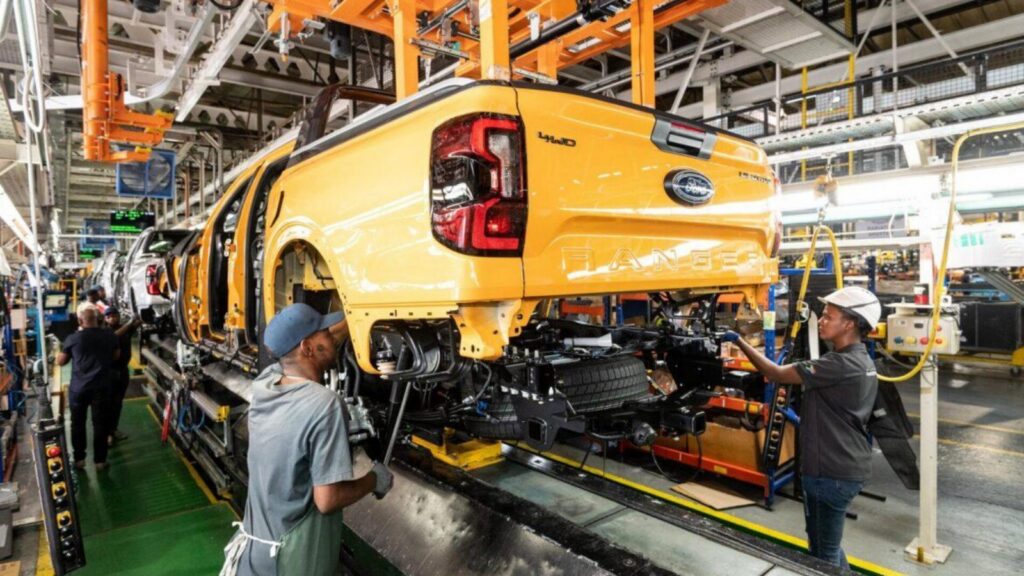
South Africa’s automotive components sector continues to see closures and job losses as local production struggles to keep pace with cheap imports.
The National Association of Automotive Component and Allied Manufacturers (NAACAM) has warned that this trend will continue unless interventions are implemented.
NAACAM represents more than 150 automotive component manufacturers, as well as 40 other associate members who provide specialised services across the sector.
In a recent webinar, NAACAM revealed that approximately 7,500 jobs had been lost across the autoparts industry within the last three years, with sector employment down to 79,800.
Over this same period, it’s estimated that around 15 businesses across the sector were forced to close their doors.
NAACAM COO Nduduzo Chala said the association had noticed a drop in sector employment, and said this was a result of the numerous challenges it currently faced.
These include rising production costs, energy and logistics challenges, global competition, skills shortages, and the country’s transition towards New Energy Vehicles (NEVs).
Chala, who is also the managing executive of the South African Tyre Manufacturers Conference, used the closure of Goodyear’s tyre plant in Kariega last year as an example, which resulted in 907 job losses.
Chala revealed that 63% of NAACAM members were considering cutting jobs over the next 12 months, or had already done so within the past two years.
He pointed to drops in production volumes from the six original equipment manufacturers (OEMs) in South Africa’s automotive sector as a major factor behind this.
“If an OEM said ‘we are going to make 100,000 vehicles’, the component manufacturers will gear up for that 100,000 vehicles,” Chala said.
“When the OEM says ‘we’ll now make 80, or 70, or 50’, there is an impact that happens. The component manufacturer says ‘I no longer require three shifts’. That is the reality we have now.”
Some of these OEMs, such as BMW and Volkswagen, have seen domestic sales decline in recent years as cheaper imported vehicles from China and India have gained popularity.
Nissan, who previously held the position as South Africa’s 7th automotive OEM, halted local production earlier this year when it sold its Rosslyn manufacturing plant to Chinese car maker Chery.
NAACAM’s policy recommendations

Chala presented several policy proposals which NAACAM believes will make domestic manufacturing more competitive against imports.
This, he said, would help to prevent further mass business closures and job losses across South Africa’s automotive component sector.
“We are currently in an Automotive Production and Development Programme (APDP) review,” Chala said. “We are having a rehaul of the incentive structure that supports the automotive base.”
“We are looking to make local manufacturers much more competitive. The support will always be for local manufacturers, and that means jobs and having a sustainable and growing industrial base supported by government.”
To this effect, Chala proposed tariff increases for both completely built units (CBUs) and complete knock-down (CKD) kits, from 25% and 20% up to 40% and 30%, respectively.
This is intended to make local CKD manufacturing more lucrative, especially with international players such as Chery looking to invest in the country’s domestic market.
Chala also suggested an increase in South Africa’s ad valorem luxury vehicle tax threshold, which he said had not been updated since it was originally put in place over 30 years ago.
Currently, all cars priced at R250,000 or more are subject to this tax, despite many of the models around this starting price being seen as more budget-friendly by modern standards.
“Our position is that this should be moved up to R500,000, so the vehicles we manufacture locally which are below that don’t attract that particular tax,” Chala said.
“It makes the cost price of the vehicle for the consumer much more affordable, because you then don’t have the added tax.”
Industry stakeholders have also called on the government to introduce policies which will promote more local content inclusion in South Africa’s automotive manufacturing.
The South African Automotive Manufacturing Plan aims to reach a minimum of 60% local content in the sector by the year 2035.
Since the plan’s introduction, however, this has remained stagnant from an OEM perspective at around 39%, while component manufacturers have raised their own local content level to 56%.
Chala recommended the introduction of additional incentives and rebates for local manufacturers and vehicle importers which meet certain local content thresholds.
 Loading ...





Comments