One South African industry lost 2,500 jobs in 18 months


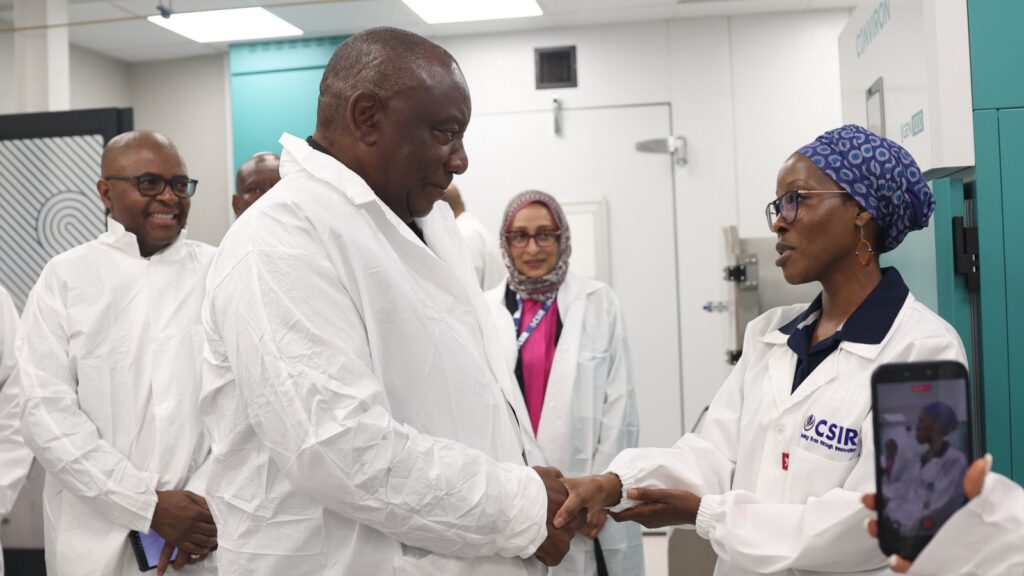
President Cyril Ramaphosa has launched a new government-business task force to address challenges facing South Africa’s pharmaceutical industry.
This comes amid increasing concerns from local pharmaceutical manufacturers around government procurement policies favouring cheap imports.
Earlier this year, Pharmaceuticals Made In South Africa (Pharmisa) revealed before Parliament that the sector had shed more than 2,500 jobs in the span of just 18 months.
Analysis from Pharmisa showed that the Department of Health awarded just 28% of the value of its 2025 AIDS drug tender to local manufacturers, down from 72% in 2008.
Meanwhile, local firms saw their value share of the pill and capsule tenders decrease from 56% in 2014 to just 18% in 2026.
In an interview with 702, Pharmisa chairperson Stavros Nicolau said the pharmaceutical sector presented a severely underutilised opportunity for industrialisation in South Africa.
“There are not too many sectors that I think we can industrialise and turn into globally competitive sectors,” Nicolau said.
“Africa has the most disproportionate disease burden, and per capita, it consumes a disproportionate amount of pharmaceuticals.”
Nicolau said all countries should look at the best value-for-money deals when they procure vaccines and other pharmaceutical products.
However, he argued that this does not necessarily mean the cheapest, but what would create the greatest economic value for both the fiscus and the country at large.
To illustrate his point, Stavros used the example of an anti-retroviral product which costs R9 to import and R10 to produce locally.
“If you’re buying a million units, we might say it’s a good procurement decision to buy the R9 product because you’re saving yourself a million rand,” Stavros said.
“However, if you are losing R3 out of that R10 by not manufacturing locally and getting the multiplier economic impact into the economy, you’re actually R2 million worse off.”
He also stressed that manufacturing pharmaceutical products locally was not always more expensive than importing these products.
The establishment of the task force comes shortly after the launch of the Council for Scientific and Industrial Research’s FuturePharma facility.
This facility is intended to advance pharmaceutical innovation and strengthen local manufacturing in response to growing imports.
Protecting the local industry

The president has instructed the new pharmaceutical task force to prioritise four key issues affecting local pharmaceutical manufacturers.
The first of these is the regulatory framework governing medicine prices in the private sector, which are determined through the single-exit price (SEP).
SEP increases are typically made once per year in January following an annual review, with the annual increase for 2026 being set at 1.47%.
Stavros described this increase as “wholly inadequate”, with inflation at that time sitting at 3.3%. This resulted in some manufacturers being unable to supply medicines.
An application was made by Pharmisa to the Department of Health to grant a second price adjustment, which the Department agreed to in response to rising domestic pricing pressures.
The additional 2.88% increase came into effect from 1 October 2026. While this has provided some relief, Stavros noted that it was still below inflation.
The second area of focus for the new task team is preferential procurement of local pharmaceuticals, which has been a repeated point of criticism against the Health Department.
In August, Pharmisa told Parliament that the Department had consistently awarded tenders to contracts offering cheap imports, such as those from India.
The Department defended this as being in response to stringent regulatory requirements, and accused Pharmisa of misleading MPs with regard to job losses in the sector.
“South Africa does not benefit from sensationalism or the selective use of procurement data to create the impression that public procurement has failed,” the Department said at the time.
“A reduction in the value of some of the contracts awarded to manufacturers is not, on its own, evidence that government policy has failed.”
The third area the task force will focus on is regulatory matters falling under the jurisdiction of the South African Health Products Regulatory Authority.
This includes measures to make doing business in South Africa more accessible and to strengthen the country’s global competitiveness.
Finally, the task force will look at improving the use of data to support evidence-based policy adjustment and decision-making within the pharmaceutical sector.






Comments