New BEE tax for South African businesses proposed


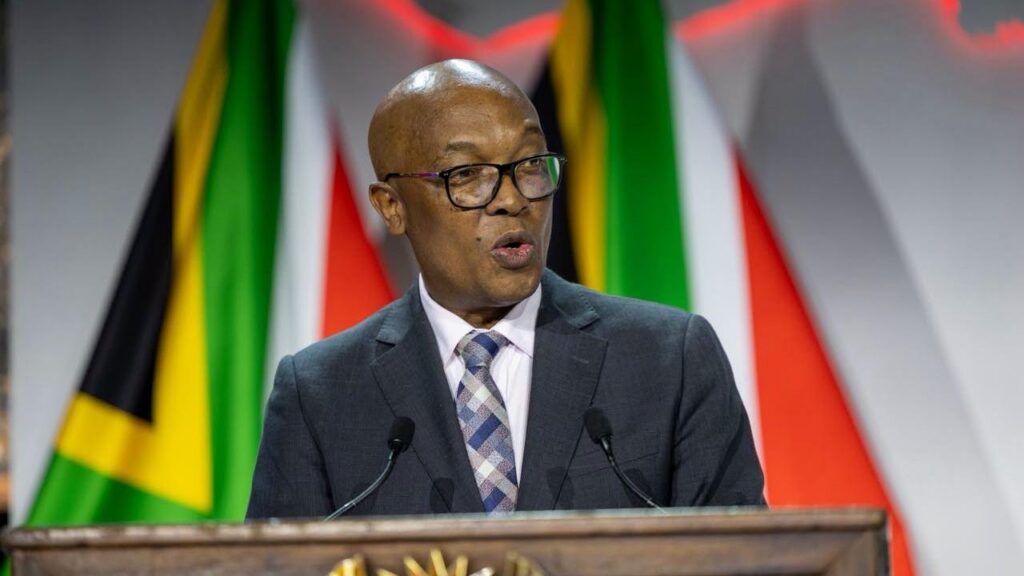
Former Reserve Bank Deputy Governor Kuben Naidoo has backed entrepreneur Alan Knott-Craig’s proposal for a new tax or voluntary levy to fund black economic empowerment (BEE).
Last year, Knott-Craig, who founded Herotel and Fibretime, submitted a new BEE plan to South Africa’s Minister of Trade and Industry, Parks Tau.
His proposal is for companies to pay a 3% levy on revenue, which, in turn, will provide them with a Level 3 B-BBEE certificate.
He prefers revenue over profit because it’s harder to manipulate. “Profit can be reduced through accounting choices,” Knott-Craig said.
“A 3% levy will raise R40 billion a year, or R120 billion over three years. For a company with a 20% margin, the burden is similar to current B-BBEE compliance costs.”
This money will flow into the Transformation Fund, which President Cyril Ramaphosa promoted during his 2025 State of the Nation Address.
“The government will set up a transformation fund worth R20 billion a year over the next five years to fund black-owned and small business enterprises,” he said.
“It will ensure businesses owned by women, youth and persons with disabilities receive equitable opportunities in government contracts.”
Last month, Ramaphosa said that transformation remains a key pillar of the government’s economic programme.
The President said the government will continue to use all available policy levers to deconcentrate ownership.
This includes competition laws, BEE legislation, sector codes, preferential procurement, and the state’s Master Plans.
“There is both a constitutional and economic imperative to correct the skewed patterns of ownership, control, and participation in the economy,” Ramaphosa said.
He explained that one of the more recent government interventions is the establishment of the Transformation Fund.
The R100 billion Transformation Fund
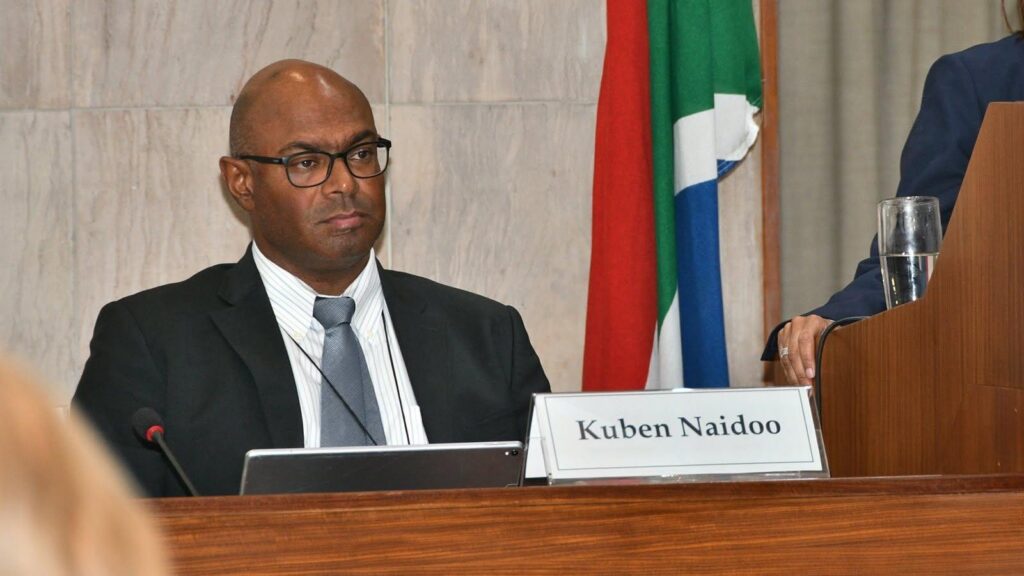
Trade Minister Parks Tau said the Transformation Fund will be an independent entity run through partnerships with public- and private-sector stakeholders.
The fund will partner with financial institutions to develop a digital portal for real-time investment monitoring.
The system will also monitor job creation and impact metrics, supporting data-driven decision-making and transparency.
“The Transformation Fund is structured to reduce over-reliance on credit for black MSMEs by adopting a blended finance approach,” Tau said.
Kuben Naidoo, a member of the presidential economic advisory council and a former Reserve Bank Deputy Governor, has weighed in on the matter.
Naidoo, who now serves as Head of Corporate Payments at Investec South Africa, proposed a voluntary 5% corporate tax surcharge as a BEE replacement.
Business Day reported that Naidoo’s plan is for companies to increase their corporate income tax by 5% to raise approximately R5 billion annually.
He said that companies that regularly pay this surcharge will have no other black economic empowerment requirements.
The money, Naidoo said, should be split between financing state-owned finance institutions and South African banks.
The banks will commit to lending the money to black-owned businesses and those operating in townships and rural areas.
The beginning of the end of BEE as we know it in South Africa

Efficient Group Chief Economist Dawie Roodt previously said President Ramaphosa’s 2026 State of the Nation Address signalled the beginning of the end for BEE.
In his speech, Ramaphosa said they are undertaking a review to refine, realign, and strengthen the Broad-Based Black Economic Empowerment (BEE) framework.
This, the President said, was aimed at ensuring that the BEE framework supports greater transformation and inclusive growth.
Roodt said that Ramaphosa’s latest comments and the new Transformation Fund signal the end of BEE as we know it in South Africa.
He said that South Africa’s economy hasn’t been growing due to incompetence, corruption, and the government’s wrong macroeconomic policies.
One of the most damaging policies is the Broad-Based Black Economic Empowerment (BEE), which costs the economy billions of rands each year.
A 2025 study by the Free Market Foundation and the Solidarity Research Institute showed that BEE costs the country between R145 billion and R290 billion per year.
Roodt disputed Ramaphosa’s claim of huge investments and foreign direct investments in mines and factories in South Africa.
“That’s simply untrue. We have very low levels of investment in the country because of a weak government and wrong policies, like BEE,” he said.
Many companies avoid investing in South Africa because of BEE, which is essentially a tax on capital coming into the country.
Roodt said Ramaphosa’s comments in his 2026 State of the Nation Address showed that BEE will likely be redefined.
“It is probably the beginning of the end of BEE,” he said. “The Transformation Fund is probably going to replace BEE, as we know it.”




Comments