The masterminds behind BEE in South Africa who created it for one of the country’s most powerful businesses


Renowned political economist Moeletsi Mbeki said the National Party, through the insurance company Sanlam, created black economic empowerment (BEE).
Mbeki shared this information during an interview with the Help Us Understand podcast by the GIBS Business School.
During this interview, Mbeki explored the historical, political, and economic forces shaping South Africa today.
One of the topics which Mbeki focused on was black economic empowerment and its impact on the South African economy.
“Many people think the ANC started BEE, but it was actually the National Party. The first instrument they used was Sanlam, the insurance company,” he said.
“When the National Party realised it was going to lose power, it wanted to create a weakened democratic state to protect its own assets.”
“To do this, they gave shares in a company called Metropolitan Life, which was part of Sanlam, to the leaders of the resistance in South Africa.”
He explained that the resistance struggle was multi-racial, made up of African, Coloured, Indian, and White citizens.
“Yet, Sanlam and the National Party gave shares and money exclusively to Africans. I could easily give you the list of names of the people who received them,” he said.
“It weakened the multi-racial coalition. It divided them because it excluded Coloureds, Whites, and Indians.”
“Consequently, those excluded groups felt aggrieved and stopped supporting the new governing party.”
He argued that this was why the Democratic Alliance (DA) secured the votes of the Coloured and Indian communities.
“That is how Black Economic Empowerment started, and that was its original purpose,” Mbeki said in the interview.
The mastermind behind BEE in South Africa

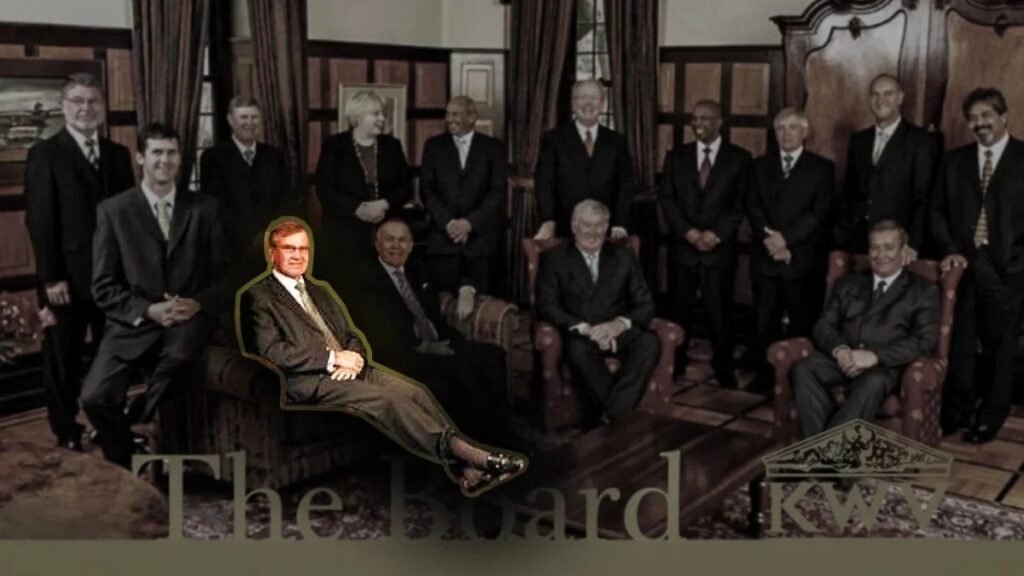
Attie du Plessis, a former executive director at Sanlam, was the mastermind behind Black Economic Empowerment (BEE) in South Africa.
Attie du Plessis was the brother of Barend du Plessis, a former National Party member who served as Minister of Finance from 1984 to 1992.
During the tumultuous 1980s, Du Plessis was one of the Sanlam leaders directly involved in talks with black leaders in exile in the eighties.
The first meeting was in Dakar, Senegal, in 1987. It soon became apparent that the ANC leadership wanted to talk specifically to Afrikaner business leaders.
Marinus Daling and Du Plessis were the two executives from the Sanlam and Sankorp stable who assisted in the talks.
These talks facilitated communication between leaders inside and outside South Africa, leading to peaceful negotiations and democratic elections.
However, there was a challenge to companies like Sanlam, which had close ties to the South African government.
They would lose their government ties after the ANC took power, and they were also concerned about the country’s political and economic stability.
Sanlam executives felt that helping black people share in the ownership of the mainstream economy would serve their and the country’s aspirations.
The company tasked with testing this black ownership strategy, Sankorp, was a management powerhouse established by Sanlam in 1985.
Du Plessis, an executive director at Sanlam’s Sankorp, structured a deal to create black ownership in one of its subsidiaries, Metropolitan Life.
In May 1993, Sanlam announced that Sankorp would sell a block of its Metropolitan Life interest to the black-led consortium, Corporate Africa.
A holding company of Metropolitan Life, Methold, was jointly formed with Sankorp and issued shares. The shares were only available to black buyers.
The transaction was concluded in August 1994, and the holding company, Methold, was renamed New Africa Investments Limited (NAIL).
The National Party must be turning in its grave

Mbeki said that Black Economic Empowerment has morphed into a destructive policy, enriching a small group of elite at the cost of millions.
“I think even the National Party must be turning in its grave, shocked by what black economic empowerment has become,” he said.
“BEE has become a virus inside the body politic of South Africa. It benefits the African elite to the absolute exclusion of everyone else.”
Mbeki explained that BEE has also become one of the main drivers of corruption in South Africa, as seen by the Tembisa hospital scandal.
“Now, they are the ones passing the laws that benefit themselves because they have the numbers,” he said.
“Remember, 80% of South Africa’s population is African, and up to now, it has been led by the African middle class. So, they have been passing laws that benefit themselves.”
He said a prominent aspect of this law is fronting, where you set up a front company for a white-owned business to pose as a black-owned company.
“That is what Black Economic Empowerment has become. It has turned into a virus in the body politic of South Africa, driving all sorts of negative processes.”





Comments