Absa snaps up Standard Bank exec for top job


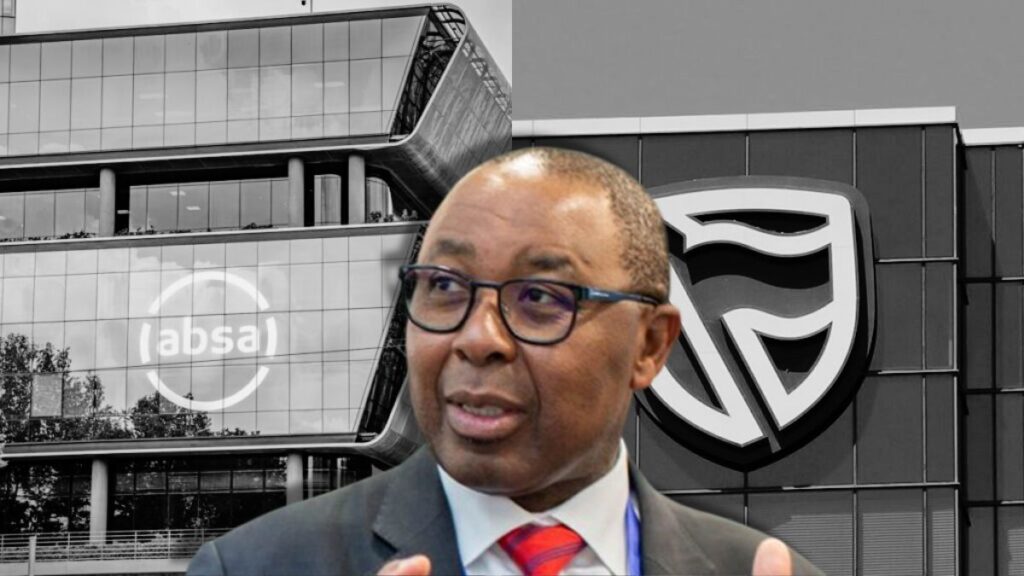
Absa has selected Kenny Fihla as its new CEO, who previously served as Standard Bank’s deputy CEO.
Absa informed shareholders on Monday, 17 March, that, following an extensive selection process, Fihla has been appointed as CEO and executive director of Absa Group and Absa Bank, effective 17 June 2025.
This came after Standard Bank announced earlier this morning that Fihla had resigned from his position at the bank with immediate effect.
“After 18 years of service to the Standard Bank Group, Kenny Fihla, the Group’s Deputy Chief Executive and Chief Executive of SBSA, tendered his resignation last night,” CEO Sim Tshabalala said.
“Whilst this is a heavy blow for us, the Group is blessed with a surfeit of talent and deep succession pools.”
Absa explained in its announcement that Kenny is a recognised leader with substantial Pan-African banking experience and a proven track record.
He has almost 20 years of experience in leadership roles in banking.
He joined Standard Bank in 2006 and has held numerous senior roles, including CEO of Corporate & Investment Banking, deputy CEO of Standard Bank and CEO of Standard Bank South Africa.
As deputy CEO, he was the accountable executive for Standard Bank’s subsidiaries outside of South Africa.
Fihla holds an MSc in Financial Economics from the University of London and an MBA from the University of the Witwatersrand.
Fihla will replace Charles Russon, who has been serving as Absa’s interim CEO since the resignation of Arrie Rautenbach in August 2024.
“Charles will partner closely with Kenny to ensure a smooth leadership transition, whereafter he will take a key senior role within the Group Executive Committee,” the bank said.
Fihla will be Absa’s seventh CEO in seven years, as the company has struggled with leadership instability for nearly a decade.
One of Absa’s longest-serving CEOs, Maria Ramos, was at the helm for 10 years.
However, after her departure in 2019, the top position at Absa became a revolving door – the CEOs that followed her all served terms of less than three years.
At the time of Rautenbach’s resignation, former Financial Times writer and financial journalist Rob Rose said Absa could not afford another crisis at the top.
However, that is exactly what has happened. “It sheds the light on how unstable Absa has been for the last few years,” Rose told SABC News.
A similar situation has been noted at embattled institutions like Eskom, which has had 14 CEOs, interim CEOs and acting CEOs in just 16 years.
Commenting on Eskom’s revolving door, Efficient Group chief economist Dawie Roodt previously said frequent CEO turnover could be “hugely disruptive” to an organisation.
“You cannot run a company – any company – if you have a new CEO all the time,” he said.
A CEO does more in a company than give direction. A CEO is also a team leader who is supposed to take his team with him.
Without a CEO, a company will lose direction, and everyone on the team will become rudderless.
This has been reflected in Absa’s financial performance over the past few years, as the bank has consistently underperformed compared to its peers in the so-called ‘Big Four’ banks.




Comments