Capitec shared details about ‘guerrilla warfare’ tactic



Former Capitec CEO Gerrie Fourie said the bank had to resort to “guerrilla warfare” tactics to win the market and take on the incumbents.
He explained that Capitec expanded from the outside in, targeting rural areas before it moved into cities where traditional banks were dominant.
Today, Capitec is the largest bank in South Africa by customer count, boasting 26.6 million active clients.
Fourie explained how Capitec reached this point and became a challenger to the traditional banks in an interview with Peregrine Capital.
When Capitec was founded in 2001, South Africa’s banking industry was dominated by a handful of large players, collectively known as the ‘Big Four’.
The Big Four consisted of Absa, Standard Bank, FNB, and Nedbank (formerly Nedcor).
Fourie explained that when Capitec launched, these incumbents misread it as a microlender, as the bank targeted lower-income and underserved markets.
This misreading allowed Capitec to establish its base beneath the Big Four’s radar, steadily building a strong customer base that the incumbents overlooked.
From the outset, Capitec’s aim has been to serve 95% to 96% of all South Africans, and it started by targeting the clients who had been ignored by traditional banks.
However, to attract these customers, Capitec had to resort to what Fourie described as “guerrilla warfare” tactics, where the bank’s representatives would go into these communities on foot.
Fourie recalled going to the Transkei in Capitec’s early days, spending three to four days to learn which banking products were already available.
He came back from this trip and told Capitec co-founder Riaan Stassen that there was only one offering available: Meeg Bank, which was minority-owned by Absa.
Fourie said Meeg had between five and eight branches in the Transkei at that time, which Capitec saw as a substantial opportunity.
“We immediately said, ‘Yeah, we need to do something’, and we opened 20 branches in Transkei,” he said.
“So, we came from the outside in: first rural areas and then city and urban areas. The vision was very clear. The strategy was how we had to manoeuvre to get to our objectives.”
Capitec’s growth
Fourie explained that since Capitec’s founders and early leaders spent years working in the liquor industry, they expected it to take years for the bank to gain momentum.
“When we started building the brand, we always said it would take us 12 years, because that’s how long it took whiskey and brandy and whatever to build a brand,” he said.
This projection rang true: It took between 11 and 12 years for people to really understand the Capitec brand.
In 2008, Capitec had grown to 2 million clients, which was still smaller than the bases of many incumbents. By 2013, it had 5.4 million clients.
Capitec had succeeded in locking down the rural, unbanked market and began stepping up its marketing aggressively in 2007.
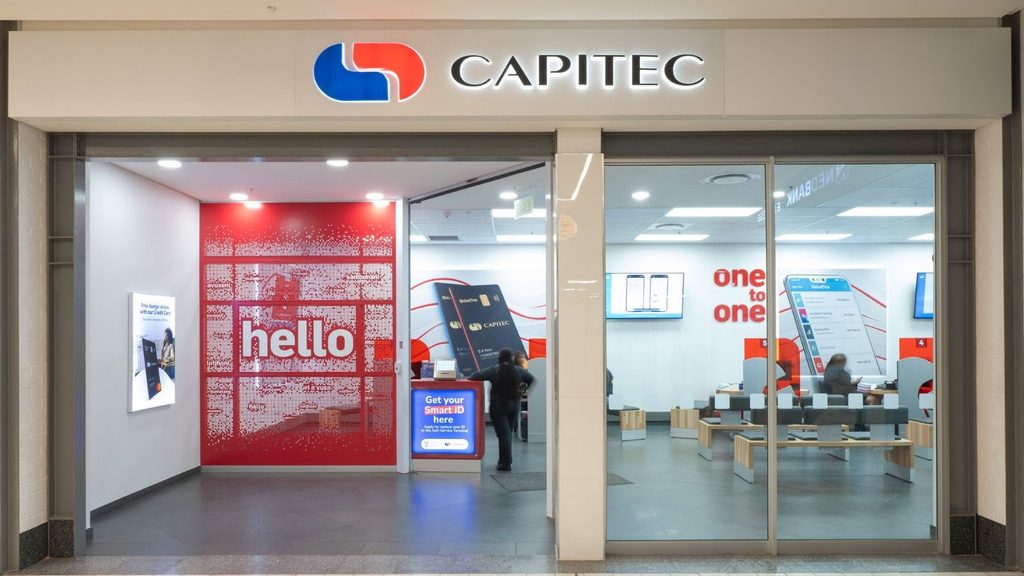
The bank opened retail-style branches in busy shopping malls and introduced a simplified, low-fee structure that disrupted the Big Four’s setup. In 2009, it boasted 371 branches.
After the 2008 Global Financial Crisis, Capitec’s simplified approach resonated with even more customers, and its client base skyrocketed.
During this time, Capitec continued its “guerrilla warfare” tactics of going into the areas it wanted to expand into in person.
“There’s not a town in South Africa that I haven’t walked A to Z. I know where the taxi rank is, I know where Shoprite is and where Pick n Pay is,” he said. “I think I’ve opened up the first 650 branches.”
“We see our branches as critical for selling,” he said, explaining that physical branches have and always will play a crucial role in Capitec’s ecosystem.
“It’s because our 10,000 consultants are from the community, they sell into the community, and our branches are really now an extremely important selling tool.”
Today, Capitec has 885 branches across South Africa, the largest branch network of any retail bank in the country.
Login or register for unlimited free access.