Bank Zero founders did not pay themselves a salary for a decade


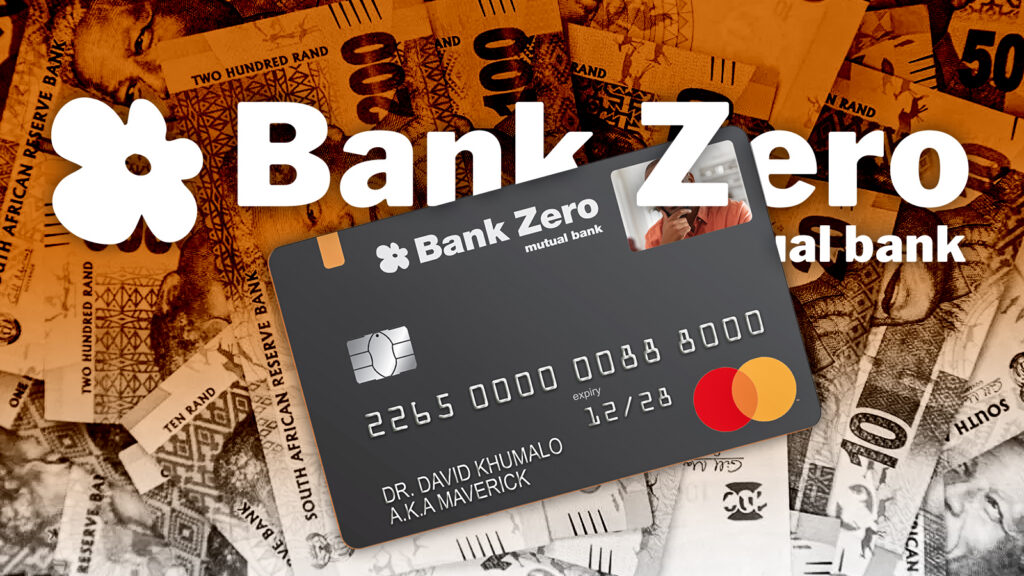
Bank Zero’s founders chose not to pay themselves upfront for nearly a decade until the bank broke even.
This decision gave the business a much longer runway, helping it avoid higher upfront costs during its start-up phase.
The success of this decision was recently revealed when Bank Zero announced that it reached the critical break-even target faster than some of its competitors.
In an interview with Daily Investor following this announcement, Bank Zero co-founder and chairperson Michael Jordaan explained how the company reached this milestone.
Bank Zero was launched to the public in October 2021 with a unique proposition: a bank account with no monthly subscription fee and lower transaction costs than conventional accounts.
The model’s singularity posed a challenge from the jump: since it had never been done before, it was unclear whether it could be profitable.
At the same time, Bank Zero also had to contend with something its other digital banking competitors, TymeBank (now GoTyme) and Discovery Bank, did not: no institutional backing.
Until they reached break-even, GoTyme was backed by billionaire Patrice Motsepe’s African Rainbow Capital, while Discovery Bank had the eponymous insurance giant’s backing.
Both of these competitors have now turned profitable. TymeBank achieved the break-even milestone in four years and 10 months after launch.
Discovery Bank took seven years to reach this milestone, having launched in 2019 and achieving its maiden operating profit in the year through June 2026.
It was initially projected that Bank Zero would reach break-even status within two years after launch, as its founders expected the company to benefit from fewer customers and less risk.
While this original deadline did not pan out, Bank Zero now also finds itself among the profitable banks, having achieved break-even in 4 years and 10 months, the same amount of time as GoTyme.
This proved that Bank Zero’s model can be and is profitable.
Bank Zero’s founders

Jordaan said five of the founding investors, Yatin Narsai, Liné Wiid, Lezanne Human, Mo Hassem, and Jay Prag, worked long, hard hours to get the bank off the ground.
They also made an important decision from the get-go: They would not pay themselves until the bank broke even.
Jordaan explained that start-ups are more likely to be successful if they have a “long runway”.
Essentially, if a start-up has enough cash to keep operating for a long time before it runs out of money and needs new funding, it is far more likely to succeed.
By choosing not to take initial salaries, Bank Zero’s founders established a lean, frugal operating model that kept the business’s burn rate low.
“The way to get a longer runway is to not be very expensive upfront. So, it’s a frugal startup, this one, and that’s definitely part of the success factor,” Jordaan said.
“This is why break-even is important, because now it can scale and it can scale inexpensively and scale beautifully. You built a truck, and now you just have to load the truck.”
He explained that the bank’s frugality since launch will now serve it well as it seeks to scale and attract more customers.
By keeping its costs low and not being beholden to legacy pricing, Bank Zero can offer its customers more benefits through lower prices.
Now, the bank is well-positioned to accelerate its profitability and scale faster than some competitors.
Bank Zero will soon also have the advantage that many of its competitors have: institutional backing.
JSE-listed fintech Lesaka is in the process of acquiring Bank Zero in a deal worth R1.1 billion.
This partnership will give Bank Zero access to Lesaka’s 2 million retail customers and 125,000 business customers essentially overnight.




Comments