The only time Adrian Gore woke up in a cold sweat while building Discovery


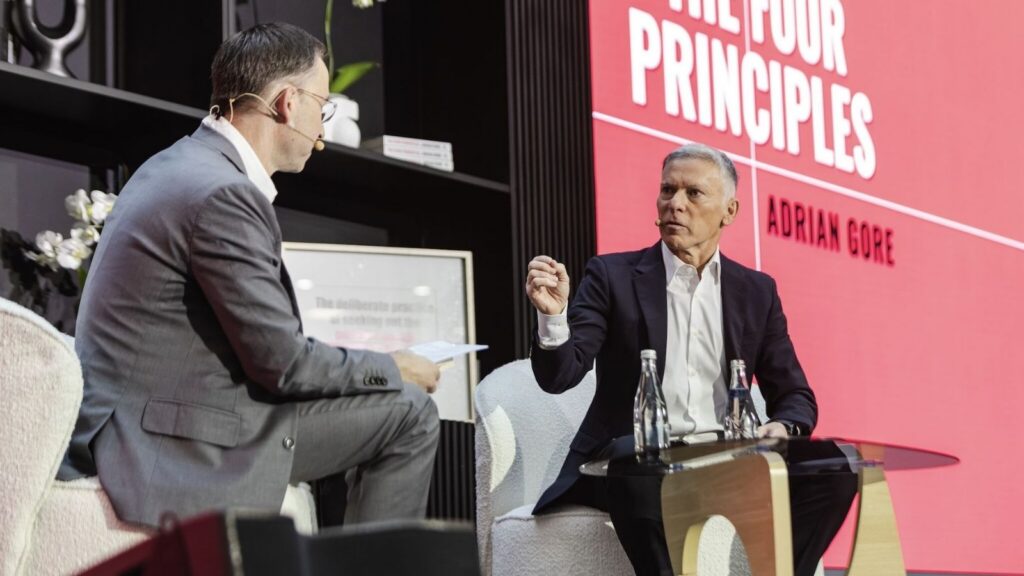
In the 34 years spent building Discovery, the only time Adrian Gore woke up in cold sweats was before the launch of Discovery Bank.
Gore was concerned that the bank would be unable to attract customers and fail to reach the critical mass required for success.
This had happened before at Discovery, in its attempt to enter the United States health insurance market in the early 2000s through Destiny Health.
In his book The Four Principles, Gore recalled how Discovery decided to launch Destiny Health in the United States in the early 2000s and how he had flashbacks when Discovery Bank was launched.
The main reason why Destiny Health failed was its inability to gain market share and customers to make the insurance model profitable.
Competition in the United States was fierce at the time, and Discovery set its price slightly wrong, resulting in minimal demand for the product.
This was the case in South Africa’s banking sector, which is highly sophisticated and competitive, with management teams among the best in the world.
Dominated by the Big Four of Absa, Standard Bank, Nedbank, and FirstRand (FNB), there was little space for a new retail bank.
The rise of Capitec had taken further space away from new competitors and ensured that whichever bank launched next could not just be a bank – it had to offer something different, Gore said.
Discovery was set to launch in 2019 with only a credit card and was positioned as the world’s first behavioural bank.
The insurer’s Vitality shared-value model would be extended to banking, encouraging individuals to engage in better financial behaviour as it does with physical behaviour.
Born out of FirstRand’s existing Discovery Credit Card business, the bank would start with a customer base of 250,000.
It would also naturally be able to tap into Discovery’s staff and clients who have medical aid products or insurance with the group.
Gore explained the bank’s success would come down to the brutal fundamental of getting enough customers to sign up.
“During my long journey in building Discovery, there was only one night that I woke up in a cold sweat, and it was around this issue,” Gore said.
“I was deeply concerned about the sheer number of new clients we’d need to bring in each week to stay on track – and alarmed by how far behind we were falling.”
The cold sweats
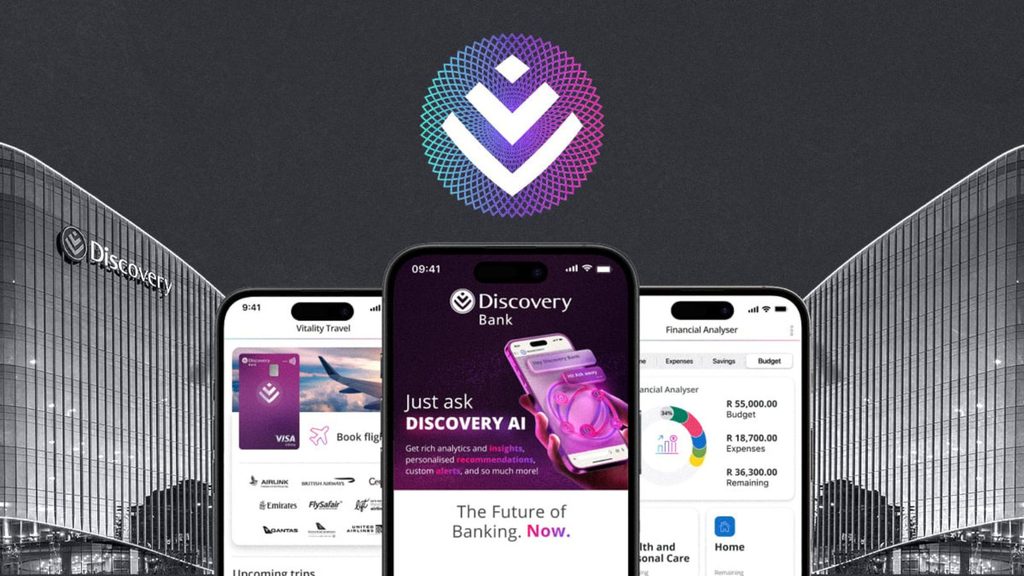
It was not immediately obvious that Discovery Bank would be successful, with it hitting a major stumbling block less than a year after launch.
The bank funding the transfer of the credit card business from FirstRand to Discovery Bank had pulled out of the deal, citing Covid-19 as the reason.
Discovery forecast that it would need to invest R15 billion in the bank to build it all in-house, and after losing one line of credit, things were on edge.
Gore said the company was committed to taking a no-shortcut approach. A full-service digital bank would be built in-house, with the shared-value model baked in.
Discovery Bank CEO Hylton Kallner often refers to the zero-compromise approach the bank takes when developing new products. It does not tolerate anything but the best.
“At the time, I tried not to fixate on the plethora of negative scenarios landing on my desk, instead focusing on the uniqueness and soundness of our idea,” Gore recalled.
Discovery Bank was launched as the world’s first behavioural bank, designed to incentivise positive financial habits among clients.
This would be done by extending Vitality and the shared-value model developed in health and life insurance.
Clients earn rewards for being financially responsible. For example, by spending less than they earn, saving regularly, and paying off debt early.
The rewards include Discovery Miles and sliding interest rates on home loans. This was one of the competitive advantages, alongside the bank’s design and technology.
“Our planning had been meticulous: we had stress-tested our models and carefully plotted the path forward. Once the plan was set, we were focused on the fundamentals,” Gore said.
Despite this, Gore was still concerned about potential failure, with none of that mattering should the bank fail to get enough clients to make the business model work.
“It was the experience of Destiny Health in the US that made me sit bolt upright in my bed and, for the first time in over two decades, I thought we may not make it,” Gore said.
From cold sweats to R3 billion in profit

Gore and Discovery were faced with a choice in that moment: stick or twist. Stick to building the world’s first behavioural bank in-house and give it everything they have, or compromise and reduce the cost of creating the bank it had initially envisaged.
“It was then that I had to hold my nerve and remember the solid fundamentals that underpinned our endeavour,” Gore said.
He also had to make difficult decisions, which included pressing the team to better integrate the bank with the behavioural incentives of Vitality.
Immense pressure was also put on the bank to scale to financial viability. The operating leverage of a digital-only service would kick in only after the bank had picked up 1 million customers.
With a digital service, the costs are largely fixed. In this case, Discovery invested heavily to build the bank, but once built, the same system can handle a growing number of clients without costs rising at the same rate.
As a result, the cost per serving each client declines as the number of customers grows incrementally, creating operating leverage and immense profit.
“In my view, the changes that were necessary were so dramatic that they required a bold new leader,” Gore said. This is when Hylton Kallner ascended to the CEO role.
“Today, the optimism that I found in that clutch moment – my refusal to succumb to a default negative position – has been vindicated.”
Discovery Bank recently posted its first full-year profit of R370 million and is on track to hit its target of R3 billion in profit by 2029.
It has hit 1 million customers ahead of target and is on track to reach 2 million clients by 2029 with over 3 million accounts.
Crucially, many of these clients are new to the Discovery ecosystem, with 70% of new business originating from outside the Discovery Group.
The bank’s next phase is the creation of a “super bank”, where it will be the primary platform for clients to engage with all of the group’s services.
The integrated ecosystem spans protection, health, wealth, and banking.






Comments