Bank of America secures legal victory at the Constitutional Court



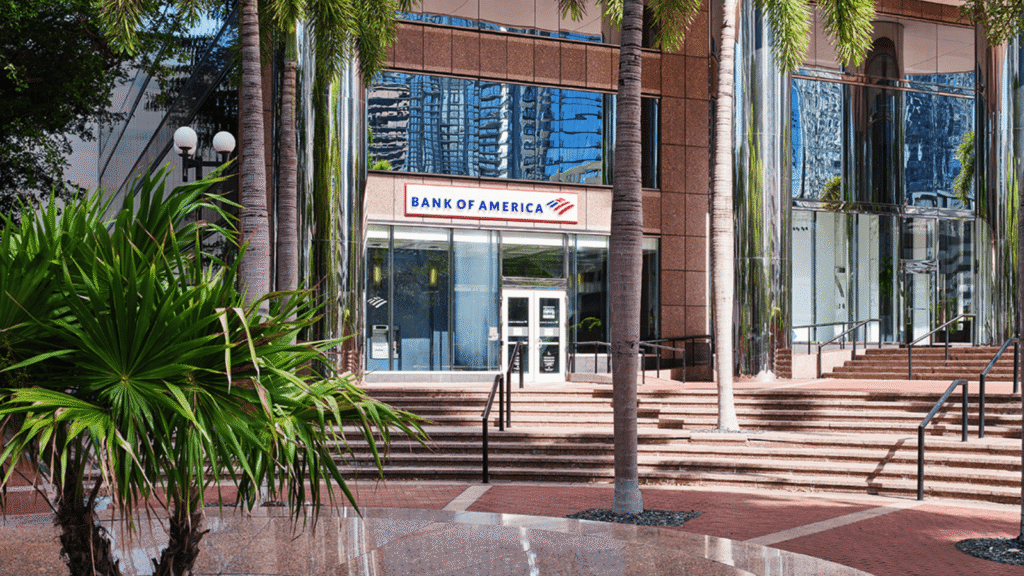
Bank of America has scored a major victory in South Africa after the Constitutional Court limited the Competition Commission’s ability to prosecute foreign banks for alleged anticompetitive conduct carried out offshore.
The unanimous judgment, handed down on 30 June 2026, ended more than a decade of legal uncertainty surrounding the country’s long-running forex cartel case.
The case began in April 2015, when the Competition Commission launched an investigation into 18 banks over alleged collusion to manipulate the USD/ZAR exchange rate between 2007 and 2013.
This was explained by Webber Wentzel partner Shawn van der Meulen and associate Kelton Miller, who represented the Bank of America group in the case.
The central question was whether South African competition authorities could prosecute foreign companies for alleged anticompetitive conduct that took place entirely outside the country.
The Commission argued that section 3(1) of the Competition Act gave it broad powers because the Act applies to economic activity within, or having an effect within, South Africa. The foreign banks challenged this position.
The Constitutional Court drew an important distinction between personal jurisdiction and subject-matter jurisdiction.
Personal jurisdiction concerns whether a South African court can compel a foreign company to appear before it. Subject-matter jurisdiction concerns whether the court has authority over the type of conduct in question.
The court found that the Commission could not simply rely on an alleged impact on the South African economy to establish jurisdiction over a foreign bank.
Foreign banks were divided into three groups. These included banks with no presence in South Africa, foreign banks with a local branch or representative office, and South African banks.
The distinction mattered because the Commission had to establish a genuine connection between the foreign banks and South Africa.
For the foreign banks, the Competition Appeal Court had previously required the Commission to show “adequate connecting factors” linking them to the country.
One way of doing this was to establish a “single overarching conspiracy” involving foreign and South African banks.
However, the Commission could not provide sufficient evidence linking most of the foreign banks to South African participants.
As a result, the Constitutional Court found that there was no case on the papers against most of these banks.
The Commission also tried to challenge the earlier interpretation of section 3(1). However, the Constitutional Court refused to revisit the issue.
It found that the matter had already been decided and that the Commission had not appealed it at the appropriate time.
Foreign banks are not beyond the reach of South African rules

Van der Meulen and Miller clarified that the judgment does not mean foreign companies are automatically beyond the reach of South African competition authorities.
The court confirmed an effects-based test for foreign companies whose conduct takes place outside South Africa.
The Commission must show that the conduct was likely to have a “direct, immediate and substantial effect” in South Africa.
The mere fact that the alleged forex manipulation involved the rand was not enough. This is important for multinational companies and financial institutions that operate across borders.
A foreign company cannot necessarily be brought before South African competition authorities simply because its conduct has some connection to the country.
At the same time, companies cannot avoid South African competition law simply by conducting their activities offshore.
Where a foreign company is genuinely involved in a conspiracy that includes South African participants, or its conduct has a substantial, direct and immediate impact on the local economy, the Commission may have jurisdiction.
As such, the judgment establishes a boundary for the Commission. Its powers can extend beyond South Africa’s borders, but that reach must be supported by a real legal and factual connection to the country.
Major banks exit the case
Van der Meulen and Miller said the ruling significantly reduces the number of banks still facing the forex cartel proceedings.
The case will continue before the Competition Tribunal against five banks – BNP Paribas, JPMorgan, Investec, HSBC Bank and Standard Americas. Investec is the only South African bank remaining in the proceedings.
Absa, Barclays and Standard Chartered had already settled with the Commission. The case against several other major international and South African banks has been dismissed.
These include the Bank of America entities, ANZ, Nomura, Commerzbank, Macquarie, HSBC US, Credit Suisse Securities, Standard Bank, Nedbank and FirstRand.
The judgment does not decide whether the alleged forex cartel existed or whether any of the remaining banks engaged in unlawful conduct. That question must still be determined by the Competition Tribunal.
They explained that the Constitutional Court’s judgment provides greater clarity on how South Africa can pursue international companies over conduct occurring outside its borders.
It also prevents the Commission from relying on a weak or coincidental local connection to establish jurisdiction.
For foreign banks, the ruling provides an important degree of certainty. A South African branch, a connection to the rand, or an alleged impact on local markets will not automatically confer jurisdiction on the Commission.
The Commission must establish a much stronger connection. However, for South Africa, the judgment also leaves the door open to pursuing genuine international cartels that cause significant harm locally.
The Commission can still take action where foreign companies are part of a conspiracy involving South African participants or where their conduct has a direct, immediate and substantial effect on the country.
Van der Meulen and Miller added that, after more than a decade of legal battles, the forex cartel case can now move towards its substantive merits.
The Constitutional Court has settled the jurisdictional question, but the Commission still faces the much harder task of proving its case against the five remaining banks.
 Loading ...





Comments