Standard Bank CEO Sim Tshabalala explains why you need a university degree


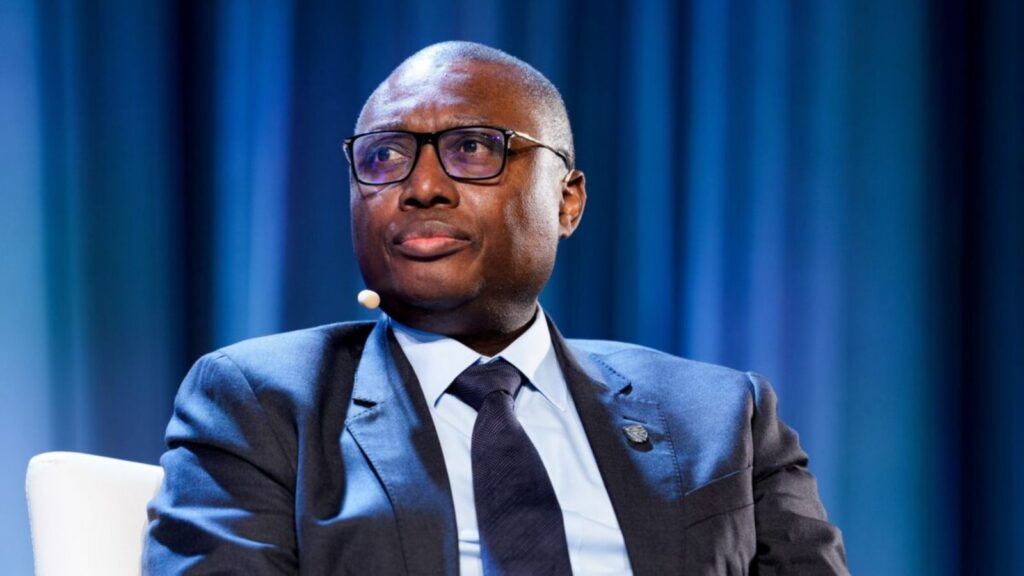
Standard Bank CEO Sim Tshabalala said that a university degree is not about preparing you for a specific job, but rather about teaching you to think, be systematic, and be disciplined.
Once you have these fundamental skills, Tshabalala believes that you can learn anything and fulfil highly skilled roles.
This is exactly what Tshabalala did, with the CEO of Africa’s largest bank not being a registered chartered accountant or having a degree in finance or economics.
He told Daily Investor that everything he has learnt about banking, finance, and economics has been self-taught, as he is a lawyer by training.
Granted, Tshabalala graduated with a Master of Laws from Notre Dame in the United States, for which he was awarded summa cum laude.
He also went into banking almost immediately after being admitted as an attorney of the High Court of South Africa in 1994.
However, the banking giant believes that having to self-learn finance and economics did not advantage him, as this is relatively common among his global peers.
“If you look at most of the leaders of global banks, many of them come from the arts. They have done liberal arts degrees,” Tshabalala said.
“South Africa is unusual in many respects in that its business sector is driven by people with specific degrees in commerce and accounting.”
“In the rest of the world, people have varied degrees. They studied the arts, they are scientists, they are engineers, and so on.”
This does not mean that a university degree is not important. Rather, Tshabalala said that shows you the importance of a degree is not to prepare you for a specific job.
“It is to get you to learn how to think, to be systematic, and to be disciplined. If you have those skills, you can teach yourself anything,” he said.
“You may not be as proficient as someone who spent their whole life getting a professional degree that prepares you for a specific situation, but you can learn it.”
Tshabalala explained that leadership is not about being the most educated, although that does help in understanding concepts.
“It is about marrying the economics, the accounting, and the data with human behaviour, and therefore psychology, philosophy, and history,” he said.
“So, has it stood me in good stead? I think it has. If I had done a BCom, I don’t know where I would have ended up.”
AI will create more jobs at Standard Bank

Tshabalala tied the issue of education to how artificial intelligence (AI) is impacting work at Standard Bank and where he sees the institution’s workforce going.
Standard Bank COO Margaret Nienaber said the bank is investing heavily in its AI capabilities, with 72% of its staff now active users of the technology.
Early data indicate that it has improved productivity from the bank’s software developers by 20% when coding.
This has enabled the bank to accelerate the rollout of new products and features, contributing to a more active client base and generating lucrative fee and commission revenue.
Tshabalala explained that the bank sees AI as a general-purpose technology, like electricity, the steam engine, and computers.
“It is fundamentally going to change how we do work. But I also believe in Jevon’s Paradox. You will actually need more people, not less, in the future,” he said.
The CEO recalled how the fear of job losses spread when banks introduced ATMs in the 1980s, only for banks to hire more people.
“The banks hired more people. Tellers’ jobs changed, and more became consultants and advisers, because you need people to talk to clients.”
Tshabalala said the same is likely to happen with the rollout of AI, with Standard Bank providing an early data point.
While the bank has invested heavily in AI, its headcount has grown by around 1% year-on-year to just over 51,000 people.
“I think we will be employing more people in the future. But, as our peers say, they will be more skilled. They will be more in the client interface,” Tshabalala said.
“Interestingly, they will have much more social science skills. Data from The Economist shows that philosophy graduates will be among the most employable in the near term, can you believe it?”
“That just shows that social science skills and human skills are going to become more important in the future, and we are going to need them.”




Comments