Top South African bank rises from the ashes


Just nine months into his tenure as Absa CEO, Kenny Fihla appears to be turning the bank’s fortunes around after a period clouded by leadership instability and strategic missteps.
Leaning on his experience leading Standard Bank’s Corporate and Investment Banking (CIB) unit and at the upper echelons of Africa’s biggest bank, Fihla has refocused Absa on its competitive strengths.
Fihla outlined what these are and how he plans to capitalise on Absa’s inherent strengths to take the bank back to where it belongs.
Stepping into the CEO position, Fihla said he was confident in the quality and strength of Absa, but unsure whether the bank was ready to commit to sustained execution of a single strategy.
Absa has suffered significant leadership instability, leading to incoherent, often opposing strategies being implemented by successive CEOs.
Fihla is the bank’s seventh CEO in seven years, following its last long-term appointment, Maria Ramos, who left the institution in 2019.
This instability saw Absa cede ground to its competitors, despite it having one of the largest banking balance sheets in Africa.
While Absa’s peers have meticulously moved forward with strategies to create the Holy Grail of an integrated financial services provider, the Red Bank has undergone several restructurings, with many CEOs undoing their predecessors’ work.
Fihla is committed to ending this cycle at Absa, promising that he will bring focus, stability, and a relentless commitment to executing on strategic priorities.
“In my engagements with clients, regulators, investors, including people within the organisation, I have been amazed at the strength and some of the competitiveness that Absa still has,” Fihla said in 2025.
“But what has effectively undermined the ability of the organisation to capitalise on that is leadership instability.”
As a result, these engagements revealed some cracks beneath the surface at Red Bank. “Parts of our group have operated without the sharpness of focus and integration that a business of this scale requires,” Fihla said.
This is his biggest challenge – getting the rest of the bank on board with his strategy and ensuring it is implemented effectively.
“My task is to focus Absa on execution, efficiency, and disciplined capital allocation by connecting our strengths and directing them with greater precision,” Fihla said.
Getting back on the front foot

Ultimately, Fihla wants to get Absa back on the front foot and begin retaking lost market share in key segments, particularly with its CIB business.
Stemming from his time at Standard Bank, Fihla understands the opportunity in Africa very clearly and knows how to make such an expansion profitable.
Under his leadership, Standard Bank’s CIB unit became the group’s crown jewel, generating the majority of the group’s headline earnings and reaping the benefits of faster economic growth across the rest of Africa.
This unit now generates more of its headline earnings outside of South Africa than it does within its home market – a testament to Fihla’s execution.
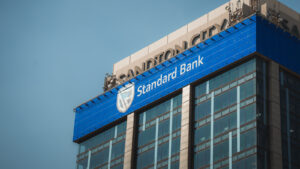
The African growth story is not the only thing Fihla took from his time at Standard Bank, with the CEO also taking lessons from the Blue Bank’s reshaping over the past five years.
Standard Bank restructured its operations to ensure it could better serve client needs, which included splitting up its Personal and Private Banking business from its Business Banking unit.
Absa underwent a similar change during Fihla’s first nine months, refocusing on the customer’s needs rather than the bank’s internal structures.
“I think the first area is that you win or lose at the client interface. So we have to sharpen our focus on which client segments we can win in,” Fihla said.
“We have to make sure that we are able to create appropriate differentiation in the areas that we want to focus on. That is true for all of our businesses – retail, business banking, and CIB.”
Fihla also looks set to shift Absa’s focus to growing outside its home market of South Africa to capture value from faster-growing economies across the rest of the continent.
“The second element of our strategy is about strengthening the diverse nature of our business. We are still overly concentrated on South Africa, but there are massive opportunities in the rest of the continent,” Fihla said.
These two pillars will be complemented by an overhaul of Absa, with Fihla looking to modernise the bank and make it more efficient.
“The third pillar of our strategy is about accelerating the pace of modernisation so that we can drive efficiency within our business, reduce the cost to serve clients, while improving client experience,” Fihla said.
This, over time, will enable the bank to allocate capital more efficiently and improve its return on equity.
“Fourthly, it will take too long for us to transform and modernise everything on our own. So, we will be looking at other opportunities for bulking up as and when the opportunities present themselves,” Fihla said.




Comments