3.67 million South Africans spend their time fetching water and collecting wood and dung because they cannot find jobs


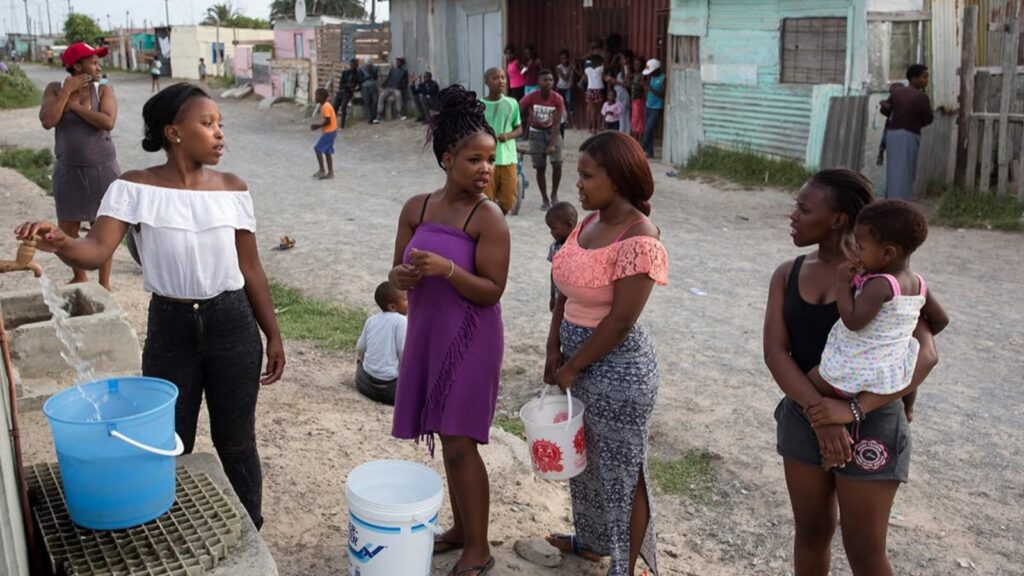
Millions of South Africans rely on subsistence activities, such as fetching water or collecting wood and dung, because they are unable to find permanent employment.
South Africa’s official unemployment rate rose to 33.7% during the third quarter of 2026, while its expanded unemployment rate rose to 44%.
This means that at least one in every three working-age South Africans who are actively seeking employment were unable to find permanent work.
South Africa’s rising unemployment crisis has been attributed to a dysfunctional local labour market, represented by the country’s Beveridge Curve shifting outward over time.
The Beveridge Curve compares a country’s unemployment rate with its number of job vacancies, demonstrating the relationship between job supply and demand.
Job demand in South Africa has outstripped supply in recent years, with the country’s economy not creating enough jobs to absorb its growing workforce.
While the country’s lacklustre economic growth played a role in this, other factors such as a lack of required skills and qualifications mean employers increasingly struggle to fill roles.
Spatial inequality has also meant many job seekers remain away from commercial centres, making it difficult for millions of South Africans to travel to work or find employment.
According to data from the Department of Labour, South Africa’s job vacancy rate is more than 15 times lower than that of the United States, which has varied between 4% and 7.5% post-Covid.
25.6 million people in South Africa are now without work, including unemployed, discouraged or unavailable job-seekers, and those outside the labour force for other reasons.
Many of these people have turned to subsistence activities, surviving on the minimum required amount of resources to support themselves, their families, and their communities.
A large percentage of these people live in South Africa’s rural areas, relying on farming and other activities for sustenance rather than commercial purposes.
South Africa’s subsistence statistics
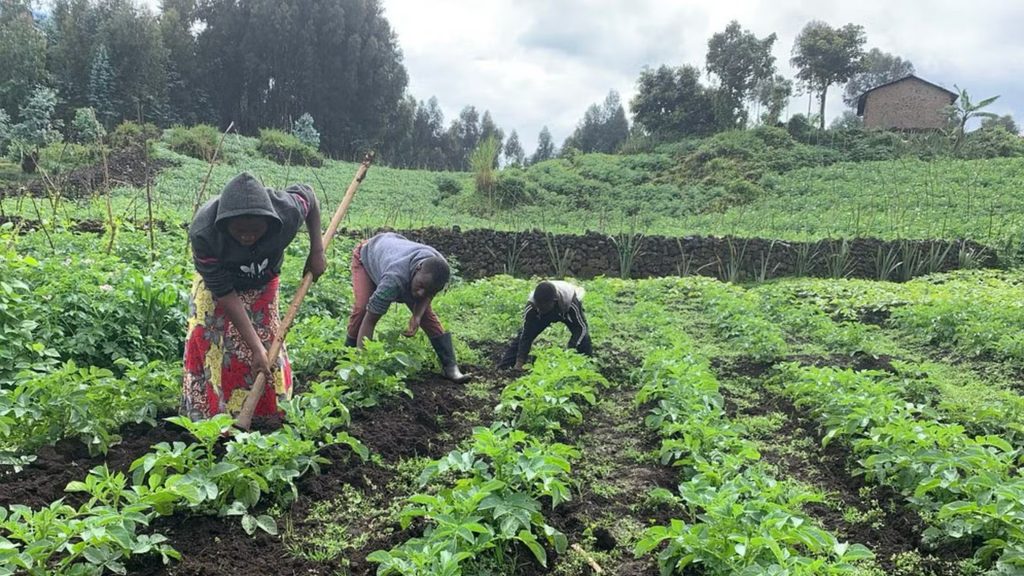
According to Stats SA’s latest Quarterly Labour Force Survey for the third quarter of 2026, approximately 5.95 million South Africans are involved in non-market activities.
Of this, the largest group was people who fetch water or collect wood/dung, with 3.67 million South Africans participating in this activity.
The next largest group was subsistence farmers at 1.75 million people, followed by those who perform construction or repairs on their own houses at roughly 296,000 people.
Approximately 214,000 people produce other goods for household use, while 21,000 South Africans perform hunting or fishing activities for household use.
The number of South Africans involved in non-market activities decreased by 6.44% from the second quarter of 2026, and declined by 16.03% yoy from the third quarter of 2025.
During the BizNews Conference in April, Efficient Group chief economist Dawie Roodt responded to an audience question about the promotion of subsistence activities.
“The reason why we have subsistence farmers and people sitting on the pavement selling tomatoes is because they haven’t got a choice,” Roodt said. “That’s all that is left.”
“The absorption rate of labour in South Africa is 40%. Of the people that can work, 40% of them work. 20% are people like housewives and students, and 40% are out of work.”
Roodt said the objective should be to integrate these people into South Africa’s formal corporate environment and get them away from a dependence on subsistence work.
He said an advertisement promoting 10,000 open employment positions promising R10,000 per month would easily draw more than 100,000 or 200,000 applications.
Roodt also argued that small-scale, uncompetitive farming could never match large-scale agricultural operations, and said these small farms should be consolidated under agricultural corporations.
“In South Africa, we are approximately 60% urbanized,” Roodt said. “It doesn’t make sense to build a road that 100 people will use when you can build the same road that 10,000 people will use.”
“We have to encourage people to move to the cities. We have to build the necessary infrastructure for people to be able to live in the cities and work in the cities as well.”
Login or register for unlimited free access.