Absa building an African giant one licence at a time



South Africa’s third-largest bank is stepping up its expansion plans as it looks to broaden its footprint across the continent, laying the groundwork for future earnings growth.
Absa plans to complete the reorganisation of its rest-of-Africa business within the next two years as it works to diversify earnings away from key markets of South Africa, Kenya and Ghana, which accounted for more than 80% of profit in the six months through June.
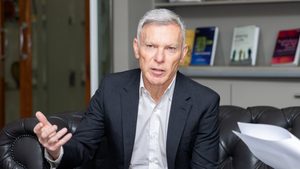
“We’re all a little bit impatient, and we want to move,” Absa Group Executive for Africa Regions Charles Russon said in an interview.
“Some of the things that are being explored are much more growth-oriented, which I think is generally quite exciting, because we are thinking about new things, new markets, new products, new capabilities, new platforms.”
The lender has already begun converting its representative office in Nigeria into a merchant bank.
It is also setting up a new representative office in oil-rich Angola, where Russon spoke last week on the sidelines of the African Financial Industry Summit in Luanda, the capital.
“We are busy applying for licenses,” Russon said. “From application to up and running, I would hope it is done in 12 to 18 months.”
Nigeria’s economy has become more attractive as investors look to capitalise on a raft of reforms implemented by President Bola Tinubu, which are boosting growth and improving the investment landscape.
A merchant-banking license would allow Absa to take corporate deposits and offer loans, investment banking and project finance.
The push marks a shift for Absa from restructuring under CEO Kenny Fihla to expansion, bringing it into competition with its larger South Africa-based rivals Standard Bank and FirstRand, as well as Nigeria’s own Access Holdings Plc, Zenith Bank Plc, and First Bank of Nigeria Ltd.
In Angola, President João Lourenço’s administration has also been pursuing a reform agenda aimed at modernising the economy and attracting private investment.
Higher oil prices driven by the Middle East conflict have also bolstered export revenue and eased pressure on the country’s public finances, which have boosted the country’s attractiveness to investors.
“It’s evident that this is a market that feels like it is turning, is becoming more open, more transparent and I think in due course, much more investable,” Russon said. “You are going to see more business activity in Angola.”
In Uganda, Absa has completed the integration of Standard Chartered’s wealth and retail banking unit that it acquired in 2025.
It is also planning to consolidate its two banks in Tanzania to gain scale and leverage the country’s infrastructure investments.
“The East Africa region is a big growth region, and Tanzania is a key part of it, a key market, a big market, and represents a big opportunity,” he said.
In Kenya, the bank is planning to slowly raise its shareholding in the local unit to 85% by 2028.
The lender made a $238.7 million tender offer in June to buy an additional 16.5% stake, but only managed to raise it by 3.5 percentage points to 72%.
Absa retains a “strategic intent” to increase that holding over the next couple of years, Russon said.
“Hopefully we’re able to get up near where we want it to be because the closer we are to 100% — not that we can go to 100% — then the more the economics make sense,” he said.
“If you believe in the market, then clearly you want to be able to benefit from everything the franchise does as opposed to holding 100% of the risk-weighted assets and only getting 70% of the profits.”
The changes should position the lender to compete effectively across the continent, unlock new markets, and facilitate better client support across its footprint to drive earnings into the future.
“We’ve gone through a lot of what I would call material foundational change that we can now start to build on for the next phase,” Russon said.
Login or register for unlimited free access.