Price cuts on the cards for TFG, and OpenAI raises $11 billion


The rand was trading at R16.52 against the US dollar on the morning of Saturday, 7 November, closing Friday unchanged from where it opened.
The rand weakened against a stronger dollar as the vote count in Wednesday’s municipal election continued, with results pointing to a further slide in support of the ANC.
With 72% of the vote counted, the party had secured 32% of the vote, down from 46% in the last municipal election in 2021.
Its nearest rival, the Democratic Alliance, was on around 24% of the vote according to electoral commission data.
Bureau for Economic Research chief economist Lisette de Schepper said the key economic issue was whether the election would lead to more stable governance in key cities, better service delivery, and a stronger environment for business.
South African equities closed yesterday lower, with the JSE All Share Index dropping 0.48% while the Top 40 Index dropped 0.49%.
South Africa’s benchmark 2035 government bond was marginally weaker in early deals, with the yield rising 4.5 basis points to 8.33%.
Meanwhile, the US dollar gained 0.3% against a basket of currencies amid support from safe-haven demand after a global sell-off in AI stocks.
The Nasdaq rebounded at a 1.09% increase on Friday from its lowest point in a year, but still posted its fourth straight weekly decline.
Meanwhile, Japan’s Nikkei 225 was down 5.96% on Friday in its worst weekly loss since the pandemic, following overnight losses on Wall Street as technology stocks retreated.
Brent crude oil rose to around $98 per barrel as investors weighed Middle East conflict risks following the US midterm elections. Gold was up at $4,070.41 per ounce.
On Saturday morning, the rand was trading at R16.52 to the US dollar, R18.40 to the euro, and R22.05 to the British pound.
Important finance and investing news

Utility wants historic rate hike: Pacific Power, owned by Berkshire Hathaway, is asking state regulators in California to approve a 57% rate increase that would see the average residential power bill increase by $120 per month. [Wall Street Journal]
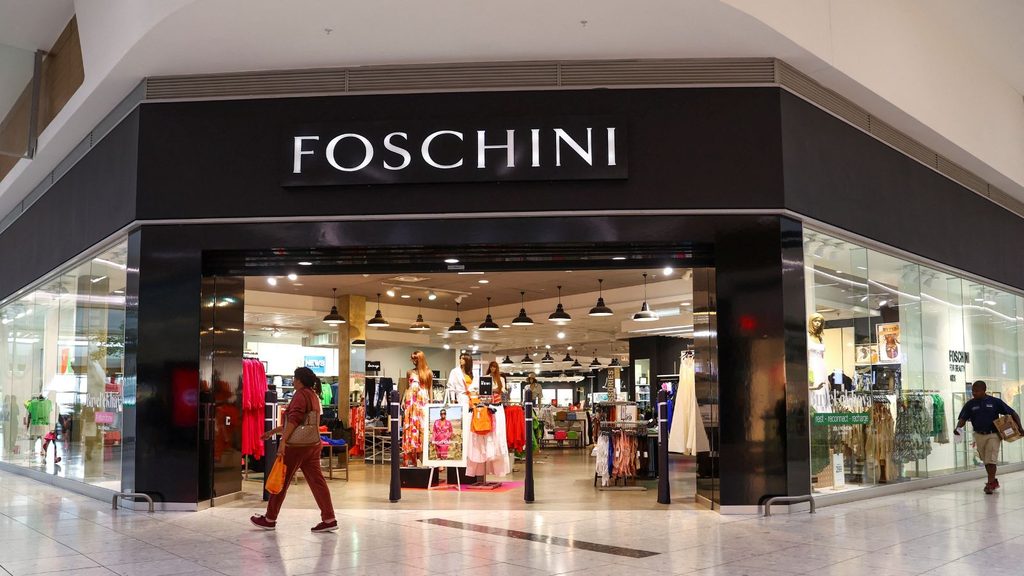
Price cuts on the cards for TFG: The Foschini Group is looking to mark down certain items to meet the needs of its more cash-strapped consumers. This comes as the owner of Jet, The Fix, Markham, and Sportscene is aiming to adapt to a tough period for the business. [BusinessDay]
55-year-old sandwich chain operator is bankrupt: Schlotzky’s Deli franchisee JPrieto Hospitality has filed for Chapter 11 bankruptcy after facing a severe revenue decline in 2026 compared to the two previous years. The franchisee operated 10 Schlotzky’s locations in northern Texas in early 2026. [Yahoo Finance]
OpenAI raises $11 billion: OpenAI has secured $11 billion in its latest round of funding, representing only a portion of its initial target of up to $30 billion. The valuation of the company has also slipped to $1.25 trillion, down from the $1.5 trillion level it originally sought. [Reuters]
R4 billion curtailment for Eskom: Eskom is expected to pay R4 billion in the current financial year to solar and wind farms for instructing them to curtail generation when there is excess supply on the national grid. This is expected to increase year on year, with consumers ultimately footing the bill. [The Citizen]
Login or register for unlimited free access.