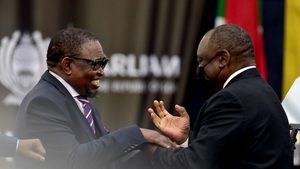
R400 billion gift for Finance Minister Enoch Godongwana



South Africa’s closely watched debt-to-gross domestic product ratio is expected to decline after a regular recalculation showed the economy was 5.3% larger in 2025 than previously estimated.
GDP at current prices stood at R8 trillion last year, compared to R7.6 trillion previously reported.
This is after the base year for calculating the figure was shifted to 2022, data published by Statistics South Africa in the capital Pretoria on Thursday showed. The exercise is generally conducted every five years.
“Based on the revised GDP estimates, the gross debt ratio for the current fiscal year could fall from 78.2% to an estimated 74.5% of GDP,” said Johann Els, chief economist for PSG Financial Services.
“The consolidated budget deficit could fall from 3.9% to an estimated 3.7% of GDP.”
National Treasury did not immediately respond to a request for comment on how the revision would affect its estimates of South Africa’s fiscal metrics.
Moody’s Ratings and other agencies have flagged improvements in the country’s debt position as a factor they will watch when considering further upgrades to the country’s credit rating.
South Africa’s credit rating has been on an upward trajectory but remains below investment grade.
“Critically, the upward revision to South Africa’s GDP will positively impact South Africa’s various fiscal ratios, including the government debt to GDP, fiscal deficit to GDP, and tax revenue as a percentage of GDP,” Kevin Lings, chief economist at Stanlib Asset Management, wrote in a note.
“This is a meaningful improvement within the South African context, which should boost investor sentiment, as well as any sovereign credit rating assessment.”
The statistics agency recalculated GDP based on 2022 production patterns, assigning larger weights to some sectors to better reflect the economy’s structure.
Though the expansion was broad-based across sectors, mining grew the most after the changes, lifting its contribution to the economy by 12.5%.
The statistics agency said this was primarily due to the inclusion and better coverage of illegal mining, which has proliferated in South Africa as the price of gold has soared.
The second-largest sector weighting expansion was in finance, real estate and business services, which increased by 9.1%.
The contribution of the unobserved economy, which includes parts of the informal economy and illicit and illegal activities, increased to 8.7% from 7.3% previously.
“Notable additions of informal activities include street hawkers, shebeens and informal recycling, and illegal or illicit activities such as narcotics and prostitution,” the statistics agency said.