SARS plan to make cigarettes more like banknotes in South Africa


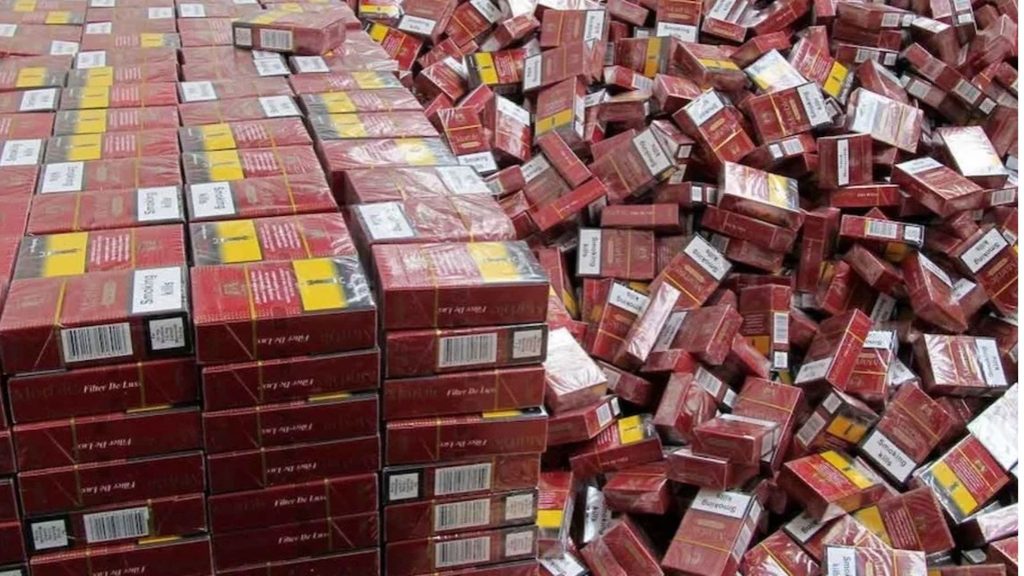
SARS plans to introduce intelligence markers that are used on banknotes onto cigarette packaging to enable it to track individual cigarettes.
This will increase SARS’ ability to monitor the illicit trade of cigarettes, which, alongside illegal trade in other commodities, costs the state R68 billion in tax revenue.
SARS has plans to use intelligence markers widely beyond cigarettes, including on alcohol packaging and potentially even soft drinks with sugar in them.
This will be the latest attempt by SARS to limit the growth of the illicit trade, which it has lost control of over the past 15 years.
The trade has grown significantly since Covid-era lockdowns in South Africa that saw the legal sale of alcohol and cigarettes periodically halted.
To fill the supply gap, illicit traders stepped in and provided individuals access to cigarettes and alcohol at extremely low prices.
Once the lockdowns were lifted, smokers and drinkers did not return to legitimate sellers, preferring to use cheaper alternatives in the illicit market.
Illicit alcohol and cigarettes are often significantly cheaper due to taxes not being levied on their sale, which impacts government revenue.
SARS estimates that the cheapest illicit pack of cigarettes in South Africa costs R5, while the cheapest legal pack is priced at R37.
This price difference is due to the minimum collectable tax on a pack of cigarettes being R27.12. If this is not levied, then packs can be sold at a significantly lower price.
A similar trend has been flagged in the illicit alcohol trade, although this has proven to be far smaller than the illegal cigarette trade.
Illicit alcohol sales are dominated by production stock being stolen or lost, with it then being sold on without proper taxes being levied.
Some illicit cigarettes are sold in a similar fashion, with them being produced by legitimate businesses but are sold to the end consumer by an illicit trader.
The illicit cigarette trade alone costs South Africa R85.6 billion in tax revenue between 2019 and 2022, according to Oxford Economics.
The Consumer Goods Council of South Africa estimates that illicit trade in 11 sectors costs South Africa R68 billion in tax revenue annually.
For context, this is R10 billion more than South Africa’s annual defence budget, which sits at R57.6 billion in the current financial year.
New SARS crackdown

SARS’ failure to rein in the growth of the illicit trade sector has led it back to the drawing board, and this time it is taking inspiration from banknotes.
The revenue service has revealed plans to introduce intelligence markers on individual cigarettes and alcohol bottles.
These markets are electronic stamps that are similar to those applied to banknotes, which enable them to be tracked.
South African Institute of Taxation CEO Keith Engel explained to 702 that the stamps will be applied when products leave the factory.
From that point onwards, they will function as digital trackers that allow SARS and businesses to trace goods through every distribution tier.
“Effectively, it keeps cigarettes out of the illegal market, and it is a tracing method where all parties involved know that it is easily traceable,” Engel said.
Engel explained that the main purpose is to prevent round-tripping and the illegal distribution of a legitimately-manufactured product.
“If the cigarettes leave the factory and are then sold to somebody who exits the country and tries to bring them back in, you can count them and collect the excise tax,” Engel said.
“This stops round-tripping and stops illegal factories from entering the formal market, protecting it.”
Engel said it will also ensure sellers and retailers can be held liable for the sale of illicit cigarettes by making them easily identifiable.
“Whenever a shopkeeper buys these cigarettes from a supplier, they will see that they should charge an excise on this, and if they don’t, then they will have liability,” Engel said.
“This is arguably more important because these taxes are fundamentally on consumers, so the problem is not only at the factory, but throughout the chain. You need to see it at every level.”
One potential issue with this plan is the cost it will take to implement it, with intelligence markers being expensive to impose across the board.
“It is expensive, but according to research, it results in such a drastic cut in illicit trade that it is worth it. You will get your money back very quickly.”
“The easy wins are the connection between the formal and the informal through electronic data, such as track and trace. You can make big money quickly, and you’ll see some gains there.”
Engel said that such markers will separate the formal and informal market, protecting legitimate players from illicit competitors.
This will stop the encroachment of the illicit trade onto the formal market, but leave the informal market largely untouched.
“You can still sell to the wholly illegal market. So, if you’ve got a whole bunch of illegal shops or shops that don’t tell you that really are part of the informal economy, the informal economy won’t care. In that sense, it’s going to fall short,” Engel said.