Woolworths’ R55.37 billion golden egg


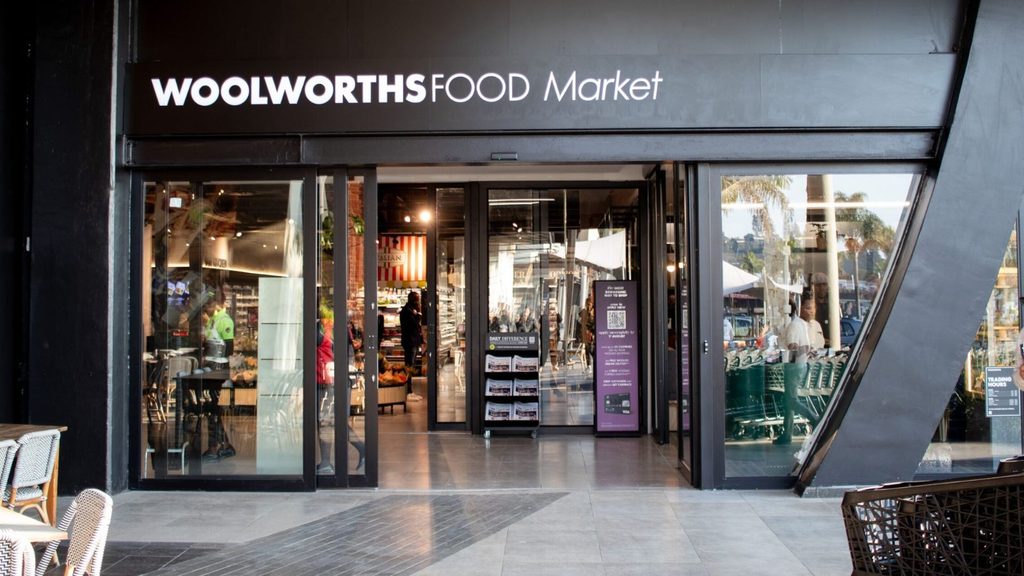
Woolworths’ plan to reorient its operations around its Food business makes the company a more attractive buy for investors.
For years, Woolworths Food has been the most stable segment in the retailer’s portfolio, compared with its more volatile Fashion, Beauty, and Home, and Australian segments.
Now, the retailer plans to reorient its business to place Food at the centre, which could see this segment get more focus and capital expenditure (capex).
Doing so positions Woolworths well to benefit from greater earnings stability and growth, making the retailer a more enticing investment.
This is feedback from PSG Wealth equity analyst Fisokuhle Mbutho, who told Daily Investor that the benefits of this reorientation could flow through to earnings in the medium term.
To understand the importance of Woolworths’ Food segment, it is helpful to look at the retailer’s earnings over the past decade.
Like many retailers that contended with shocks such as the Covid-19 pandemic, and including its unique David Jones blunder, Woolworths’ financial performance has been volatile.
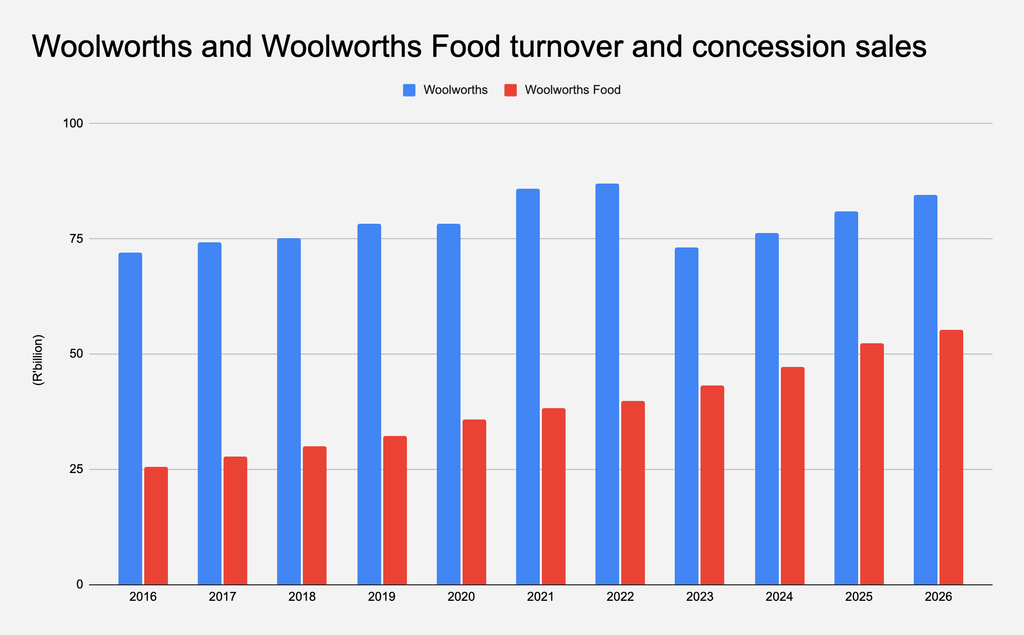
While its turnover and concession sales grew relatively consistently year-on-year, these forces led to extreme volatility in Woolworths’ bottom line.
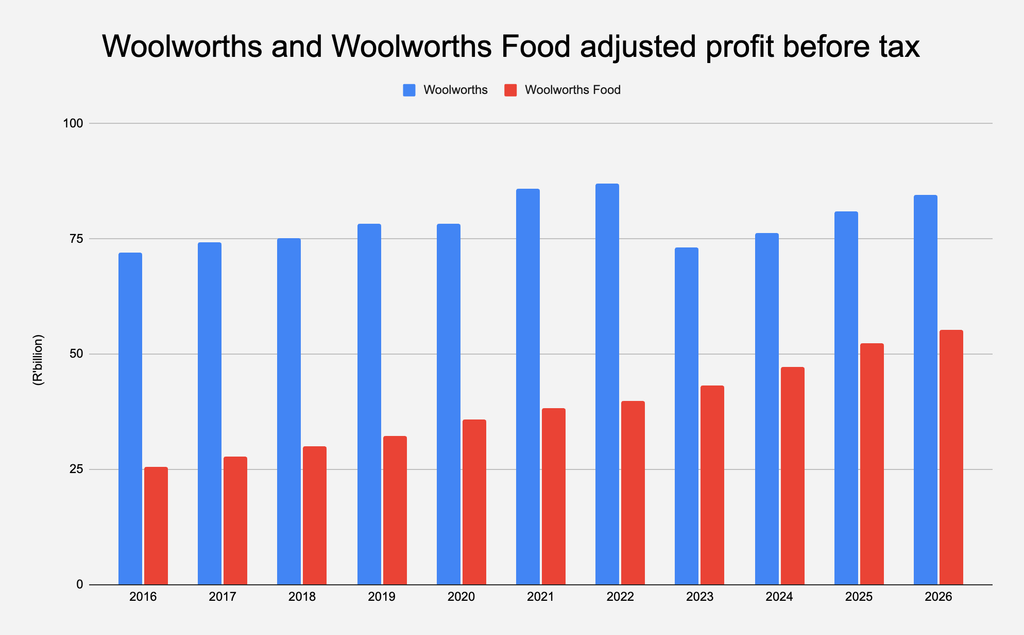
Between 2016 and 2026, the retailer’s adjusted profit before tax went from a peak of R6.05 billion in FY16 to a low of R2.51 billion in FY20.
The retailer has yet to recover to its FY16 peak, with the 2026 financial year seeing an adjusted profit before tax of R3.76 billion.
At a group level, Woolworths’ adjusted profit before tax shrank at a compound annual growth rate (CAGR) of -4.6% per annum from 2016 to 2026.
In contrast, over that same period, Woolworths Food has mostly seen its adjusted profit before tax grow.
It rose from R1.83 billion in 2016 to R3.37 billion in 2026, achieving a CAGR of 6.3%.
This means Woolworths Food went from contributing 30.2% to the group’s adjusted profit before tax in 2016 to 89.6% in 2026.
Analyst opinion
Mbutho said Woolworths’ food business has served as one of the stable parts of the group for years, even prior to its David Jones divestiture.
In a presentation for PSG Financial Services, Mbutho referred to the Food business as Woolworths’ “golden egg and stabiliser”.
“Its importance to the group has been to be less volatile in earnings growth relative to the other more discretionary segments,” he told Daily Investor.
At the same time, this segment offers a premium food experience that adds a bit of discretionary character to the staple-like business.
“We see the premiumisation more so in pricing above food inflation during typical economic environments and having minimal negative impacts on volumes,” Mbutho explained.
This is why Mbutho believes the reorientation of Woolworths’ business, centred on the Food segment, makes its investment case more attractive.
“As the more stable, premium-positioned part of the business gets more focus, capex spend would follow suit with new stores and distribution centre expansion, with investments positioning the group’s earnings for stability and growth,” he said.
“The appeal of the group as an investment gets more enticing through a core focus on the more stable part of the group that is growing.”
This will also be paired with the discretionary segments that have potential upside from the implementation of restructuring and turnaround strategies.
While Mbutho could not provide an exact timeframe of when these benefits will start to be seen, he said the Food business already accounts for 65% of Woolworths’ revenue.
Therefore, should the focus shift to this segment and investment be directed toward an already growing part of the business, the impacts would potentially be seen in the medium term.
When asked what makes Woolworths’ Food segment so strong, Mbutho explained that it comes down to premium pricing for quality products.
These factors working in tandem make for strong and stable margins, something critical for retailers at the mercy of a strained consumer environment.
“This isn’t to say that the other businesses are of no quality. The real importance of the Food segment is in its relative stability compared to its more volatile siblings in the group,” Mbutho explained.