South Africa’s ‘DOGE’ cutting R38.1 billion


South Africa’s version of the United States’ Department of Government Efficiency (DOGE) has identified R38.1 billion in savings over the next three years.
This builds on the R12 billion identified by the Treasury’s Targeted and Responsible Savings (TARS) mechanism in the February 2026 Budget.
The R38.1 billion in savings are driven by restructuring inefficient programmes, reducing administrative overhead, and eliminating fraud.
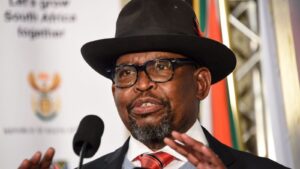
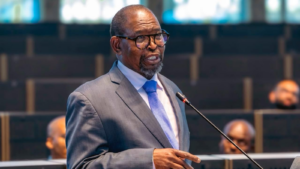
This was announced by Finance Minister Enoch Godongwana in the Medium-Term Budget Policy Statement on Wednesday, 21 October.
Launched in July 2025, the TARS initiative was established to identify and remove low-priority or underperforming programmes from South Africa’s budget to reduce aggregate expenditure.
In the February 2026 Budget, Godongwana announced that TARS had already identified R12 billion in savings over the medium term.
Now, Godongwana said this number has risen to R38.1 billion in savings over the 2027 Medium Term Expenditure Framework (MTEF).
This R38.1 billion in savings stems from various sources of waste, fraud, and inefficient spending identified by TARS.
This includes R13 billion from reducing fraud in social grants through the implementation of biometric enrolment and strict beneficiary checks.
Godongwana said these security measures will also be extended to the National Student Financial Aid Scheme and housing subsidy programmes.
Another R11.7 billion in savings will come from cutting low-priority spending, lowering administration and technology costs, and eliminating duplicate functions across national departments.
A further R7.8 billion in savings was achieved by pausing the Human Settlements Development Grant.
This grant is a conditional allocation provided to provincial governments to fund residential development and neighbourhood upgrades for families who cannot afford to buy a house.
This programme has now been paused while a new, restructured delivery model is designed under an updated White Paper on housing.
Godongwana said this pause will address the programme’s inefficiencies and rent-seeking, ensuring that future spending translates into completed houses.
Lastly, TARS identified public entities with R5.5 billion in cash surpluses, which will now be paid to the National Revenue Fund.
Through this mechanism, state-owned enterprises with idle, unallocated cash reserves will be required to surrender R5.5 billion back to the National Revenue Fund starting in 2027/28.
Going forward, the Treasury is also working to develop a consistent legal framework to govern public-entity cash management.