Shoprite and Boxer going head-to-head in South Africa’s R180 billion spaza shop market


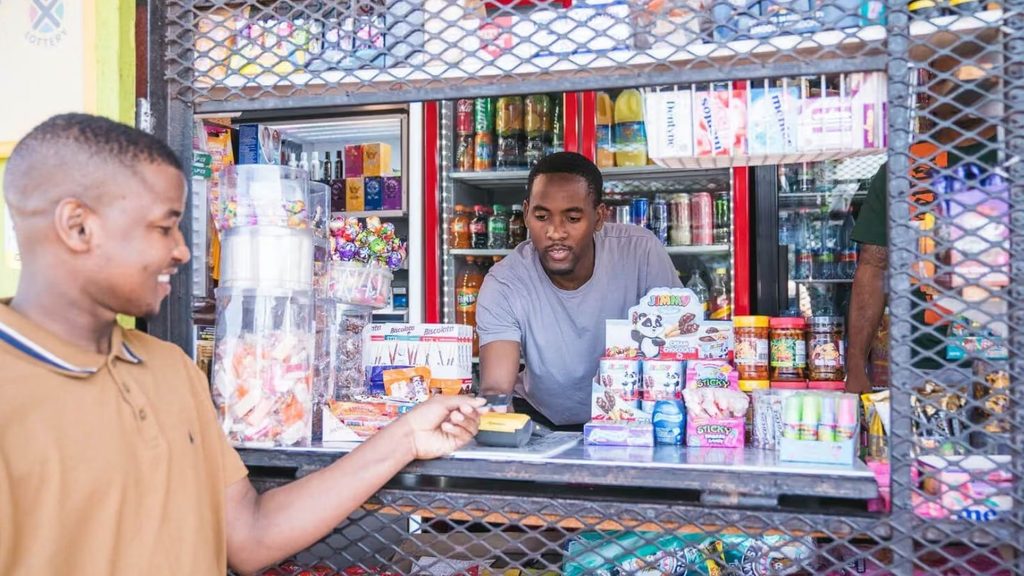
Two of South Africa’s biggest discount retailers, Shoprite and Boxer, are both looking to expand in the country’s lucrative but complex informal market.
The retailers are taking similar approaches, with Shoprite and Boxer seeking to supply businesses already operating in the market.
Shoprite, through its Usave business, is also competing with some of the businesses it supplies as its eKasi stores roll out in South African townships.
These container stores operate alongside spaza shops, which can be supplied by Shoprite’s Cash & Carry business.
Similarly, Boxer operates in the informal sector by serving as a stockist for informal traders through its Bulk Online offering.
At the same time, the retailer’s aggressive store roll-out strategy has seen it opening stores near transport hubs, taxi ranks, and grant collection points.
These areas overlap with informal retail zones, which also puts Boxer in competition with the stores it supplies.
However, Boxer CEO Marek Masojada told Daily Investor that the relationship between spaza shop owners, informal traders, and traditional retailers is more complicated and symbiotic.
“The informal market, because of the fact that it is informal, is a very difficult market to engage with, and to an extent, we need to do a lot more,” Masojada explained.
“We’ve always sort of had a symbiotic relationship with the informal market in that many of them come and shop in our stores, and buy their product in our stores, and we promote that as much as we can.”
He noted that this is easier said than done, as it can be difficult to distinguish between Boxer’s Bulk Online customers and those who buy products at a normal Boxer store.
With the Bulk Online business, Boxer knows who the customer is and whether they are a spaza shop owner or an informal trader.
However, since many spaza shop owners buy their supplies at a Boxer store, it can be difficult to track and specifically target these customers.
What makes it particularly difficult, Masojada said, is that “the informal market has some of the most astute buyers you’ll ever find”.
Spaza shop owners and informal traders tend to be more price-sensitive than typical customers, shopping for their supply purely based on price.
“So, you have to decide whether you want to be in that extremely low-margin business,” Masojada said.
Informal economy experts and Kasinomics author GG Alcock estimated that South Africa’s informal spaza and superette sector is valued at R180 billion, comprising 100,000 spaza shops and 500,000 mobile traders.
Boxer vs Usave
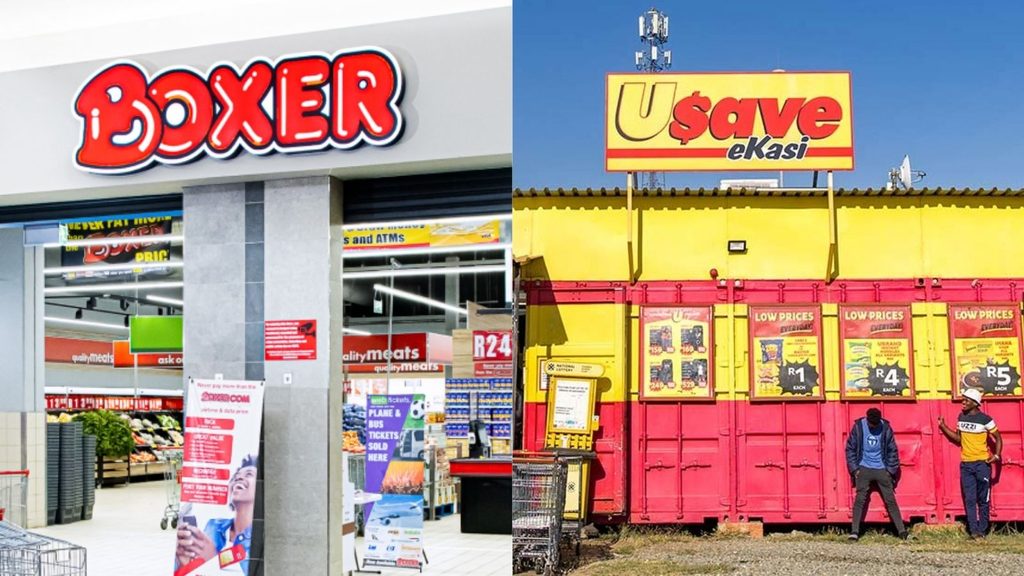
While Shoprite operates in the informal market through various channels, its Usave brand is the most prominent in South African townships.
This is by design. Shoprite has centred Usave to operate as a low-cost, no-frills, limited-assortment hard discounter.
Limited-assortment in this context means that Usave carries a lean, focused assortment of essential, fast-moving groceries rather than thousands of different products.
Usave averages 1,900 items in standard stores and between 950 and 990 items in its eKasi container stores.
This offering is tailored to price-sensitive, lower-income consumers in underserved communities, such as those in the informal market.
Usave stores tend to be located inside townships, peri-urban areas, and rural communities where retail penetration is low.
This puts Usave in head-to-head competition with Boxer, which also targets its store roll-outs in the lower end of the consumer market.
One unique aspect of Boxer’s grocery stores is that 64% of them have an adjacent liquor store, which gives it an edge over Usave in this respect.
However, since Usave stores are smaller, Shoprite can roll out stores faster and at lower cost than Boxer.
Based on both retailers’ latest results, Usave had 545 stores in South Africa at the end of June 2026, while Boxer had 587 stores. Not all of these stores are located in the informal market.
Otto1980 senior equity analyst Alec Abraham told Daily Investor that Boxer is competing well, despite strong competition from a giant like Shoprite.
He said Boxer is benefiting by filling much of the “white space” in peri-urban areas that are not as aggressively contested by the likes of Shoprite.
Abraham explained that Boxer is also benefiting from the margin uplift ramp-up that hard discounters experienced as they expand their product range.
On top of this, Boxer is seeing the benefits of rolling out additional value-added services to customers and monetising insights from captured customer data.