Top South African CEO sends a do-or-die warning to her own company


Sygnia CEO Magda Wierzycka warned that her company could be out of business in five years if it does not innovate and keep pace with global trends.
This comes as she recognises that Sygnia’s original disruptive idea of extremely low fees is no longer a moat or as innovative, with competitors adopting the same model.
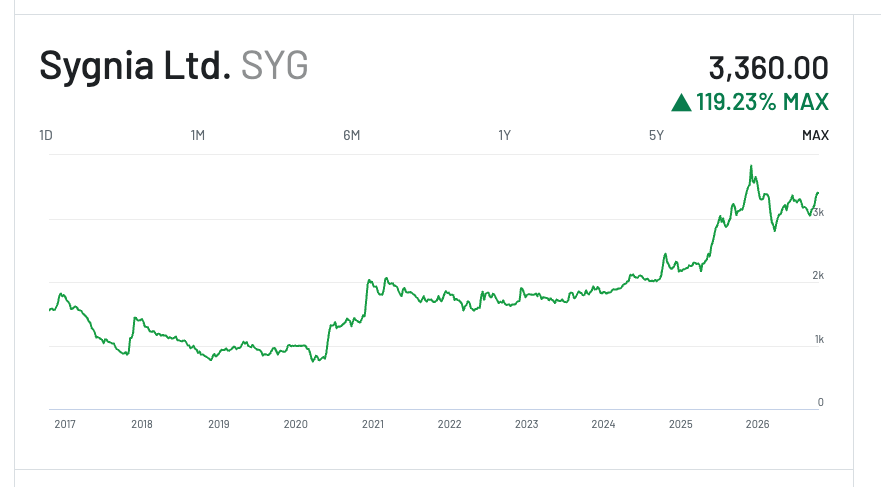
Valued at R5.32 billion on the JSE, Sygnia is one of the biggest entrepreneurial success stories in South Africa over the past 20 years.
Wierzycka founded the firm in 2006 after leading a management buyout of the Africa Harvest Group, giving rise to Sygnia with R2 billion in assets under management.
The company became synonymous with innovation and disruption in the asset management space, leading the industry’s revolution in South Africa.
Sygnia launched with customised investment strategies and multi-manager funds that were among the first to blend actively managed strategies with passive investments.
This innovation was coupled with low fees that were becoming commonplace in more developed markets but had not yet reached South Africa.
South Africa’s asset management industry was dominated by large players, typically insurers, who used advisory services to funnel clients into their unit trusts or retirement products.
Sygnia was also one of the first asset managers to develop a vertically integrated business across asset management, institutional administration, umbrella funds, stockbroking services, and a retail division.
Wierzycka credits this innovation with much of Sygnia’s growth and its ability to retain clients, despite competing against large incumbents.
Another key edge has been Sygnia’s focus on thematic investing in technology, which has made it the largest provider of international exchange-traded funds in South Africa.
This translated into strong new business flows throughout its history, with assets under management and administration growing at 12% per annum for the past 10 years.
Sygnia now manages R460.8 billion in assets, with revenue and profit growing at a faster rate, indicating strong operating leverage.
Holding the company’s shares has also been rewarding, with it returning a total compound annual return of 17.5% since it listed on the JSE in 2015. This includes its hefty dividend payouts.
Sygnia has to do it again
Wierzycka has made it clear that Sygnia cannot rest on its laurels and must innovate and reinvent itself to maintain its market-leading performance.
Speaking to BizNews, Wierzycka said that much of what made Sygnia different and disruptive is no longer powerful as the industry has caught up.
“People are now used to the fact that Sygnia charges low fees. Is that disruption anymore? No, I would be lying to you if I said it was,” Wierzycka said.
“So, we have to think outside of the box again. Literally, we have to go outside the box all over again, as low fees are now standard market behaviour.”
Wierzycka said this would result in a completely new set of moats and business lines over the next five years.
If Sygnia cannot develop “outside-the-box” business lines, it risks going out of business.
“It will have to be completely different. If we don’t create new moats, we will be out of business,” Wierzycka said.
“So, Sygnia in five years’ time will, if you look under the hood, be different. There will not be a division in this business that will not be restructured. If we don’t do it, there won’t be a Sygnia.”
Sygnia will be evolving from a strong position, with supportive operating leverage and its growth showing no signs of slowing.
The business has passed the point where incremental revenue flows almost directly to the bottom line, with its cost base flat.
This is an advantage of digital business and asset management. As Sygnia grows its asset base, its costs do not rise at the same rate, widening its profit margin.
“Our existing divisions – the umbrella fund, retail business, and institutional administration – are strongly positioned. But future disruption must come from brand-new ideas,” Wierzycka said.
Some of these ideas include adopting artificial intelligence across the business to improve productivity and streamline processes.
Another is the looming launch of a pre-listing tech fund, which is a venture capital investment vehicle that Sygnia plans to make available to the public.
Some of the investments in this fund include OpenAI, SpaceX, and ByteDance, which would typically only be the preserve of well-connected venture capitalists.