Capitec lent R1.5 billion to South Africans who do not earn a salary


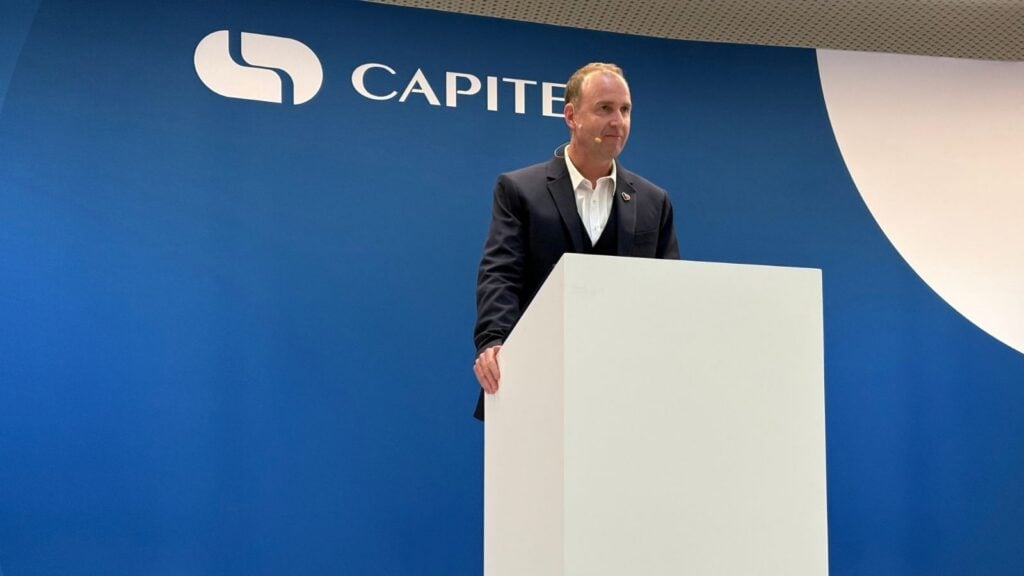
One of Capitec’s biggest avenues for growth in the coming years will be lending to clients who do not earn a traditional monthly salary.
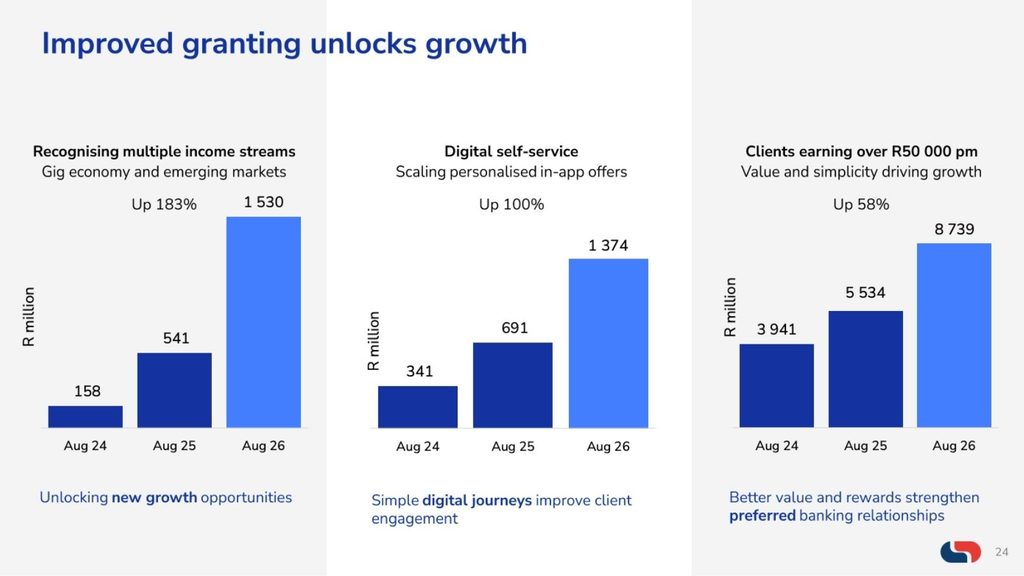
This segment has already become a major growth driver for the bank, which lent R1.5 billion to gig economy workers and non-salaried clients in the first half of its 2027 financial year.
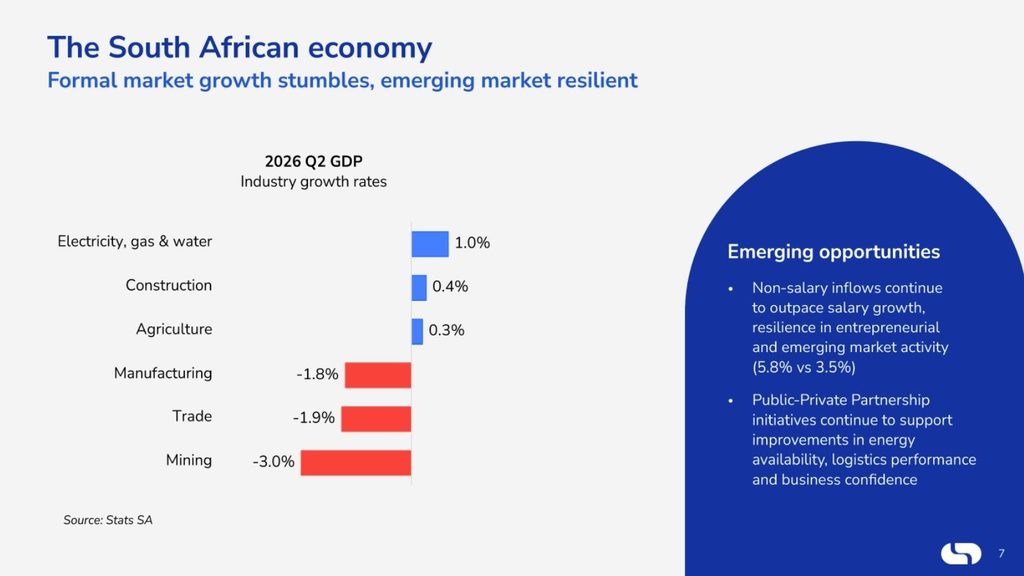
This figure is expected to grow in the coming years, as the bank’s customer data shows non-salary inflows continue to outpace salary growth in South Africa.
This presents a significant opportunity for Capitec, which has its eye on South Africa’s R1 trillion informal, or “emerging”, market.
In its interim results presentation for the six months through September 2026, Capitec outlined its approach to attracting non-salaried South Africans.
On the surface, it sounds counterintuitive for a bank to not only take on but explicitly target clients who do not have a regular, stable income.
However, according to Capitec’s data, attracting these clients presents a significant opportunity in an economy where wage growth is weak or stagnant.
Based on the bank’s internal data, non-salary cash inflows into client accounts grew by 5.8%, far outpacing formal salary growth of 3.5%.
“That is the entrepreneurship and ingenuity of the emerging market at work,” Capitec CEO Graham Lee said in the results presentation.
Notably, this trend was observed across industries. Capitec found that the formal sectors, such as mining and manufacturing, contracted in the second quarter of 2026.
In contrast, informal, entrepreneurial, and emerging-market activities showed far greater economic resilience.
Many of its non-salaried clients are part of Capitec’s multiple-income-earners client group, referring to customers who make a living from various income streams.
In Capitec’s latest results, multiple-income earners rose by 138%, making it one of the bank’s fastest-growing and highest-potential client groups.
Capitec’s non-salaried clients range from gig economy workers and digital creators to informal traders and “side-hustlers”.
Lee said these clients will often receive regular income – it just comes from sources other than a formal employer.
He explained that while South Africa’s economic growth remains weak, at the client level, “what we see is a picture of transactions across our client base that remains healthy”.
Lee said this gives Capitec cautious optimism about future growth, particularly as public-private partnerships continue to support economic reforms.
Lending to clients without a salary
While non-salaried South Africans present a significant growth opportunity for Capitec, they also come with several risks, particularly when credit is involved.
Capitec explained that, historically, unsecured credit scoring relied heavily on formal monthly payslips. With non-salaried clients, this is clearly not an option.
To overcome this hurdle, Capitec has spent the past few years refining its credit risk algorithms using client data from its substantial customer base of 26.6 million.
The bank has implemented 1,500 micro-adjustments in how it analyses and scores non-traditional, multi-income inflows.
As a result of this refinement, Capitec’s credit disbursements to gig economy workers and non-salaried clients skyrocketed by 183% to R1.5 billion in the six months through September 2026.
It should be noted that this was one of the factors that contributed to a 21% surge in Capitec’s credit impairments to R5.7 billion in the first half of the 2027 financial year.
However, according to Lee, this surge was deliberate. He explained that the bank’s credit figures are “sensible numbers” when seen in context.
Lee listed the four drivers of Capitec’s higher credit impairments as:
- The bank deliberately and proactively raised its forward-looking macroeconomic provisions early in preparation for a tougher environment
- Capitec planned to grow its loan sales and credit book, which comes with the implication of larger upfront provisions
- There has been a change in client mix for its business bank, which has taken on more unsecured lending
- Capitec is increasingly serving the emerging market, which is riskier but means more new business
In a media roundtable following the results presentation, Lee explained that prudently and deliberately growing unsecured lending is crucial to Capitec’s future growth.
How Capitec manages risk
“Traditionally, the way that credit is granted to businesses is an intuitive process. The ‘model’, if you wouldn’t mind me describing it this way, is in the minds of an expert,” Lee said.
“It’s in the mind of a human being who has lots of experience and applies their mind to the specific circumstances of that business.”
“That’s still the way that most business banks operate, and it’s still the way that Capitec operates with respect to the larger exposures.”
However, Lee said that there is one major problem with this approach – it does not scale.
“You can’t do that a million times without a million people. So, what we’ve done is we’ve taken the unsecured but scored approach that we have in the personal bank,” he explained.
The bank also leveraged its data flows and expertise to build up predictive models for small businesses.
“It’s taken us quite a bit of time to build those models and approaches to the level of accuracy where we can really start scaling – and now we’re there,” he said.
One way in which this approach differs from traditional banking is that Capitec does not only extend credit to clients with assets, even when it comes to business clients.
“That just cuts out too much of the population and, in effect, is ultimately discriminatory,” Lee said.
“People who need the funding most do not have assets to back it up, so that’s why we’re clear that it’s unsecured.”
However, Capitec is also clear that this lending remains scored, using a mechanism the bank has developed over time, based on billions of client data points.
“It’s a mechanistic approach to scale,” Lee described. “We bring in all the disciplines that we do in the unsecured model on our personal bank side.”
“It’s about monitoring the models, monitoring deviations from any single one of the variables, managing deviations from outcomes, and making micro adjustments every single day.”
He specified that while Capitec’s approach to business banking draws on lessons learnt from the personal banking side, it does not use the exact same models.
“We’re using the same data platforms, skills, and capabilities we’ve built up over the years,” he explained.
“These are the same disciplines and operations that we have applied differently to build specific models for small businesses.”






Comments