A South African woman used social grants to make R18,000 per month tax-free



A woman in Khayelitsha used her monthly social grant payments to buy building materials on lay-by to build six rooms, which she now rents out for R3,000 per month.
As a result, she nets R18,000 per month, tax-free, after ten years of investment, and is now a respected landlord in the township.
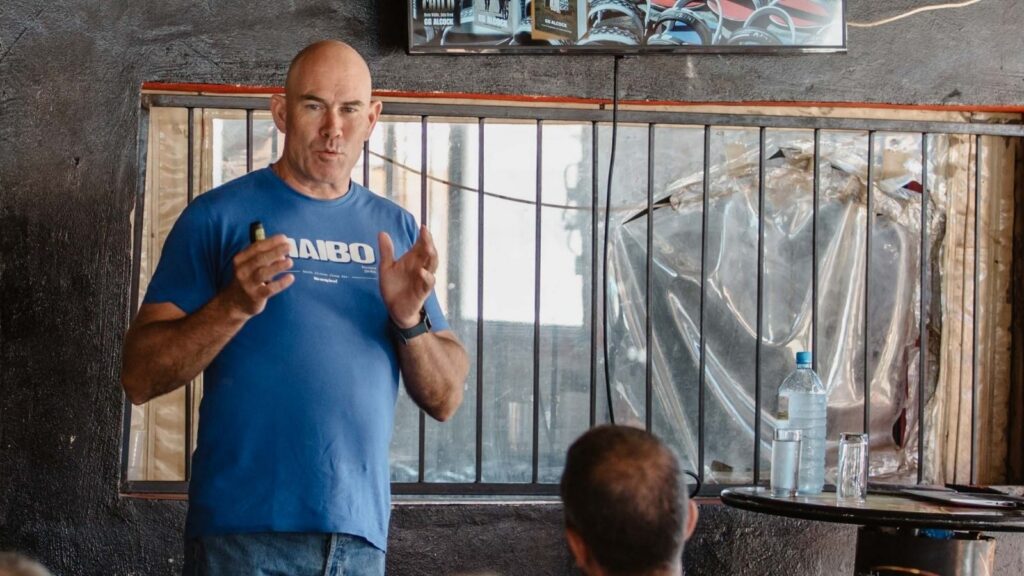
Informal economy expert GG Alcock recalled this story as an example of how the R30 billion-a-year backroom rental economy works.
Alcock told BizNews that this sector is completely ignored by the government and players in the formal economy, as they have very little information about it.
Largely cash-based, this part of the informal economy is overlooked in favour of areas with more traditional economic activity, such as retail.
Companies like Tiger Brands, Premier Foods, and Unilever understand this activity as a mirror image of the formal counterpart.
This enables them to serve informal traders in a similar fashion to formal retailers through wholesalers and distributors.
However, the backroom rental market, while lucrative, does not get the same attention as it is hard for formal players to participate.
Alcock also explained that formal players fail to grasp the scale of the backroom rental economy, seeing it only as someone renting out a spare room.
Aggregating it together makes it a R30 billion sector that formal landlords would love to be a part of.
To illustrate how differently this market operates from its formal counterpart, Alcock cited the example of a lady in Khayelitsha.
Unable to access traditional finance, she used a unique approach to construct her own mini apartment complex.
“I wrote in my book, Kasinomics, about a lady who rents out these backrooms after a decade of saving,” Alcock said.
“She took her social grant, every month for ten years, and she laid by building materials for six rental units.”
“She then rented these out for R3,000 each. She financed that construction through lay-by, taking half her social grant every month.”
Social grants as financing
Alcock explained that this use of social grants is not unique to the Khayelitsha landlord, as it is often a form of financing for entrepreneurs in the informal economy.
As their businesses are unregistered and they are not formally employed, many qualify for state social grants.
This money is then saved or invested steadily to build a home, a business, and often both in the informal economy.
“When Capitec looked at social grant recipients, the average social grant recipient was earning five times their social grant according to their bank statements,” Alcock said.
“They earn this money through side hustles, businesses, and other income that is not related to the social grant.”
This is not unique to Capitec, with it being seen in nationwide data. Because these businesses and jobs are not classed as formal, they cannot be tracked.
Stats SA data shows that only 23% of social grant recipients say it is their only or main form of income. 77% say it is a secondary income stream.
Former Capitec CEO Gerrie Fourie previously explained that the effectiveness of the social grant system is also its Achilles heel.
This system is highly effective at putting cash into the hands of South Africans who need support, with around 28 million people receiving a grant.
However, it also encourages people to report to the authorities that they are unemployed, as doing so allows them to continue receiving social grant payments.
Fourie explained that if Stats SA’s unemployment survey were done by a different organisation, the data would look completely different, as people would give different answers.
“I told Stats SA that we have a big problem with social grants. If you ask someone who gets a social grant if they are employed or unemployed, they will never say employed,” Fourie said.
“The moment that they say ‘I’m employed’, they lose all their social grants. There is no way they are going to answer: Employed.”
Fourie said the country’s biggest banks can see this clearly in their data, with individuals receiving income from social grants and other sources.
These individuals are not formally employed, so they do not get a salary, but they receive payments into a personal account from running a small business or picking up short-term work.






Comments