Wholesalers make R150,000 a day selling eggs to informal township traders


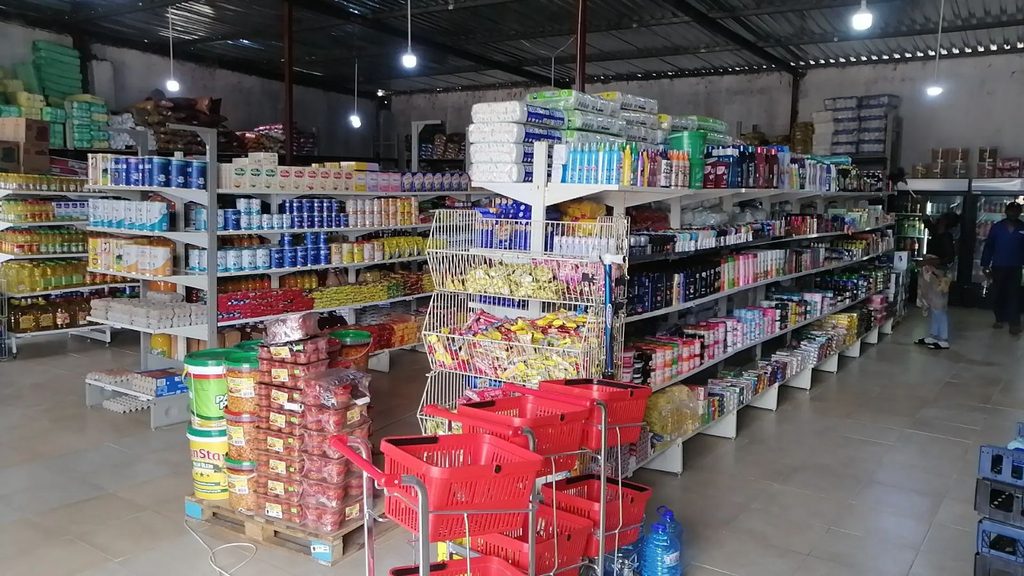
Independent wholesalers make R150,000 a day by selling eggs to informal traders who distribute them throughout the township economy.
These wholesalers can make up to R1.5 million a day in turnover by effectively supplying the informal economy and are large, established businesses.
Informal economy expert GG Alcock said this is the primary root for large corporate food producers to enter the informal retail market and get their products into the hands of traders.
The companies using this channel include giants such as Tiger Brands, Unilever, Premier Foods, and RCL Foods.
These companies produce iconic local brands, such as All Gold Tomato Sauce, Sasko Bread, Nola Mayonnaise, and dozens more.
Alcock explained to BizNews that through wholesalers, these companies can see the aggregated scale of the informal economy rather than that of solitary traders.
This makes the business case far more attractive to them, as they can see how it will impact their bottom line and can move the needle.
“Some of these informal wholesalers, which we would call informal, are turning over R1 million to R1.5 million a day for six days of the week,” Alcock said.
“These businesses cannot actually be called informal, because R1 million a day is not informal. These are formal, structured, VAT-registered companies.”
One of the stranger details of these wholesale businesses is the popularity of eggs, which are in high demand in the informal economy.
These wholesalers can offer ‘luxuries’ such as eggs at attractive prices by aggregating demand from hundreds of traders.
Thus, they leverage economies of scale to drive down prices from suppliers and pass the lower costs on to traders.
“They will tell you that probably 10% of their business is eggs. Eggs are a big thing in the township and are in high demand,” Alcock said.
“At 10% of their business, these wholesalers are turning over R100,000 to R150,000 a day just from eggs.”
These wholesalers operate on extremely thin margins. Shoprite, for all its scale, has a net profit margin of 2.9%, and wholesalers operate on thinner margins than their large peer.
The VAT dynamic
These wholesalers are established, formalised businesses that pay corporate income tax and VAT, contributing immensely to the fiscus.
More importantly, these wholesalers absorb some of the millions of South Africans who cannot find jobs in the formal economy.
Alcock pointed out that it is also a misconception to believe that informal traders, who are not registered businesses, do not contribute to the fiscus.
Because they are not registered for VAT, they pay it and cannot claim it back, as a registered, formalised business would.
“The spaza shop sector turns over R200 billion a year. The vast proportion of them are not VAT-registered,” Alcock explained.
“They pay VAT and do not claim it back. So, there is a net benefit to the fiscus of about R85 billion a year from these traders purchasing their goods.”
The obvious way this trade flows into the formal economy is through large food producers who sell products to the informal sector.
This directly boosts the top and bottom lines of these businesses efficiently, as wholesalers distribute their products.
“Even within the townships, you have a lot of redistribution. People who buy in bulk from a wholesaler and then go and deliver it to different people,” Alcock said.
This enables food producers to reach deep into the informal economy and increase their brands’ presence in these areas.
Alcock estimates that a significant portion of formal food producers’ revenue comes from serving the informal economy.
“If you take the big plays, Tiger Brands, Premier Foods, RCL Foods, between 60% and 70% of their business is going to the township through wholesalers,” he said.
“If you did not have the demand coming out of this kind of space, their profits would be substantially less than they are now.”






Comments