Sustainable infrastructure transformed the Middle East – and it can do the same in South Africa


Sustainable infrastructure is the future of engineering – and it is not only defined by your carbon footprint. It requires a comprehensive approach that accounts for resilience, redundancy, security, and long-term operational value.
The increasing impact of climate change has reinforced the importance of environmental resilience.
In Dubai, for example, we are seeing environmental events that would once have been considered highly unusual occurring with increasing frequency. These kinds of “black swan” events demonstrate the need for infrastructure to be designed not only for expected conditions but also with the resilience and adaptability to withstand unforeseen challenges.
The threat is not purely ecological, either – threat actors have never been more aggressive and committed to breaching systems and operational facilities.
“When we look at critical infrastructure, a significant cyberattack on a major facility could have consequences that extend far beyond the facility itself, potentially affecting supply chains, essential services and even the wider economy,” explained Dreyer.
This highlights why resilience today has to extend beyond the physical design of infrastructure. Security, cybersecurity and operational continuity need to be considered as integral parts of how critical infrastructure is planned and designed.
Change is inevitable
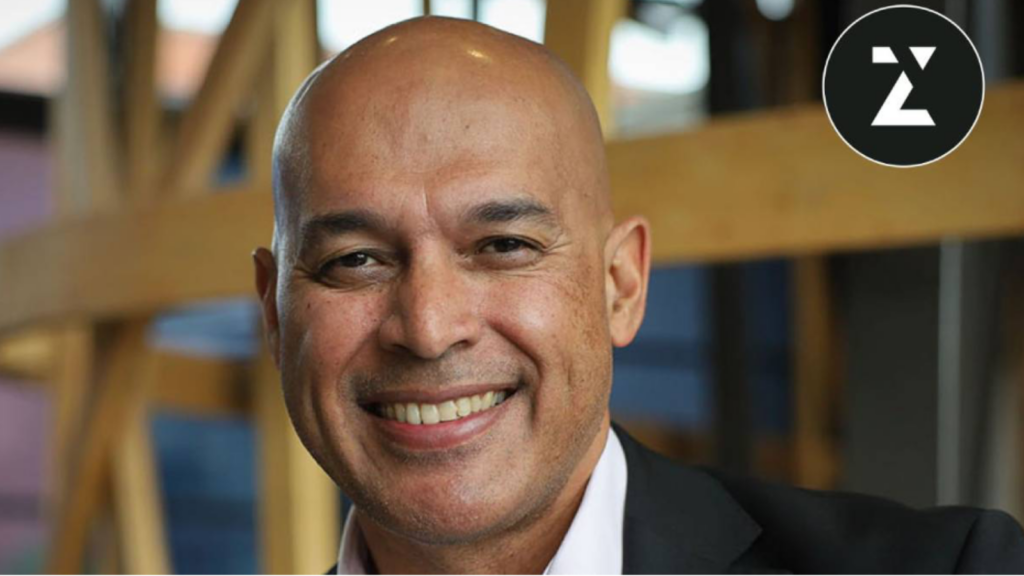
Denver Dreyer, CEO of Zutari in the MENA region, explained that these factors mean the necessary rate of change in the engineering sector is unprecedented.
Thankfully, the engineering profession has standards that always form the basis of how things are designed and built.
It is therefore not the fundamental concepts of engineering that must change, but rather their application in accordance with the ever-evolving landscape.
A successful cyberattack could disrupt essential services, supply chains and economic activity, which is why cybersecurity and operational resilience must increasingly be considered alongside the physical design of infrastructure,” explained Dreyer.
Thankfully, Dreyer said, the governments in the Middle East have been incredibly forward-thinking when it comes to amending legislation to protect against such situations, as well as providing funding to build the appropriate sustainable infrastructure.
This has not only enabled local operations to be protected against the threats they face. It has supported the rise of the Middle East nations as major economic powers.
Look at Dubai today. The scale and transformation of its skyline over just a few decades is remarkable,” said Dreyer. “What you see is the result of visionary leadership, sustained investment and a willingness to think differently about what is possible.”
The importance of partnerships
Beyond the vision of the region’s leaders, another key factor that played a role in the Middle East’s growth was a willingness to partner with knowledgeable and skilled engineers.
“Engineering has an important role to play in helping governments turn their ambitions into practical, deliverable infrastructure,” said Dreyer. “The most successful outcomes come when governments, investors and technical experts work together, challenge conventional thinking and bring the right expertise to the table.”
“Zutari is proud and fortunate to operate here, with a government that truly thinks into the future, and partners with you to make that vision a reality.”
“Learning is a critical element of the Middle East’s success, as consistent partnerships with leading engineering minds have enabled the transfer of skills to local professionals over time.”
“These are lessons we can carry forward and multiply in any location, including Africa, adapting them to local contexts to help turn ambitious visions into lasting, sustainable development.”
Africa’s opportunity
African governments have the same opportunity to grow that the Middle East has capitalised on over the past few decades.
However, it requires governments to collaborate with engineers and other members of the private sector to ensure that regulations are up to date and that investment is available.
In return, the engineering firms must present governments and banks with clear and practical guidelines for success – something Zutari has solid experience in.
There is a clear process that has worked for Zutari in the Middle East, and Dreyer believes it will be just as successful in Africa.
Firstly, governments must be presented with a clear, executable plan that will clearly detail the value that will be delivered over the course of the project. Every decision we make today has an impact on future generations, and our plans must therefore consider the long-term benefits to communities, the wider economy, and the environment, while recognising the potential global impact of what we deliver. Then, investors must be shown that the need is also something that is bankable.
Even if there is viability for a specific project, it is a waste of time and money if there aren’t enough available skills to build, design, and operate it.
“This is where we work with economists and banks to build a case that proves the project not only provides value, but is practically feasible,” said Dreyer.
The use of technology supports this further – such as the opportunity to build proof-of-concept digital twins that can be translated in the future to physical projects.
One great example of the value engineers can provide for economic development is the AutoPV® platform.
AutoPV® was built on years of Zutari’s utility-scale solar PV design experience and has been commercialised under the spin-out company, 7SecondSolar. AutoPV® is a comprehensive design platform that lets engineers automate large parts of both the Concept and Detailed design processes for large utility-scale solar PV projects.
“Instead of months, everything can now be done in a matter of weeks,” explained Dreyer.
“This was very innovative and was already recognised internationally, winning the Smarter E award for innovation at the Munich Intersolar conference in 2025. It was designed in our South African offices.”
“AutoPV® has developed into a global design solution through a growing network of international clients, and we are proud of the impact it is having.”




Comments