Gauteng vs Western Cape house prices – the winner is clear



An analysis compared the distribution of property prices and rents by suburb in Gauteng and the Western Cape, with one showing both better rental yields and affordability.
A Codera analysis by Aleksandar Mitrovic and Riaan Grobler examined the distribution of property prices and rents across suburbs in Gauteng and the Western Cape.
While Gauteng’s property market has been stagnant for years, the Western Cape has seen its house prices skyrocket thanks to semigration, continuous development and good infrastructure and service delivery.
However, Codera found that for both buy-to-let investors and tenants, Gauteng emerged as the better option.
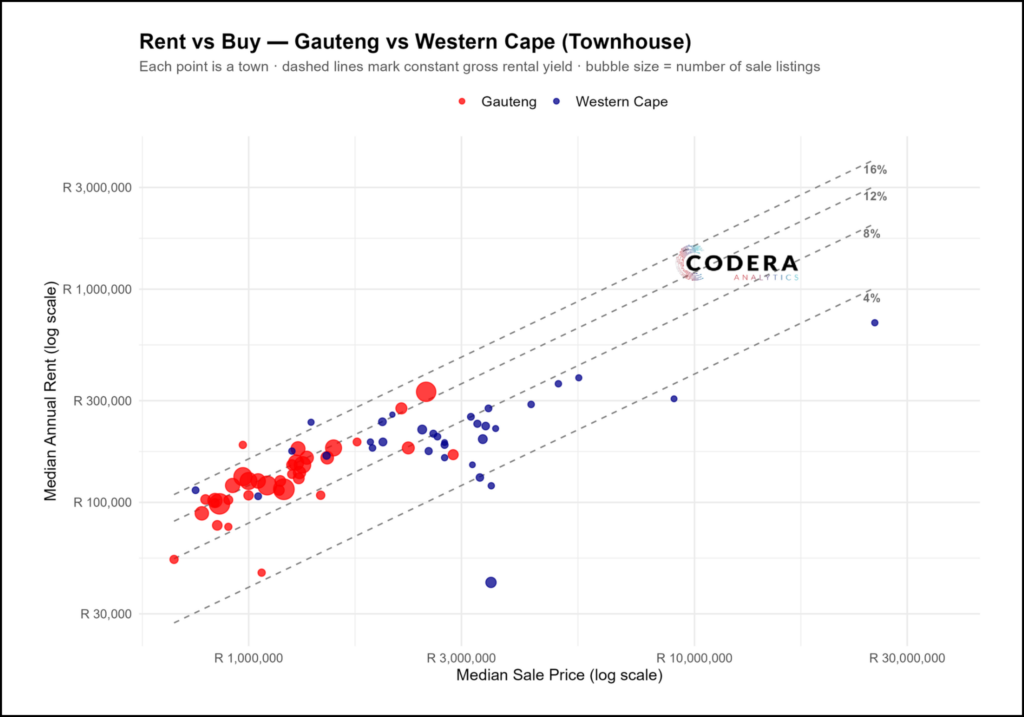
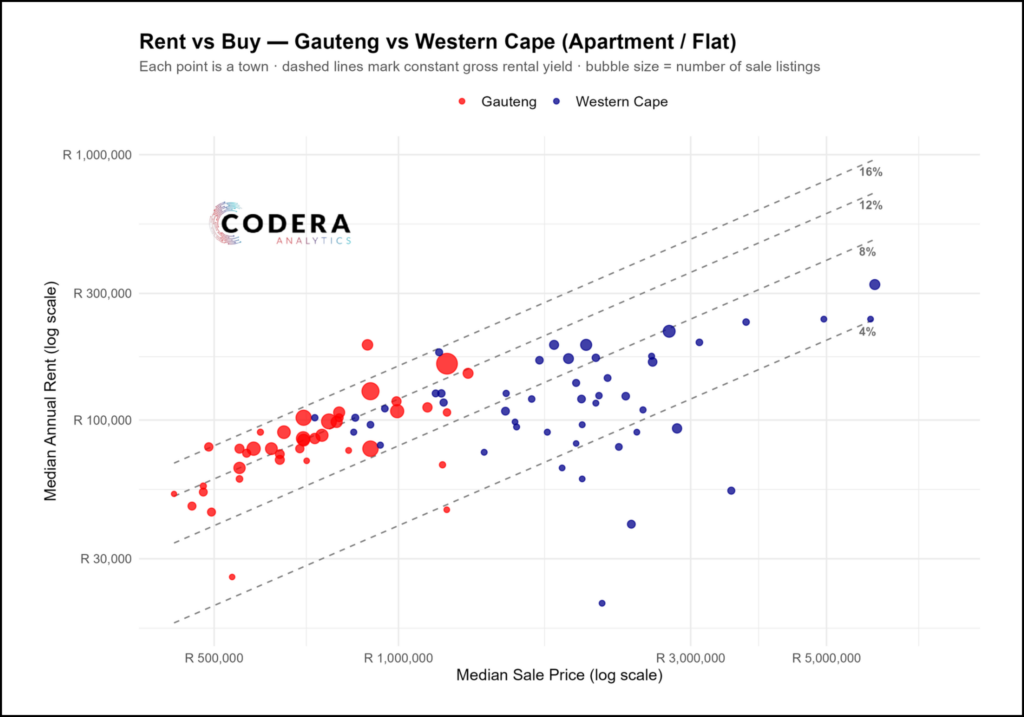
Across all property types analysed – houses, townhouses and apartments – rent was more affordable in Gauteng than in the Western Cape.
This finding supports other research. For example, Payprop’s latest Rental Index shows that the average rental price in the Western Cape was R12,125 in Q1 2026, which is over R2,500 higher than in Gauteng, at R9,600.
The Western Cape’s high rental prices may create the impression that rental yields would outperform those generated in Gauteng. However, the Codera data tells a different story.
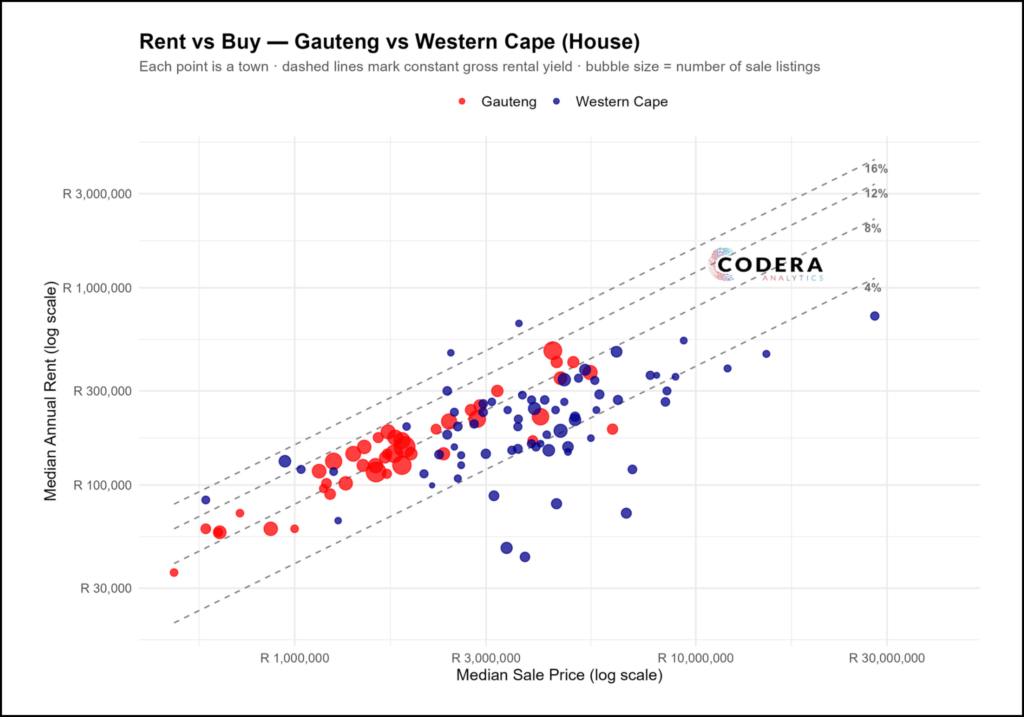
For houses, for example, a larger proportion of properties available in Gauteng would imply rental yields of around 8% or more than in Cape Town.
Based on current pricing, Gauteng rental yields for apartments tend to be higher on average, since properties are cheaper.
Meanwhile, rents in low-property-price suburbs tend to be higher relative to prices than in the Western Cape.
Buying vs renting in Gauteng and the Western Cape
While Gauteng may offer better rental yields and affordability, the choice between Gauteng and the Western Cape is more complex for individuals.
It depends on what they can afford, whether they are acquiring a property they want to live in or to rent out, and simply which province they would prefer to live in.
For those unsure whether to buy or rent a property, Meridian Realty principal and founder Antonie Goosen previously told Daily Investor that location is one of the biggest factors.
Johannesburg and Cape Town are the most popular cities in South Africa, but they both offer very different property markets.
Goosen said Johannesburg often provides a stronger immediate buying opportunity because buyers can generally get more property for their money.
“Johannesburg often presents a stronger immediate buying proposition because buyers can generally obtain more property for their money,” Goosen said.
He added that buyers also have greater negotiating room in many Johannesburg suburbs, which can make ownership more accessible than in comparable areas of Cape Town.
However, buyers should not judge a Johannesburg property solely by its price. Goosen said the market needs to be assessed “suburb by suburb and sometimes building by building”.
Factors such as security, municipal services, levies, body corporate finances, nearby employment nodes, schools, and resale demand must all be considered.
He stressed that a property should not be considered good value simply because it is inexpensive.
This is especially because Johannesburg’s property market has been stagnant for a long period, which means many sellers have not seen good returns on their investment.
Conversely, in Cape Town, strong lifestyle demand, inward migration, and limited supply in sought-after areas have supported both property prices and rentals.
“The initial cost of buying is considerably higher in many suburbs, but tenants are also facing rising rentals and competition for good-quality properties,” Goosen said.
For buyers who are settled in Cape Town and plan to hold a property for the long term, buying can provide protection against rising rents while giving them exposure to a market where supply remains constrained.
“For someone who is settled in Cape Town, can afford the property comfortably and intends to hold it for the long term, buying can provide protection against future rental escalation and exposure to a supply-constrained market.”
However, at the higher end of the market, renting can still make financial sense for people who value flexibility or do not want to commit a large amount of capital to one property.
“In simple terms, Johannesburg may offer the better entry point for buyers, while Cape Town may offer stronger long-term scarcity value, but at a much higher cost of entry.”
The graphs below show the distribution of property prices and rents by suburb in Gauteng and the Western Cape, according to Codera.
The lines show the gross rental yield (gross rent-to-price ratios), indicating the annual return from rental income relative to the assumed property prices in that area before accounting for costs or taxes.






Comments