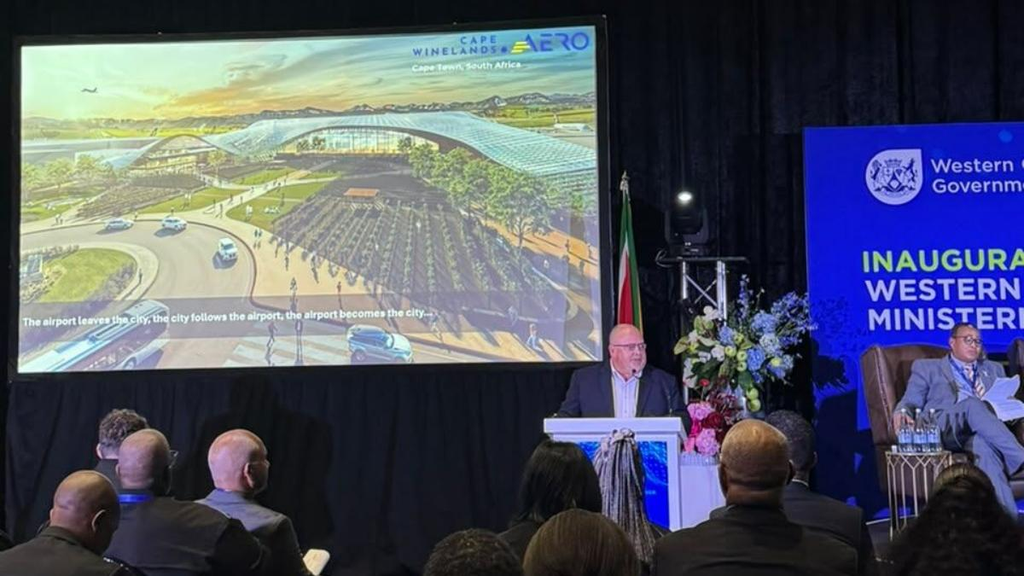
New R10 billion international airport in Cape Town


The Cape Winelands Airport promises to provide Cape Town with an additional international airport and create an economic hub in the area.
The Cape Winelands Airport has a rich history. It was built in 1943 to serve as an operational base for the South African Air Force.
It was formerly known as the Fisantekraal Airfield and was operated by the South African Air Force. However, it became privately owned in 1993.
In November 2020, private investors acquired the Cape Winelands Airport property. It is owned and operated by RSA.Aero.
Currently, Cape Winelands Airport serves as a general aviation facility and is a popular choice for flight training in the vicinity of Cape Town.
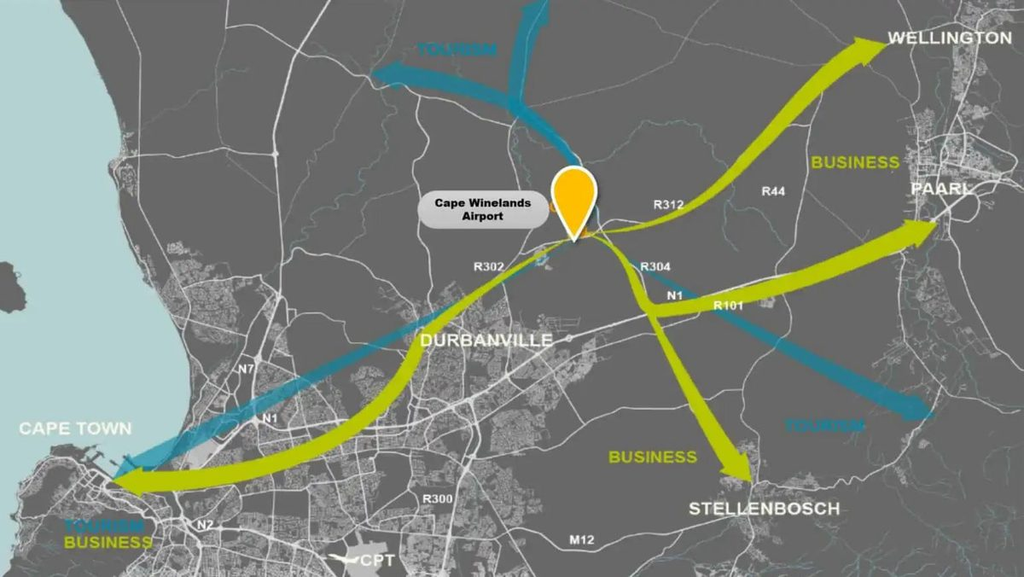
It is located on a 150-hectare site 13 km northeast of Durbanville. It is, therefore, ideally situated to serve the Cape Town aviation sector.
Plans are underway to transform the Cape Winelands Airport into a hub for air travel to Cape Town, aiming to serve as an engine of regional economic development.
The airport has previously unveiled a multi-billion-rand redevelopment and expansion plan to create an international commercial airport.
The first step is to expand and realign the primary runway to 3,500 m. The airport currently has four runways, two inactive, and the others are under 1 kilometre.
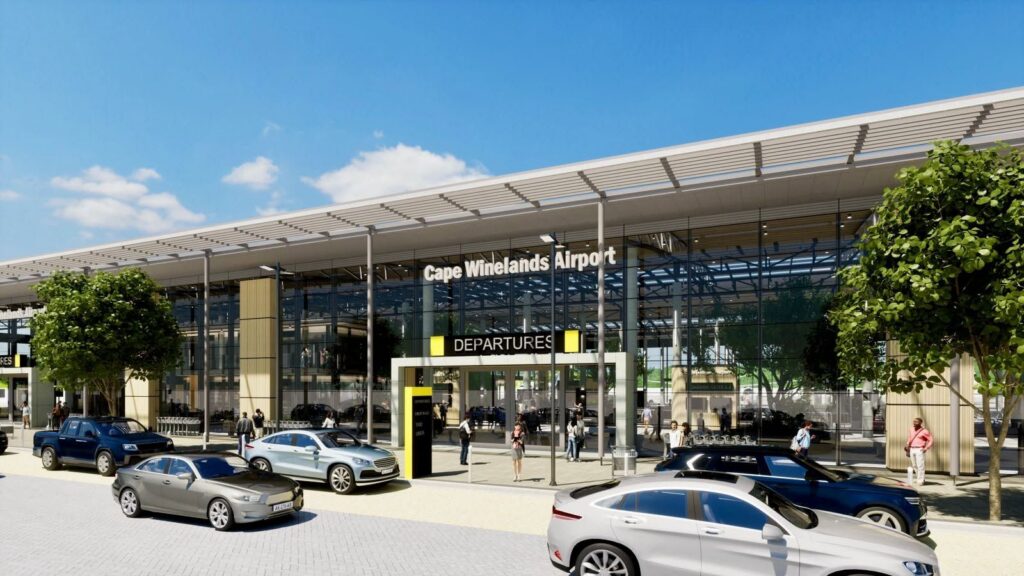
The Cape Winelands Airport will develop a new, boutique terminal building, including state-of-the-art processing facilities.
The cargo facility is another key part of the development. The success of airline operations is directly linked to their ability to fill the aircraft’s belly.
The airport is also investing in new hangarage, which includes additional hangars needed to serve the general aviation, business aviation and airline sectors.
There will also be upgraded fuelling facilities. Aviation fuel storage for JetA1 and Avgas will be included, with a dedicated spatial allocation for sustainable aviation fuels (SAFs).
A fuelling station is expected to be built at the airport entrance. As is typical globally, they serve airport users as well as individuals in proximity to the airport.
The Cape Winelands Airport plan also includes hotel accommodation for passengers and flight students, a heliport, warehousing, and logistics facilities.
Updated information about the Cape Winelands Airport

Last week, the Cape Winelands Airport said that its teams continue to work through the planning and preparation required to bring a project of this scale and complexity to life.
These plans include airport and infrastructure design, engineering, environmental considerations, road connectivity, and commercial planning.
“There are many interconnected elements that need to be considered, coordinated and brought together,” it said.
“Much of this work may not yet be visible from the outside, but it forms an essential part of preparing the project for its next phase.”
“Every plan developed, technical detail considered, and decision made contributes towards creating the foundations for the airport we envision.”
The team said that their vision extends beyond creating another airport in Cape Town. Instead, it is working towards a new gateway for the Western Cape.
“This gateway will support greater connectivity, contribute to the growth of the region and create new opportunities for tourism and business,” they said.
“At the same time, we want to rethink what an airport can be. It can be a place designed around the people who use it, with sustainability and innovation at its heart.”
The Cape Winelands Airport was recognised as part of South Africa’s investment momentum at the 6th Annual South Africa Investment Conference.
“A planned R10 billion capital investment set to transform air access in South Africa and unlock new economic potential,” it said.
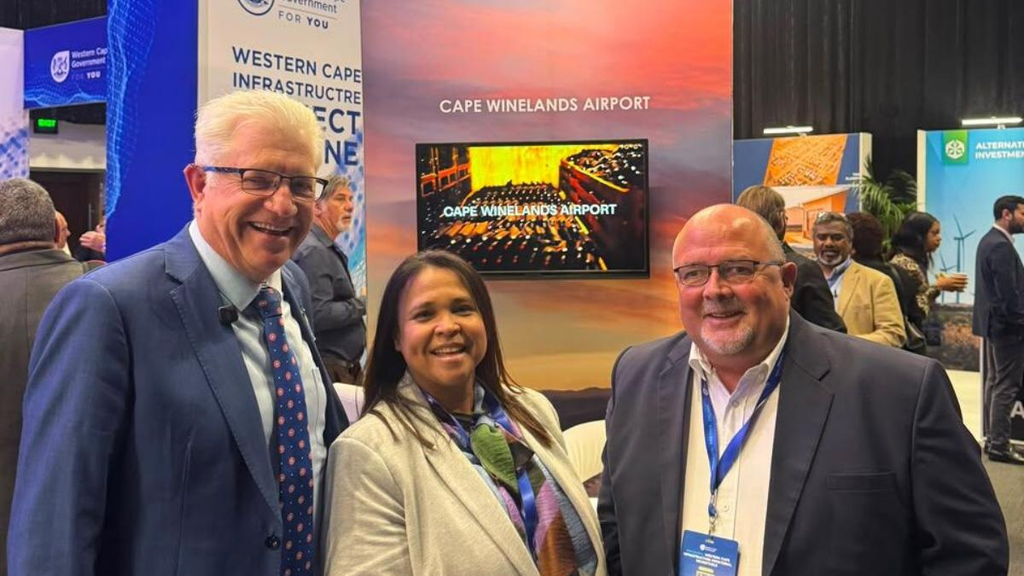
Mark Wilkinson, Director of the Cape Winelands Airport, said that giving Cape Town a second airport will ease congestion and reduce carbon emissions.
He said they hope to start construction on the Cape Winelands Airport upgrade soon and be operational by 2028 with the first phase of operations.
“It is going to transform the economic landscape of Cape Town and the Western Cape,” Wilkinson said at Africa’s Green Economy Summit.
Wilkinson said this infrastructure project will have the single most significant socioeconomic impact of any project in Cape Town.
Cape Winelands Airport images

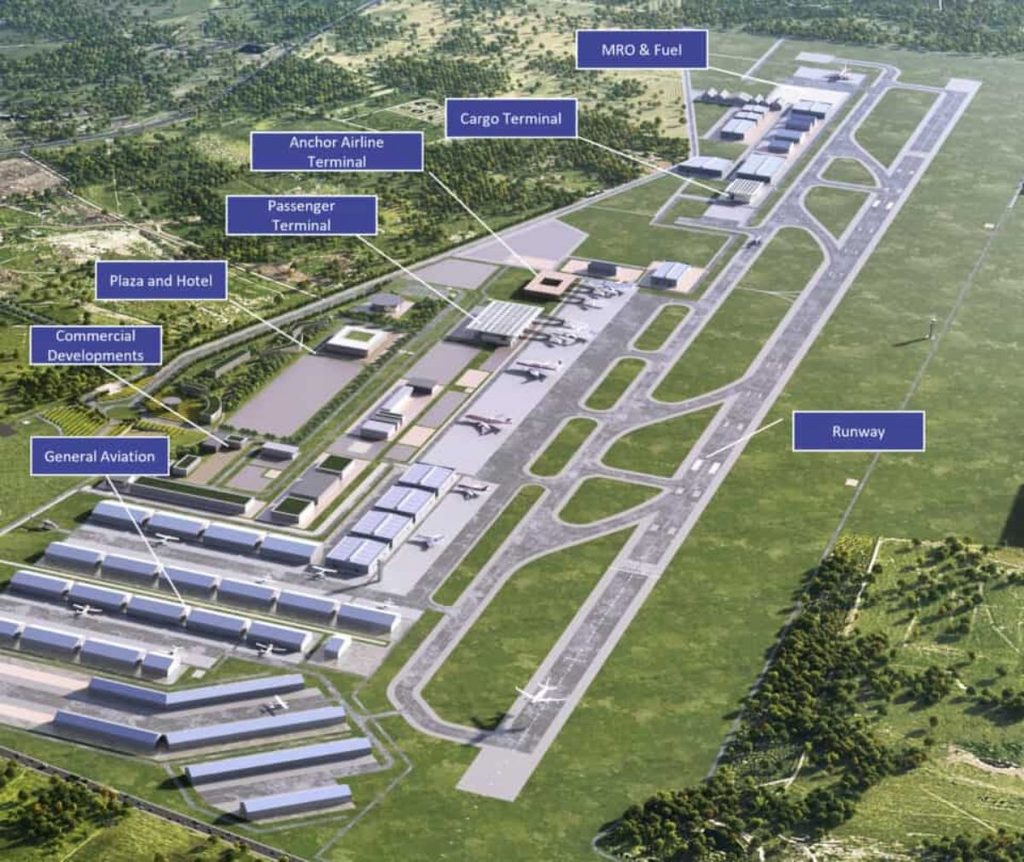
Cape Winelands Airport management photos