South Africa’s ‘red gold’ is gaining popularity worldwide



Rooibos tea continues to grow in popularity worldwide, presenting economic opportunities for South Africa.
Known as the ‘red gold’ of South Africa, Rooibos is a herbal tea made from the dried leaves of the Aspalathus linearis plant, and is famous for its deep red colour.
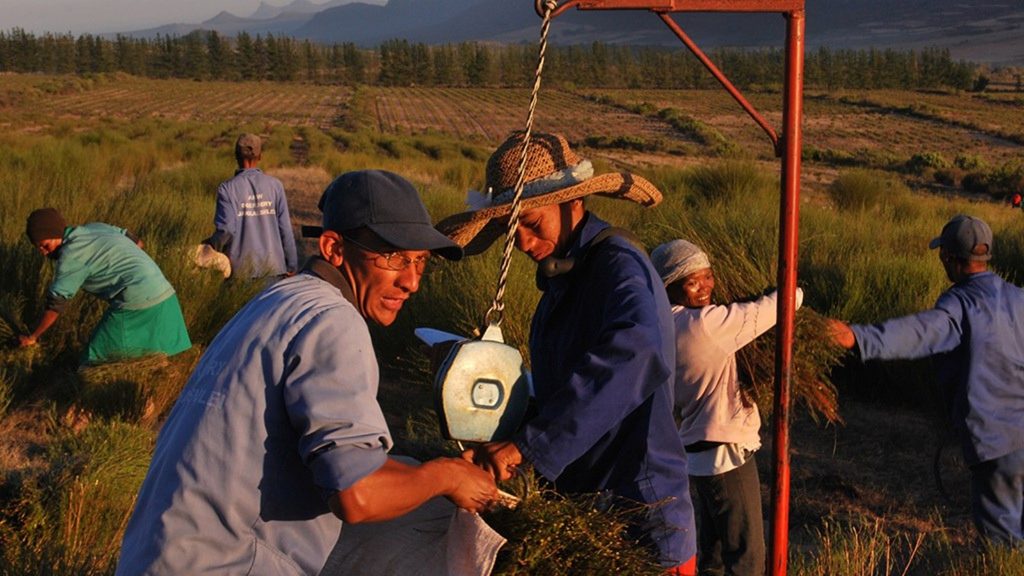
This plant is native to the Cederberg mountains of South Africa’s Western Cape province, where a growing industry has developed around Rooibos.
According to the South African Rooibos Council (SARC), South Africa’s Rooibos industry encompasses 300 commercial farmers and 210 small-scale farmers.
Additionally, it supports 160 small-scale farmers, including those belonging to the Wupperthal Cooperative in the Western Cape and the Heiveld Cooperative in the Northern Cape.
The industry reportedly provides income and employment to 8,000 people across primary production and upstream activities, including processing, packaging, and retail.
Rooibos production averages 15,000 tonnes per year, but fluctuates depending on factors such as plantings, rainfall, and climate conditions.
Despite these fluctuations, demand for Rooibos remains high, with total sales of the tea exceeding 10 billion cups in 2025.
In South Africa alone, Rooibos reportedly accounts for one-third of the country’s entire tea market, and is sold at many cafes, restaurants, and grocery stores across the country.
Global demand for the tea has continued to grow in recent years, with Rooibos now exported to more than 50 markets.
In 2025, total Rooibos exports reached 10,930 tonnes, surpassing the 10,000-tonne mark for the first time. This is almost double the 5,900 tonnes exported in 2015.
Japan has consistently ranked as the top export destination for Rooibos since 2020, accounting for 33% of all Rooibos exports in 2025.
Earlier this year, China implemented a zero-tariff policy on imports from African countries, after having already reduced the tariff on Rooibos to just 6% in 2024.
This move was welcomed by both the SARC and the Department of Trade, Industry, and Competition as an opportunity for growth in the sector and job creation in South Africa.
Tapping into the economic potential of Rooibos
With the growing global demand for Rooibos, the SARC has increasingly called on industry stakeholders to find ways to keep the tea’s value in the country.
SARC spokesperson Adele du Toit said businesses should look beyond the traditional tea cup and find new applications for Rooibos in other sectors.
“The real opportunity now is to unlock more value from Rooibos within South Africa, through innovation, beneficiation, and new business opportunities across the value chain,” du Toit said.
According to the SARC, Rooibos is already used in a wide range of applications, from foods and beverages to cosmetics and personal care products.
This, they said, presented opportunities for manufacturers, entrepreneurs and small businesses to create new offerings centred around the plant.
This can range from new Rooibos-based beverages and confections to self-care brands using the plant in beauty and wellness products to potential uses in the hospitality sector.
“Every new application creates the possibility of a new product, business or even market, broadening the economic contribution of Rooibos well beyond the farm and teacup,” Du Toit said.
“The more we can transform Rooibos into finished products and experiences here in South Africa, the greater the opportunity to retain more of that value within our own economy.”
In 2019, the Rooibos industry entered into an Access and Benefit Sharing (ABS) agreement with the native San and Khoi communities in the Cederberg region.
Under this agreement, processors pay these communities a 1.5% levy based on the farm-gate price of Rooibos in recognition of their Traditional Knowledge of the plant.
Between 2019 and 2024, these communities received R42.7 million as part of the ABS, which Du Toit said is indicative of the rural development benefits associated with Rooibos production.
She also pointed to potential tourism opportunities, with the prevalence of Rooibos-related restaurants, farm visits, tastings, and accommodation across the Cederberg.
“Rooibos has already demonstrated its ability to create economic value well beyond the farm,” Du Toit said.
“The challenge now is to build on that foundation in a way that strengthens the industry, supports the communities connected to it, and protects the resource on which the entire value chain depends.”






Comments