Finance Minister Enoch Godongwana warns about higher taxes in South Africa


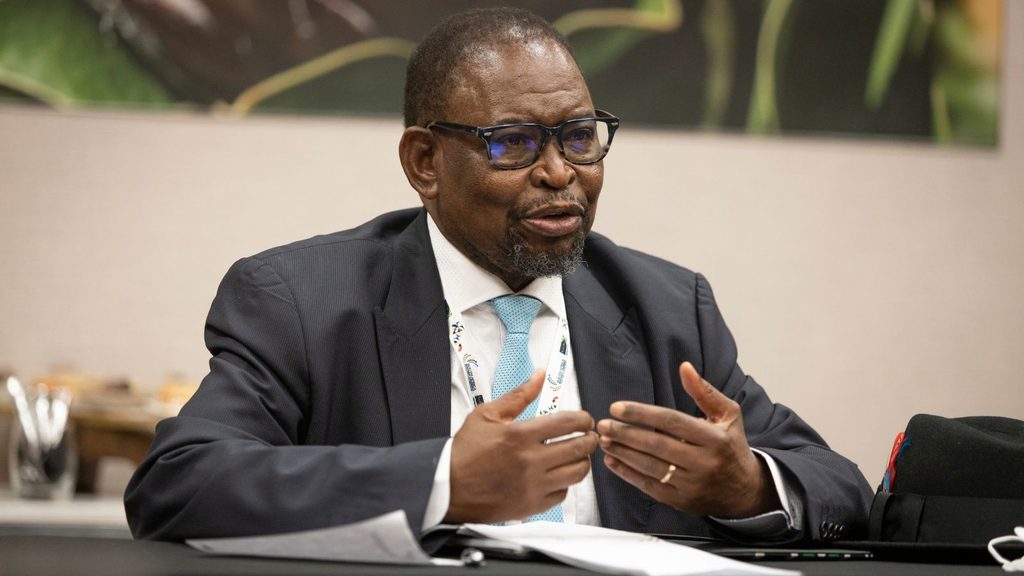
Finance Minister Enoch Godongwana has warned the government that South Africa’s tax burden is at an uncomfortably high level.
Godongwana explained that if the government were to try to raise taxes further or squeeze taxpayers much harder, the result would likely be lower revenue rather than more.
This is because South Africa is far along the Laffer Curve, which is an economic theory that illustrates the relationship between tax rates and the revenue collected by the state.
The theory explains that as the state increases tax rates, it will initially raise more revenue until it crosses a point where further increases yield diminishing returns.
Godongwana told BizNews, following his Medium-Term Budget Policy Statement (MTBPS), that South Africa has probably crossed this point.
The MTBPS was broadly filled with positive news, with the government’s debt burden peaking as a share of GDP and beginning to decline.
This news came despite an external shock from conflict in the Middle East and the provision of relief in the form of cuts to fuel levies.
However, it was not all good news as the stabilisation of the debt load has come on the back of an increasingly strict and aggressive SARS.
SARS has been tasked by the government to increase tax collection by improving compliance to avoid tax increases.
This resulted in South Africa’s tax burden as a percentage of GDP reaching a record high of 26.8%, with Godongwana saying this number bothers him.
“This bothers me because for us to be competitive on corporate income tax, we have to reduce that as a percentage of GDP,” Godongwana said.
“Secondly, personal income tax is also problematic for individuals who are sitting among high-income groups at a 45% tax rate. Those are not comfortable levels for any Minister of Finance.”
Combined with VAT, Godongwana said this means South Africa’s “Big Three Taxes” are also its most sensitive.
He warned that the government cannot keep raising these taxes to fund spending priorities or budget increases in the coming years.
Godongwana and the National Treasury have avoided tax hikes by limiting relief to inflation-linked adjustments to personal income tax brackets.
This has been coupled with giving SARS additional resources to improve compliance and the closing of several tax loopholes.
South Africans being squeezed hard
Economists have been warning that South Africa has passed the point where tax increases will not yield more revenue for the state for some time.
They have pointed to South Africa’s highly concentrated tax base and the country’s inefficient tax system, alongside high taxes for this.
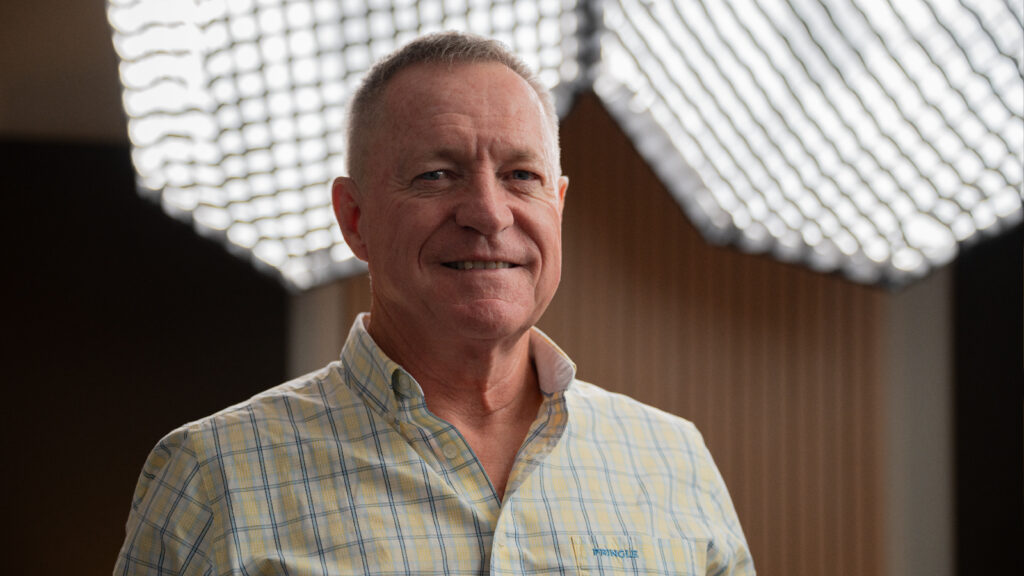
Efficient Group chief economist Dawie Roodt said that a large proportion of the state’s funding comes from a small number of high-income individuals.
The money the state collects from these individuals is redistributed to lower-income households, leaving those who paid the tax having little to show for it in terms of services from the state.
Roodt warned that any increase in the tax rate is likely to translate into less revenue for the government as it becomes more attractive for individuals to invest in ways to minimise their tax liabilities.
“The fiscus in South Africa is particularly redistributive. The expenditure is not benefiting the people who paid the taxes,” Roodt said.
He estimated that 30 million South Africans depend on the state for their monthly income, including government employees, who account for 17% of the country’s GDP in wages.
“The current tax system does not fit a developing country like South Africa. The tax mix is wrong. The burden is heavily skewed,” Roodt said.
“The country is already beyond the optimal tax rate for personal income tax, corporate income tax and value-added tax. It undermines economic growth directly.”
Roodt explained that the best way for the government to get additional revenue is from a growing economy, which is not the case in South Africa.
“His only alternative is to give SARS more money and get them to squeeze every last drop of blood out of the economy,” Roodt said.
“In the process, the tax-to-GDP ratio has reached new record levels, and SARS has become extremely aggressive.”
He said that people are now tired of SARS because they are so aggressive. “We are being taxed to death,” he said.