South Africa’s illicit economy is crushing the country


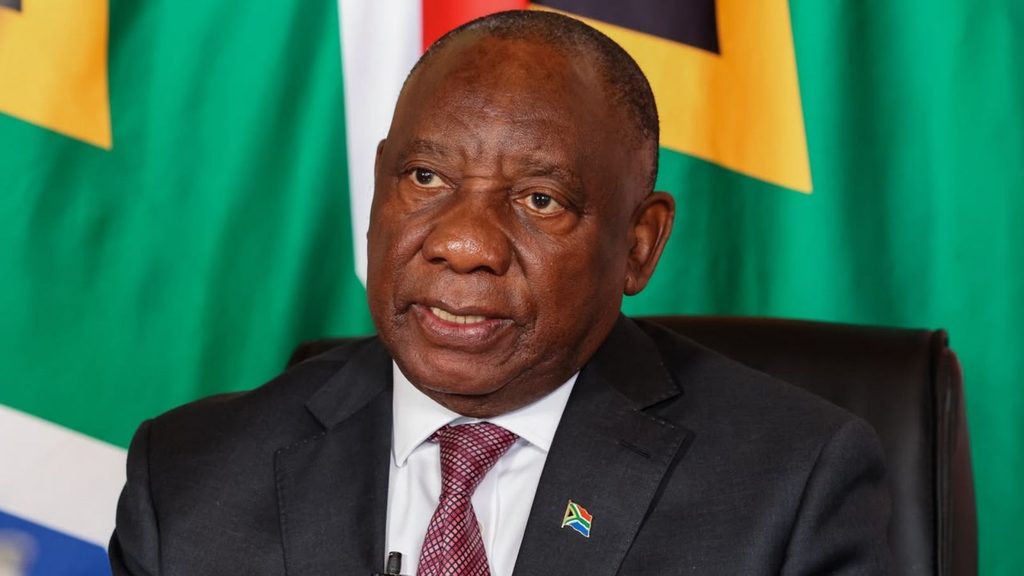
IRS Forensic Investigations CEO Chad Thomas warned that the illicit economy has permeated normal business, sapping billions from the economy.
Thomas explained that what started as illicit markets emerging in specific sectors, including cigarettes, liquor, and mining, has now become a given across various sectors.
This has not only harmed these sectors specifically but also damaged investor confidence in South Africa as a whole, making firms less likely to invest in the country and do business with the state.
In the latest instalment of PSG’s Think Big series, Thomas unpacked the pervasive influence of the illicit economy on the ordinary course of business in South Africa.
“It started with the illicit economy. It started with counterfeit cigarettes, it started with counterfeit liquor, it started with the Zama Zamas,” he said.
“But what’s grown out of this illicit market is organised crime that is now permeating normal business.”
“You can’t now have a government tender without being extorted by a so-called business forum, which is a nice name for a mafia or cartel of sorts.”
He used the example of a R1 billion contract awarded to a company to build a bridge linking a rural area of KwaZulu-Natal to the Eastern Cape.
“The construction mafia demanded 30% of the value of that project, or they wouldn’t allow it to proceed,” he said.
The project was ultimately shut down because of extortion-related violence.
Thomas said that, as criminal syndicates become more emboldened, the functioning of a market economy is affected.
This is because investors need confidence that contracts will be enforced, regulators will function, and the rule of law will hold.
He explained that the pervasiveness of organised crime in government tenders has reached the point where many private-sector players simply refuse to do business with the government.
This is problematic because the government is the private sector’s largest client.
“So many organisations within the private sector no longer want government as a client,” Thomas said.
“They don’t want to be strong-armed. They don’t want to pay protection fees. They don’t want to be part of a compromised, corrupt process.”
Eventually, Thomas said, this will leave only companies willing to be compromised as bidders for government tenders.
“We can see how this illicit economy has moved from the shadows into the limelight, and how emboldened organised criminal syndicates have become,” he said.
Thomas believes this problem must be addressed, but there is a lack of social and political will to do so.
“We seem to have become desensitised as a nation to the impact and the effects that corruption has,” he said.
The cost of South Africa’s illicit economy

Given the nature of the illicit economy, it is impossible to say exactly how much it has cost the country in lost tax revenue, missed opportunities, and business disruption.
Thomas places the cost of the illicit economy “in the billions”, with other estimates showing similar figures.
For example, a study by Ipsos previously estimated that the illicit cigarette trade alone costs the country around R28 billion every year.
Public Works Minister Dean Macpherson also recently revealed that the direct cost of the construction mafia is R17 billion in lost economic output per year.
To address this growing problem, Thomas said commissions like the ongoing Madlanga hearings are necessary.
“Criminal syndicates have had unfettered access to the very top echelons of our state security leadership for the past 26 years,” he said. “We really need Madlanga, and whatever it costs, we need to spend.”
Thomas also advocated for establishing a Chapter 9 Anti-Corruption Body, which has been a topic of debate for some years.
“We’ve got all these other agencies responsible for oversight when it comes to our criminal justice system that haven’t really succeeded,” Thomas said.
“Having a ‘Super Body’ is perhaps the right route to go. And Madlanga can lay the foundation for this.”
A Chapter 9 institution is a constitutionally protected body that is tasked with supporting and strengthening constitutional democracy in South Africa.
Examples of existing Chapter 9 institutions include the Public Protector, the Auditor-General, the Electoral Commission, and the Human Rights Commission.
A Bill has been put forth to establish such a Chapter 9 Anti-Corruption body, namely the Constitution Twenty-first Amendment Bill, but little progress has been made to date.
This Bill, put forth by the DA’s Glynnis Breytenbach, aims to amend Chapter 9 of the Constitution to establish an independent Anti-Corruption Commission.
This commission would be tasked with investigating and prosecuting high-level corruption and organised crime.
The Bill was introduced to Parliament in November 2024 and referred to the Portfolio Committee on Justice and Constitutional Development for review.
It has undergone parliamentary committee briefings and stakeholder inputs, but the Department of Justice has raised structural reservations. Currently, the Bill is still under committee review.

Comments