Dawie Roodt as Finance Minister of South Africa


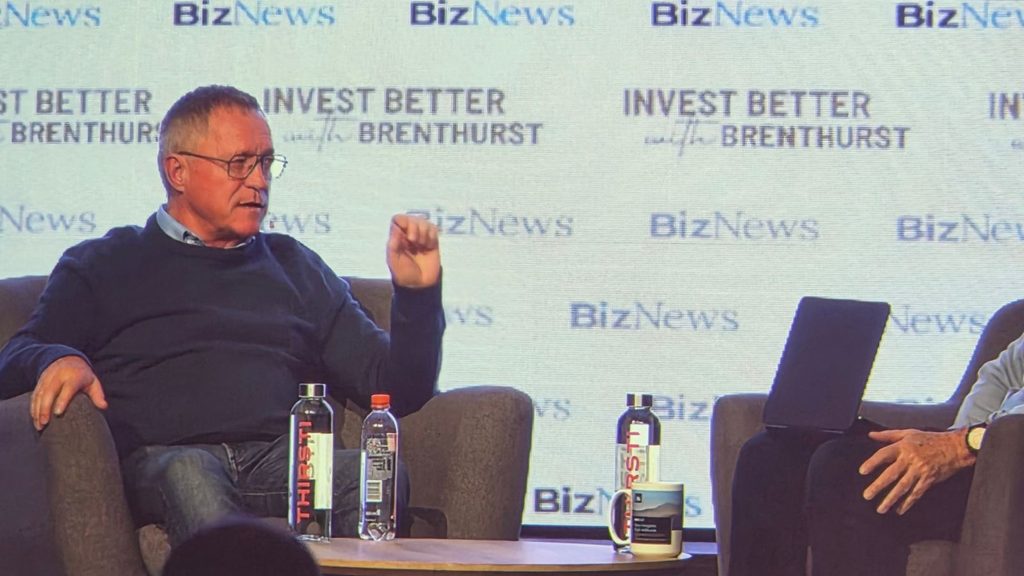
Dawie Roodt would overhaul South Africa’s tax regime to make it simpler, strip all loopholes and deductions from personal income tax, elminate zero-rated VAT items, and liberalise exchange controls.
This is a fantasy scenario for Efficient Group’s chief economist that played out at the 9th BizNews Conference.
The ultimate end goal for Roodt as finance minister would be to have a tax regime that is simple and cheap to administer, which places much of the burden on broad-based taxes.
Currently, South Africa’s tax regime places most of the burden on individual taxpayers through personal income tax and businesses via corporate income tax.
This has created one of the most concentrated tax bases in the world, with a handful of individuals and companies providing a significant portion of the government’s revenue.
These taxes are also difficult for SARS to administer, with South Africa’s tax code having hundreds of loopholes, deductions, and exemptions.
This creates a situation where the tax regime is highly inefficient and burdensome for both taxpayers and SARS.
Roodt said that the extent to which this complexity stifles economic growth is underestimated, scaring off investors and limiting wealth creation.
He also said the impact of such changes on economic growth is significant, freeing up capital for more productive use by the state and businesses.
This is among the lowest-hanging fruit for the government to quicken economic growth in South Africa and boost personal wealth creation.
Crucially, Roodt said this must be done without significantly reducing the amount of revenue the state collects, as its financial accounts are in poor shape.
The state needs additional revenue to avoid issuing more debt to provide basic services and make interest payments.
Roodt said the best way to do this is to grow the economy, as this organically generates more tax revenue for the state.
However, in a low-growth environment, he would settle for a simpler, more efficient tax system that meets the state’s needs without unnecessarily burdening individuals.
End loopholes and VAT zero-rating
“What would I do as Finance Minister? I would love to be Finance Minister in South Africa,” Roodt said in response to the fantasy scenario.
“I wouldn’t want to be a conventional politician, because I want to be liked by people. I also wouldn’t want to be the Reserve Bank Governor, because there is nothing to fix.”
Roodt’s primary objective would be unconventional: he would focus first on South Africa’s tax regime rather than on government spending.
“I will fix this tax regime without necessarily lowering the tax bill, but I would make it the simplest,” Roodt said.
“I will make it the easiest to comply with and the least complicated tax regime in the world. That is what I would do first.”
To achieve this, Roodt would first strip every single exemption, deduction, and rebate from personal income tax.
“You will still have personal income tax, but I would reduce it to only tax on the income an individual makes. No deductions, no rebates, nothing. Simple and straightforward,” Roodt said.
This would be followed up with the elimination of all food items that are zero-rated for VAT. This list includes brown bread, maize meal, fresh fruit, milk, and eggs.
The elimination of this, with the streamlining of personal income tax, would significantly ease SARS’ administrative burden and make the tax regime more efficient.
It would also make it easier for individuals and businesses to comply, enhancing tax revenue without SARS being aggressive.
The elimination of zero-rated VAT items means the state will shift welfare and poverty relief to the spending side of the budget, which Roodt argued is more effective and efficient.
“If you want to address poverty, do it on the spending side. Put cash in the hands of individuals and get rid of the bureaucracy in between the poor and the government,” Roodt said.
The final Roodt would do as finance minister would be to completely lift South Africa’s capital controls.
This would allow South Africans to move their money in and out of the country without needing bureaucratic permission and enable foreign investors to easily get their capital in and out.
“I want to reduce your taxes. I want to get rid of foreign exchange controls because it’s your money. You can do whatever you want with it,” Roodt said.



Comments