Top South African university shut down, and Facebook under siege


South Africa’s rand is still holding steady at R16.25 to the United States dollar, remaining weaker than last week.
The local currency has felt the pressure of rising tensions in the Middle East, with lower gold prices also weighing on risk-sensitive currencies like the rand.
The gold price has fallen in response to rising energy prices amid escalating US-Iran tensions, which have stoked inflation worries and weighed on non-interest-bearing bullion.
This comes as prospects for a US-Iran peace deal remained stalled after United States President Donald Trump said Tehran was unlikely to accept the terms needed to end the conflict.
Iran, in turn, vowed a “fully offensive” military posture and said the Strait of Hormuz would remain closed until Washington meets the conditions of an interim agreement.
Soon, the US-Iran war will reach the six-month mark. This conflict has overturned global interest rate outlooks and stirred up inflationary concerns for most of the year.
Aside from the rand, the JSE has also been under pressure. The All Share Index is down 1.18%, while the Top 40 is down 1.24%.
US markets are also not having a good week, with the S&P 500 down 0.69% and the Nasdaq having bled 1.33% as memory and AI chips experienced concerted selling.
Citadel Global managing director Bianca Botes notes that the Dow proved more resilient in easing just 0.54%, as stronger long-dated Treasury yields and a firmer oil price kept buyers on the sidelines.
She explained that Wall Street’s semiconductor weakness swiftly made its way across Asian screens on Wednesday morning.
The KOSPI collapsed by 5.50%, as SK Hynix and Samsung, which together account for nearly half the index, were dumped.
Tokyo’s Nikkei is also trading 2.40% lower, and the broader MSCI Asia Pacific Index, excluding Japan, is firmly in the red, taking its cue directly from the chip selloff that began in the US.
In commodities markets, Brent crude oil extended its climb to $91.71/barrel, up 0.76%.
On Wednesday morning, the rand was trading at R16.24 against the US dollar, R18.81 against the euro and R21.99 against the British pound.
Important finance and investing news

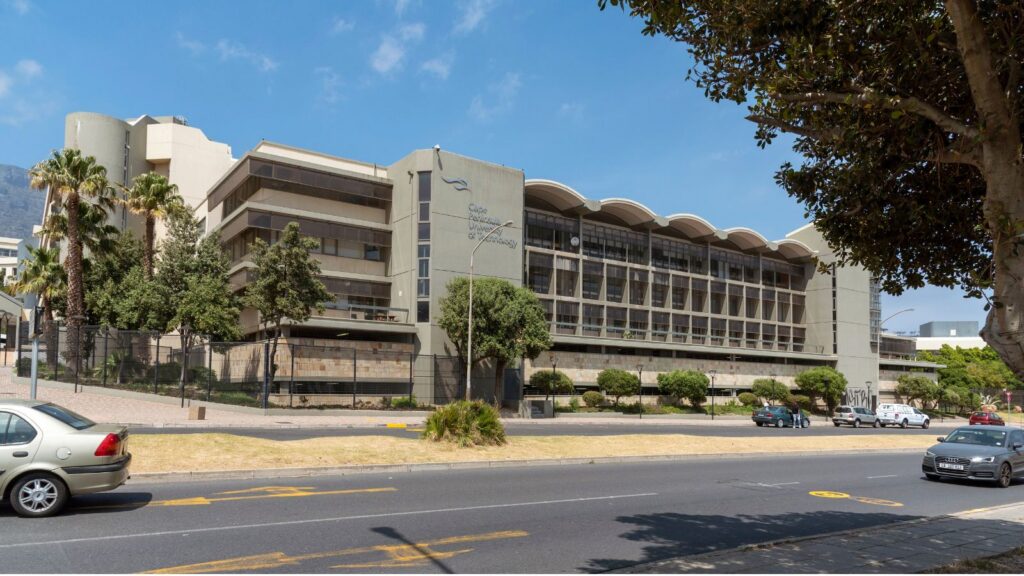
South African university shuts down: The Cape Peninsula University of Technology (CPUT) has suspended all academic activity until further notice. It has also ordered all students to vacate residences, as all campuses will be shut down, following days of protests. [EWN]
War on Ozempic: Big food companies ranging from Nestle to Kraft Heinz are developing new products to get people to eat, even when they don’t want to. This is part of the efforts of these companies and fast-food chains to minimise the impact of Ozempic and other GLP-1 drugs on their businesses. JPMorgan sees GLP-1 treatments draining the food and beverage industry of $30 billion to $55 billion in annual revenue as soon as 2030. [Wall Street Journal]
Trump pauses tariffs: US President Trump announced late on Tuesday he was putting a three-day pause on new 50% tariffs set to go into effect on Canadian goods at midnight, saying the two countries had reached a deal. [Reuters]
Absa wants back in on Angola: Absa is looking to re-enter the Angolan market two decades after it exited the country. It is also pursuing a banking licence in Nigeria as it looks to diversify beyond its three main markets of South Africa, Kenya, and Ghana. [BusinessDay]
Facebook under siege: Attorneys representing four US states argued that Meta (formerly Facebook) developed its products to hook young users on its platforms and harvested the data of children under 13 to its benefit. This is Meta’s latest social media addiction trial. Meta argued that it is working with authorities, parents, and action groups to improve the experience of young people on its platforms. [Yahoo Finance]



Comments