Sale of FlySafair under fire


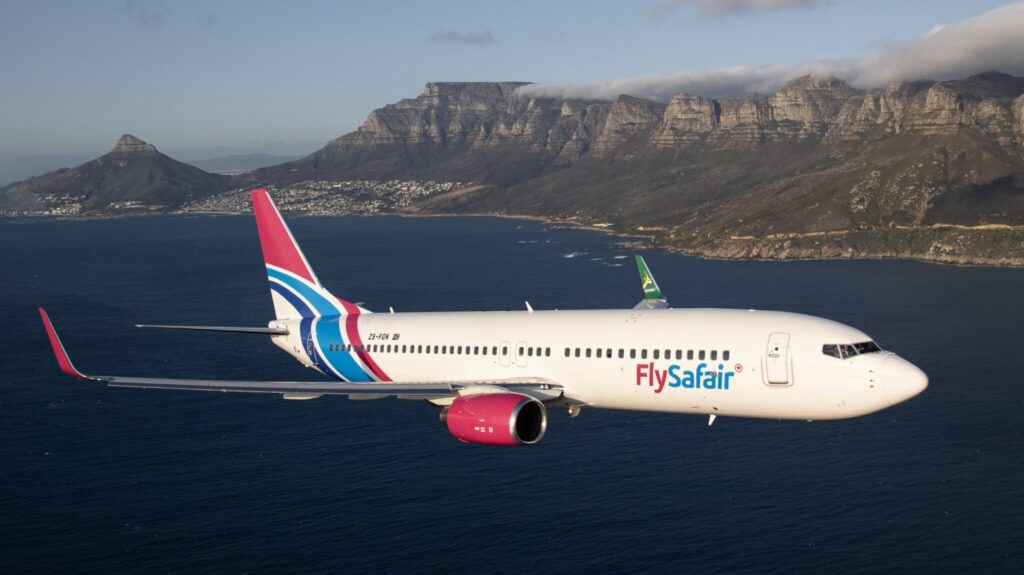
Privately owned airline CemAir has petitioned South Africa’s Competition Tribunal to prohibit the proposed acquisition of Safair Holdings by Harith Aviation.
The transaction would see Harith acquire Safair from its current owner, the Irish aviation services company ASL Aviation Holdings.
Harith first announced its intention to acquire the owner of FlySafair in February 2026, with talks between the two reportedly already at an advanced stage.
Representing CemAir before the Tribunal on 17 August 2026, advocate Dwight Snyman raised concerns over potential overlapping ownership interests arising from the sale.
Snyman specifically pointed out that Harith currently holds a 37.5% ownership stake in the privately-owned Lanseria International Airport.
The other 62.5% is controlled by the Government Employees Pension Fund (GEPF), which is represented by the state-owned Public Investment Corporation (PIC).
Additionally, the PIC has publicly confirmed that it holds a 30% shareholding in Harith General Partners, the parent company of Harith Aviation.
According to Snyman, this corporate overlap could lead to the inadvertent exchange of commercially sensitive information.
He argued that this would present an opportunity for FlySafair to gain an anti-competitive advantage through common interests at Lanseria, where the airline is already based.
Additionally, he said the merger could potentially soften competition between Lanseria and airports owned by the Airports Company South Africa (ACSA), in which the PIC holds a 20% stake.
The proposed acquisition comes after FlySafair faced regulatory scrutiny over its ownership structure, with domestic airlines being required by law to be at least 75% South African-owned.
The Air Services Licensing Council previously found that ASL Aviation Holdings effectively controlled 74.86% of the airline through a trust arrangement.
Last month, the Competition Commission approved the transaction and recommended that the Competition Tribunal do the same, provided certain conditions were met.
These include regulated information exchange and ensuring that goods and services provided to other airlines at Lanseria are not offered on unfair or discriminatory terms.
Responding to CemAir’s concerns, the Competition Commission said Harith had agreed to these conditions and that the PIC would only hold minimal indirect interest in FlySafair after the merger.
The Competition Tribunal reserved its approval of the acquisition following the hearings, and said it would communicate its final decision at a later date.
Concerns over FlySafair jobs
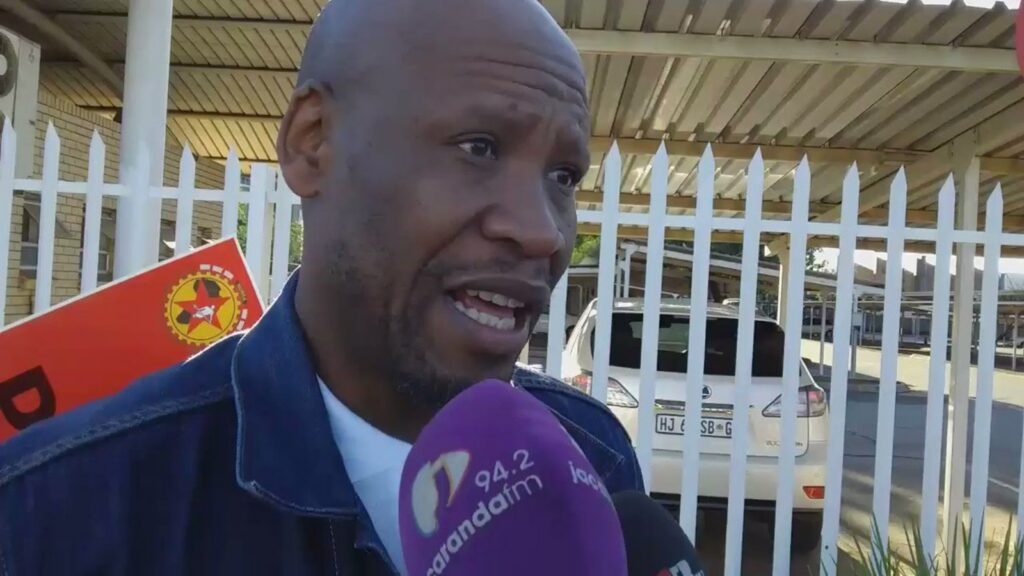
The South African Cabin Crew Association (SACCA) has also raised concerns before the Competition Tribunal regarding the acquisition of FlySafair.
The union, which represents a majority of FlySafair’s cabin staff, said it had not been properly consulted prior to the announcement of the acquisition.
However, SACCA said it would still support the acquisition provided it does not result in the retrenchment of any FlySafair staff, in line with Section 197 of the Labour Relations Act.
Appearing on Newzroom Afrika, SACCA president Christopher Shabangu said the union had appealed to the Competition Commission for protection for FlySafair’s workers.
“What that deals with is if the merger takes place, there wouldn’t be any changes with regard to the contracts of the workers,” Shabangu said.
“There wouldn’t be any material changes to the workers’ working conditions, and there wouldn’t be any implied retrenchments related to the merger.”
Shabangu explained that in an implied retrenchment, a company uses a merger opportunity to replace permanent employees with temporary workers.
While technically nobody is retrenched during the process, it becomes implied because these roles are not filled with permanent jobs when those employees resign.
According to CH-Aviation, Safair Operations CFO Pieter Richards has confirmed that no pre-merger retrenchments would take place at FlySafair.
Shabangu said that while SACCA acknowledges Harith’s stake in Lanseria, it does not foresee any potential conflicts of interest arising out of the acquisition.
He also said that SACCA is not concerned about how Harith is funded, and said it was the responsibility of the Commission to ensure the funding for the deal is sustainable.
Instead, Shabangu said SACCA completely supported a locally owned FlySafair and would give its full backing to Harith in the acquisition.
“For me, it looks positive,” Shabangu said. “It looks like a done deal, besides a few things that they need to maybe clarify to the Commission.”
“It would seem they have answers to those questions. It might have just been a question of logistics, but as far as we’ve assessed the process today, it looks like it’s going well.”