Growing pains at the new Absa


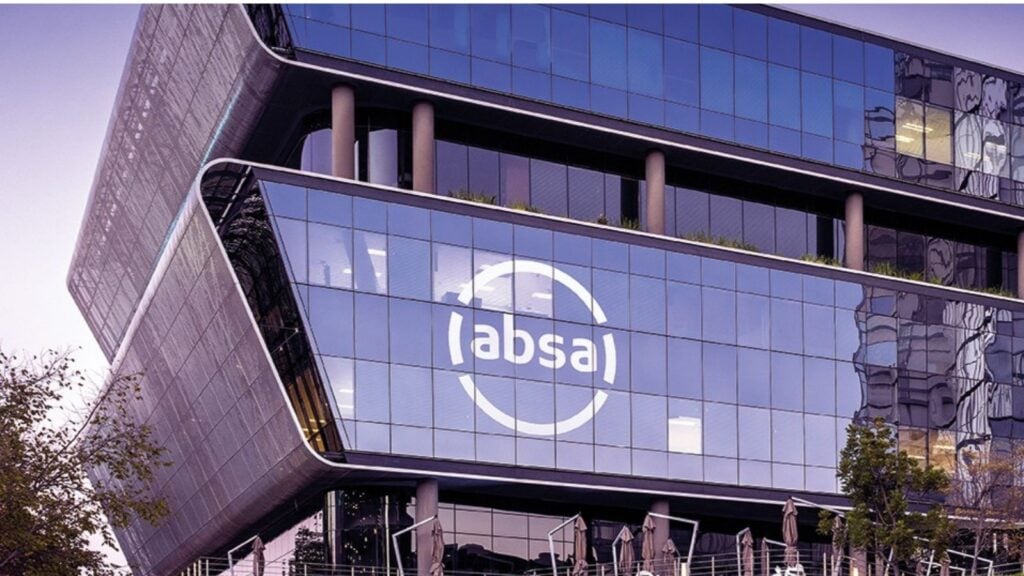
New Absa CEO Kenny Fihla’s sweeping changes at the bank have led to strong results for the banking giant, though it continues to struggle at a segmental level.
While there is still much to be done, particularly with regard to Absa’s Africa regions, the bank appears to be heading in the right direction under Fihla’s leadership.
Absa released its interim results for the six months through June 2026 on Tuesday, 18 August 2026. These results showed a strong performance at the group level, with headline earnings up 8% to R12.81 billion.
The bank’s return on equity improved to 15% from 14.8% previously, while its revenue grew by 4% to R58.8 billion.
Absa’s profit for the period rose by 8.17% to R14 billion, while its basic earnings per share grew by 12.1% to 1,517.9 cents.
This strong performance represents the first set of results reported by Absa that Fihla has overseen in their entirety since taking over as CEO in June 2025.
Since taking the helm, Fihla has overseen sweeping changes across the business, including significant executive churn and leadership shuffles.
Notably, Fihla has also restructured the organisation, launching a new pan-African operating model in January 2026 to streamline Absa’s regional footprint.
Many analysts believe that much of Absa’s future growth lies outside South Africa, with competitor Standard Bank having achieved excellent results by expanding across African regions.
The bank now operates across 17 countries and boasts 13.4 million customers.
Since taking the helm, Fihla has restructured Absa’s model to integrate its former “Africa Regions – Personal and Private Banking (PPB) and Business Banking (BB)” segment directly into the group-wide PPB and BB segments.
He has also transitioned Absa’s wholesale business to a more customer-centric model, with merchant acquiring reallocated from PPB to BB.
While these changes are expected to pay off for Absa in the future, much work still needs to be done before the bank can go toe-to-toe with Standard Bank and other competitors in Africa.
Absa’s weak points

While Absa’s results at the group level proved resilient, a segmental breakdown revealed some glaring weak points.
Most notably, while Absa’s growth was strong in its home country of South Africa, its Africa Regions business fell short.
Absa’s South African operations carried the group, with headline earnings up 17% to R9.19 billion. This was driven by a solid 8% revenue increase and a stable net interest margin of 3.78%.
In contrast, Absa’s Africa Regions business saw headline earnings decline by 10% to R3.62 billion. This is a cause for concern, as Africa Regions contributes 30% of Absai’s group revenue and 28% of headline earnings.
This segment also suffered net interest margin compression, dropping from 7.82% to 7.35%, largely due to lower policy rates in some of Absa’s key markets.
Another segment divide came in Absa’s PPB business compared to its Corporate and Investment Banking (CIB) division.
While PPB posted a strong 12% increase in headline earnings to R4.11 billion, CIB’s headline earnings grew by a meagre 1% to R6.19 billion.
The bank explained that the CIB business was held back by pricing pressures in South Africa and a 42% increase in credit impairments in Africa.
Another weak point in Absa’s results was that its operating expenses grew at 4%, the same as revenue growth.
This left the bank with flat operating JAWS and a slightly higher cost-to-income ratio of 53.4%.
Despite these shortcomings, it appears that Fihla’s efforts are paying off at the group level, with Absa’s restructuring expected to yield results across its business units in the coming years.
One highlight for shareholders now is that Absa elected to increase its interim dividend by 8% to 850 cents per share.





Comments