Absa going from zero to hero


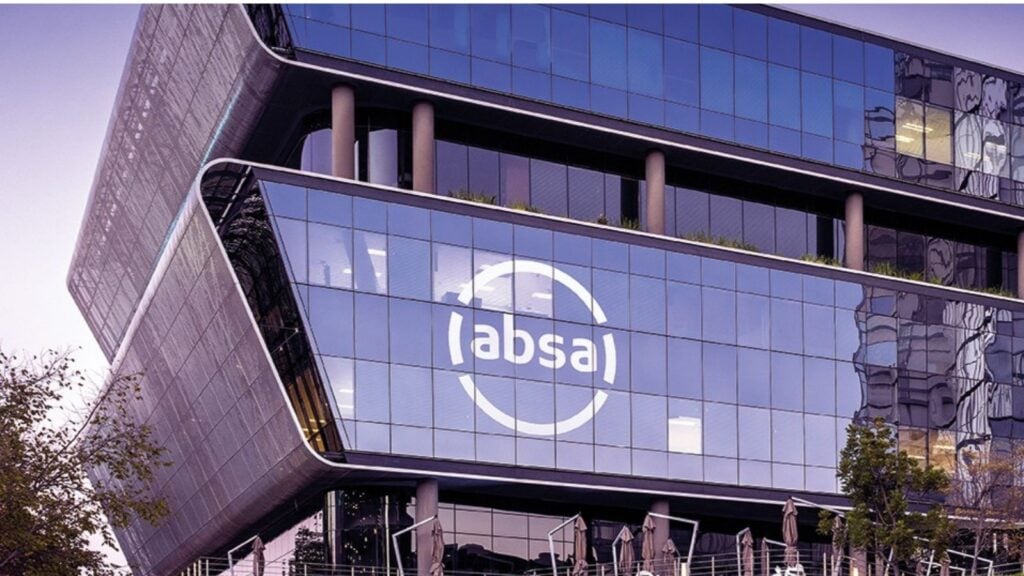
Coronation’s Top 20 fund has taken a sizeable position in Absa, with its portfolio managers believing that its African franchise provides an opportunity for significant upside.
This position was taken in the second quarter of 2026, with Neville Chester, Nic Stein, and Nicholas Hops revealing it in their quarterly commentary for the fund.
Coronation’s Top 20 fund is one of the asset manager’s flagship portfolios. The three managers oversee R33.1 billion in assets and have consistently outperformed their benchmark.
Their investment in Absa is a significant vote of confidence in the bank that has suffered from leadership turmoil ever since Maria Ramos left the CEO position in 2019.
Since her retirement, the bank has had six different CEOs in six years and lacked a cohesive strategy, while its peers have surged ahead.
Historically, Absa vied with FirstRand and Standard Bank for the position of South Africa’s premier banking institution.
FirstRand and Standard Bank have had remarkably stable leadership, with their CEOs often staying in the top job for a decade at a time.
This has allowed them to craft long-term strategies that can be executed over time, generating value for shareholders and clients.
These two institutions have seen their market value on the JSE surge to R544 billion and R525 billion, respectively. Absa has seen its plunge to R192 billion.
The lender has had a difficult time in 2026, with its share price falling over 10% year-to-date while its peers have seen their share prices rise by high single digits.
This is on the back of investors questioning the bank’s aggressive talent acquisition strategy and the sums of money and shares it is handing out to attract top talent.
In particular, investors questioned new CEO Kenny Fihla’s mammoth R148 million pay package in the 2025 financial year. R98.5 million of this was to lure him away from Standard Bank.
Investors questioned his R23.2 million bonus in particular, given the bank’s performance. 43% of shareholders voted against the bank’s remuneration report.
This has been coupled with a disappointing start to the 2026 financial year, with Absa’s latest trading statement showing little sign of its turnaround gaining traction.
Analysts now forecast the bank’s headline earnings growth to be the lowest of its peers due to pressure on net interest income from falling interest rates across key African markets.
Coronation dives in

The bank’s share price decline, which some see as a warning sign, is also an opportunity to invest in it at an attractive valuation.
“We initiated a position in Absa during the period, as low market expectations combined with a compelling turnaround story,” the portfolio managers said.
They are particularly positive about the improvements seen in Absa’s South African business and its continued success in Africa.
The Top 20 fund has been heavily invested in Standard Bank over the past few years, partly due to its successful growth in Africa.
Now, it is looking to increase exposure to the continent through Absa, which has a substantial African franchise and can capture value from faster-growing economies on the continent.
“While the group contribution is smaller at one third of earnings, it offers an additional leg up to earnings growth in the years to come,” they said.
Much of this hinges on Fihla. Apart from the leadership stability his appointment hopes to bring, he is charged with reinvigorating the Red Bank on the continent.
Fihla was previously CEO of Standard Bank’s prestigious Corporate and Investment Banking unit. He led its African expansion and doubled headline earnings in his time in the top job.
Looking to replicate this success at Absa, Fihla has refocused the business around Absa’s African franchise and brought in talent to lead key business units.
“On a 7 times PE ratio and a 8% to 9% dividend yield, the market is taking a very cautious view on Fihla’s ability to turn the business around,” the fund managers said.
“If he is successful, Absa will provide excellent returns from this base, with the high dividend yield providing some downside protection in the event of the turnaround struggling.”
One point of concern is Absa’s South African retail business, which has struggled for a long time from a lack of strategic focus.
The business has been split into separate units, reunited, and split again to mimic the structure of other banks, particularly FirstRand and Standard Bank.
“We have been sceptical over the strength of Absa’s South African retail franchise for a long time, and this view has been vindicated as it has shrunk itself to a near immaterial portion of earnings,” the managers said.





Comments