Sasol has built three cities in the middle of nowhere and one is entirely underground


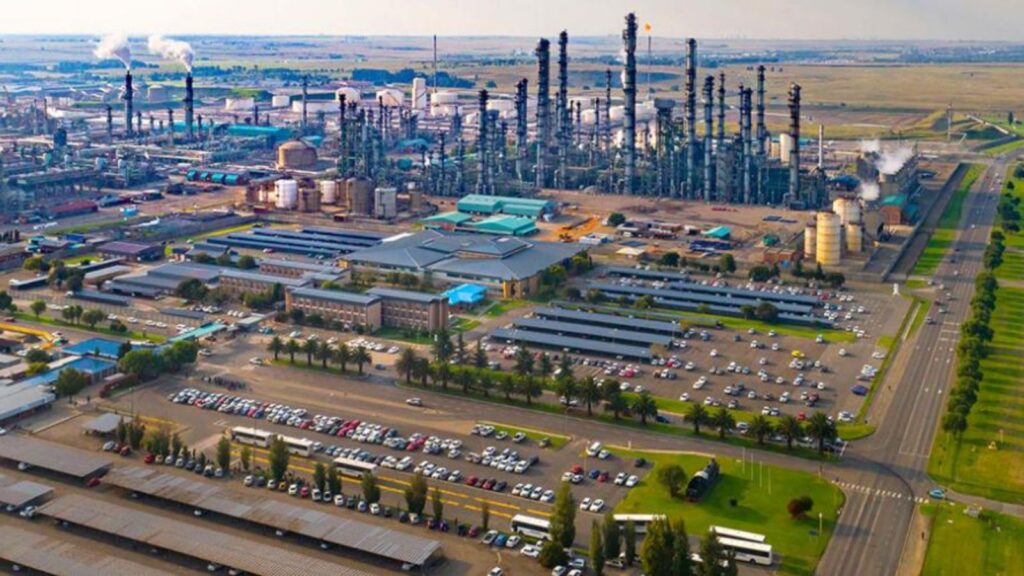
Sasol has built an entire city above and below ground to power its Secunda operations, including a 65-kilometre underground tunnel network.
This complements its facilities in Sasolburg, which host the first commercial plant capable of converting coal into liquid fuels and chemicals.
These tunnels facilitate coal mining to feed the plant, which is the only commercial coal-to-liquids fuel facility in the world.
It plays a key role in South Africa’s energy security, meeting nearly a third of the country’s fuel demand on any given day.
The scale of the Secunda operations was revealed by Sasol CEO Simon Baloyi at the 9th BizNews Conference in the Drakensberg.
Baloyi explained that Sasol plays a critical role in South Africa, serving more as an institution integral to the country’s operations than as a business.
The CEO told the story of Sasol’s history and how an experiment to make South Africa more self-reliant turned into a company worth R120 billion on the JSE.
Founded in 1950, Sasol was charged by the government to leverage South Africa’s coal reserves to reduce its reliance on imported oil.
Using the Fischer-Tropsch coal-to-liquids technology developed in Germany, Sasol built Sasolburg to produce synthetic fuel. This was the first commercial use of the technology.
The 1973 oil crisis injected fresh urgency into South Africa’s push for self-reliance, leading to the construction of Sasol Two and Sasol Three in Secunda.
This town’s name comes from the Latin word secundus, meaning second. Sasol is the only company in the world to have two towns named after it.
Sasol has invested heavily in improving the Fischer-Tropsch process at Secunda, creating its own Sasol Advanced Synthol reactors and natural gas reformations.
This enables the company to use natural gas alongside coal as feedstocks for the plants, significantly reducing carbon emissions and improving process efficiency.
Baloyi and his team have led a turnaround at Secunda in recent years, with the plant recording its highest production in the past five years in 2025.
Sasol has also managed to export its technology and skills from Secunda in recent years, with it operating a gas-to-liquids facility in the Middle East to produce industrial chemicals.
Secunda today
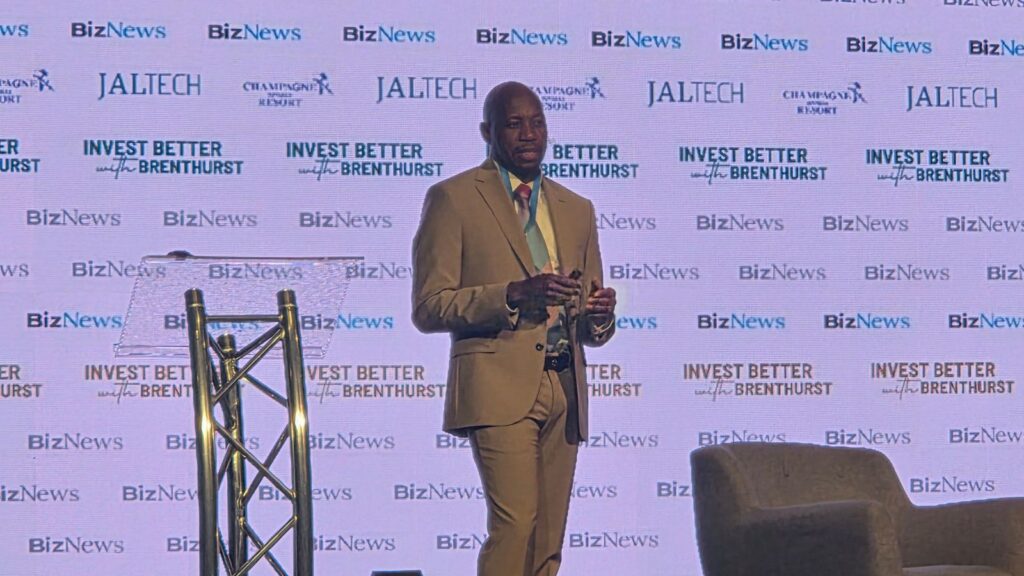
None of the production at Secunda comes cheap or without considerable effort, with the site home to one of the country’s largest workforces.
Under normal conditions, the Secunda facility hosts 16,000 to 20,000 workers daily. This does not include the miners underground, which adds another 10,000.
However, in September, the facility’s workforce more than doubles to 50,000 as it shuts down for maintenance and upgrades.
Every year this happens, Baloyi explained. “We take a portion of the facility, and we conduct maintenance on it for three to four weeks, using 50,000 employees,” he said.
For context, Africa’s largest bank, Standard Bank, employs 51,000 across all its operations on the continent.
As a result of its high labour demand, Sasol’s facilities create new towns and cities from scratch, where its employees live, and an entire economy is created to service the company.
Baloyi explained that much of the magic that happens above ground is heavily dependent on the mining that nobody sees below the ground.
Secunda sits atop one of the world’s richest coalfields. This has been systematically mined by the company to feed the above-ground facility.
Often overlooked, this is one of the largest coal mining operations anywhere in the world, and it is just to supply one facility.
“In Secunda, we used around 40 million tonnes of coal or about 100,000 tonnes every day to create more valuable products in the form of fuel and chemicals,” Baloyi said.
“We have the largest underground mining infrastructure in the world at Secunda. We have an underground tunnel network of 65 kilometres.”
To this end, Baloyi explained that Sasol cannot simply dump coal overnight as its facilities are designed to run on the fossil fuel.
While natural gas has more recently been added as a feedstock, this process is costly and labour-intensive. Sasol spends R20 billion a year on maintaining its assets in South Africa.
“We have said that we will not grow in coal, but we will keep using our current reserves. That is where we stand, and we have to do it,” Baloyi said.
Baloyi explained that Sasol is not like any other company, as it is a vital part of South Africa’s national security and an almost universal input into the economy.

Comments